Cottage Garden Ideas: Design, Plants, and How to Layer Them
Cottage gardens look effortless. They aren’t — but the rules behind them are simple once someone spells them out. Below: the three-layer planting method that makes a border look full instead of messy, eight cottage styles with their signature plants, what the whole thing actually costs, and which plants earn their space in each season.
A cottage garden is an informal planting style rooted in English horticultural tradition, popularised by designers Gertrude Jekyll and Rosemary Verey. Unlike formal gardens with rigid symmetry, cottage gardens celebrate “controlled chaos” — dense mixed plantings of perennials, annuals, self-seeding biennials, climbing roses, herbs, and vegetables all growing together in apparent spontaneity.
Contemporary cottage gardens, championed by designers like Piet Oudolf and Jo Thompson, have evolved the style with more wildlife-friendly planting, drought-tolerant species, and modern palettes — making cottage gardening one of the most adaptable styles in garden design history.
Cottage Garden Trends: What the Data Shows
• Cottage gardens are the #1 most-saved garden style on Pinterest globally (2024–2025).
• The Pennsylvania Horticultural Society named nostalgic cottage-style gardening a top 10 trend for 2025.
• Cottage garden searches rose 34% in two years, driven by the cottagecore movement.
• A well-designed cottage garden increases property value by 10–20% (RHS / Angi).
• Once established, cottage gardens use 60% less water than lawn-heavy gardens (RHS).
How to Layer a Cottage Garden: The 3-Layer Method
Plant everything at one height and a border reads as a muddle. Stack it in three bands and the same plants read as abundance. This is the difference between a garden that looks planted and one that looks designed.
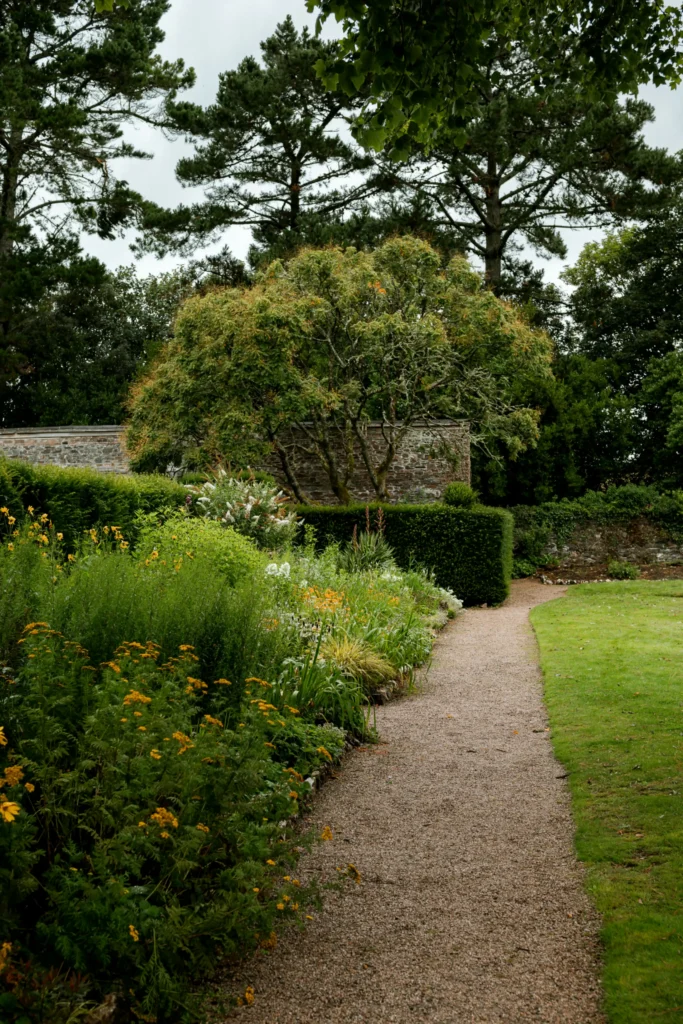
Layer 1 — Ground Level (0–60cm)
The carpet of your garden, suppressing weeds and providing colour at foot level. Best plants: Dianthus, Catmint (Nepeta), Creeping thyme, Alyssum, Viola, Ajuga, Alchemilla mollis. Rule: plant in drifts of 3–5, spacing 20–40cm.
Layer 2 — Mid Height (60–150cm)
The heart of the garden, where most drama happens. Best plants: Roses (David Austin), Foxglove, Delphiniums, Echinacea, Peonies, Lavender, Salvia, Alliums, Hardy Geraniums. Rule: use 1–2 bold anchor plants per 2m².
Layer 3 — Vertical Accents (150cm+)
Height and structural rhythm even when lower plants finish. Best plants: Climbing roses, Clematis, Hollyhocks, Verbascum, Miscanthus grasses. Structures: rose arches, obelisks, trellises, arbours. Place one every 3–4 metres.
8 Cottage Garden Styles to Inspire Your Design
How to Build a Cottage Garden on Any Budget
“How much does a cottage garden cost?” comes up constantly and almost nobody answers it properly. Here are real numbers.
• Small bed, up to 10m²: £200–£500 / $250–$650. Perennial plugs, a few bare-root roses, seed packets.
• Medium, 10–30m²: £500–£1,500 / $650–$2,000. Adds a rose arch, gravel path, and some structure.
• Full garden with hard landscaping: £2,000–£8,000+ / $2,500–$10,000+.
Four ways to spend less
Buy roses bare-root between November and February. Same plant, 40–60% cheaper than a potted one, and it establishes faster.
Grow from seed. Foxgloves, cornflowers, cosmos, sweet peas, and hollyhocks all germinate without fuss. A £2 packet can give you fifty plants.
Divide what you already have. Most cottage perennials split happily after three or four years, doubling your stock for nothing.
Do the Chelsea chop. Cut perennials back by half in late May and you get shorter, bushier plants carrying more flowers — no extra purchase needed.
Frequently Asked Questions
What makes a garden a cottage garden?
Informal, mixed planting — dense borders of perennials, annuals, climbers, roses, and herbs growing together with no rigid layout.
How much does it cost?
A small 10m² cottage garden can be created for £200–£500 using bare-root roses, plug plants, and seeds. Full gardens with landscaping run £2,000–£8,000.
Can you have one in a small space?
Yes — small cottage gardens are often the most charming. Go vertical, use containers, and pick compact varieties. Even 2m x 3m works.
Is a cottage garden high maintenance?
Most effort is in the first two years. Once established, expect just 2–3 hours per month in summer — dense planting suppresses weeds and perennials return each year.
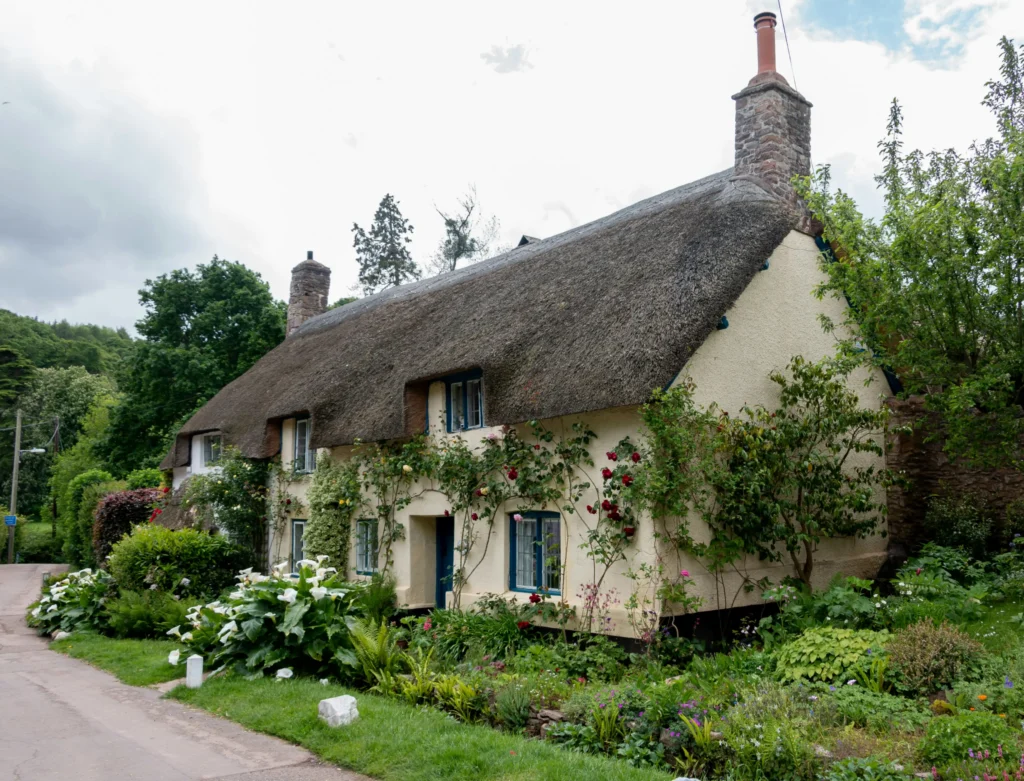
1. English Cottage Garden
Picket fencing, climbing roses, soft pinks and blues. Signature plants: Rosa ‘Gertrude Jekyll’, foxglove, delphinium, lavender. UK zones, USDA 5–9.
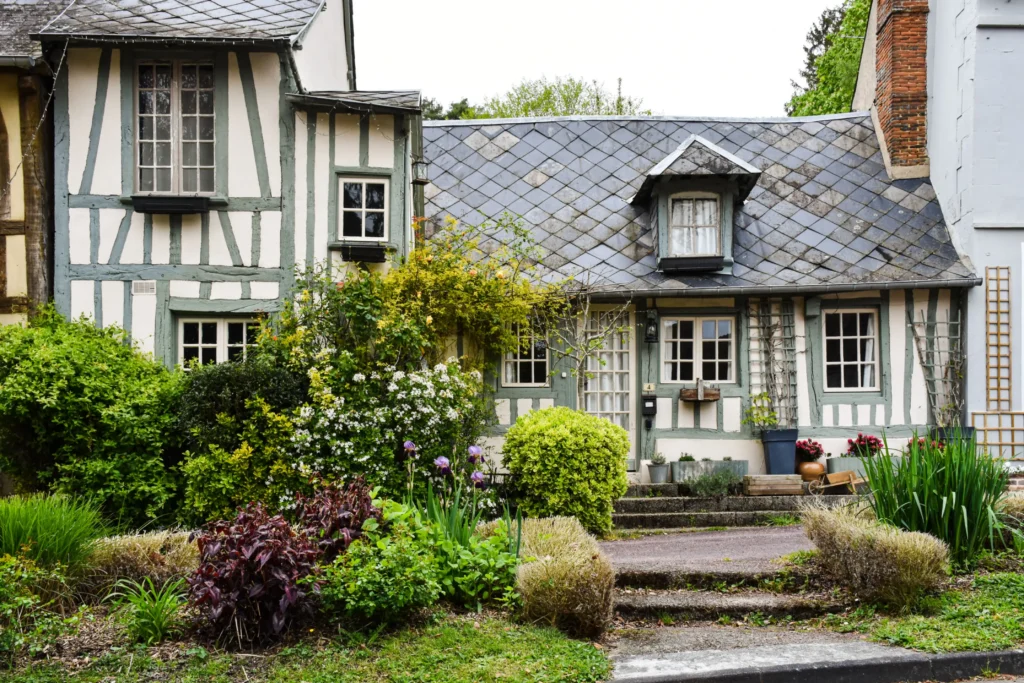
2. French Cottage Garden
Kitchen-garden productivity meets ornamental planting. Box hedging, lavender paths, potager beds, fruit trees mixed with cut flowers.
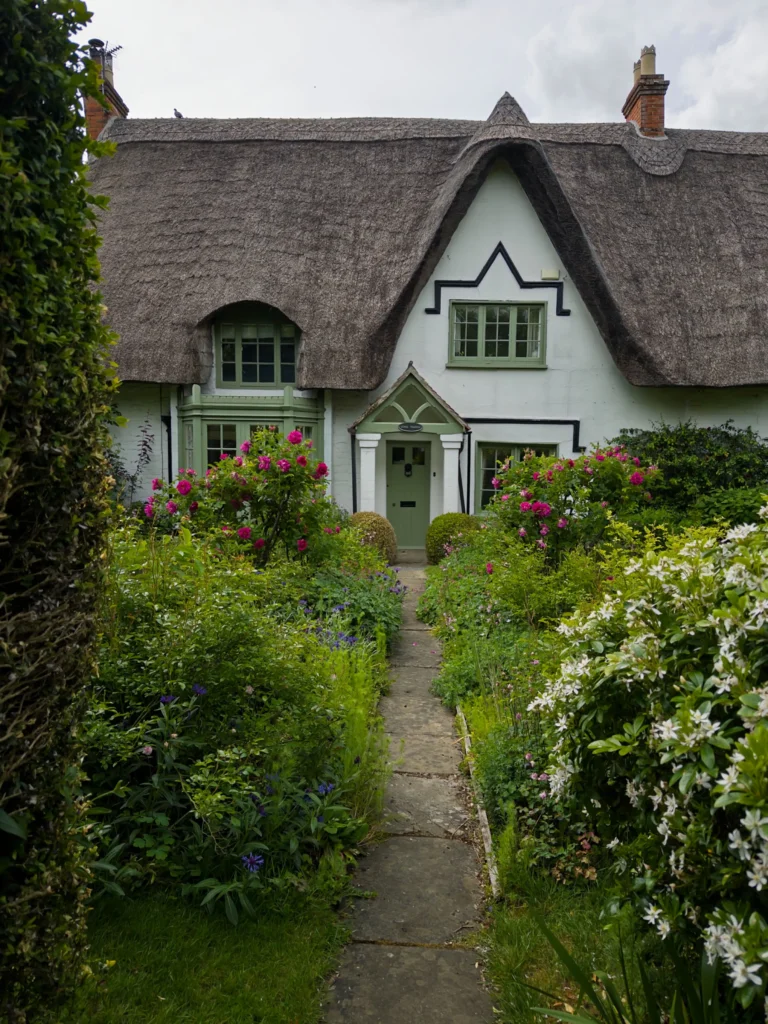
3. Wildflower Cottage Garden
Meadow-style planting supporting biodiversity. Hosts up to 30x more pollinators than a lawn. Leave seed heads through autumn and winter.
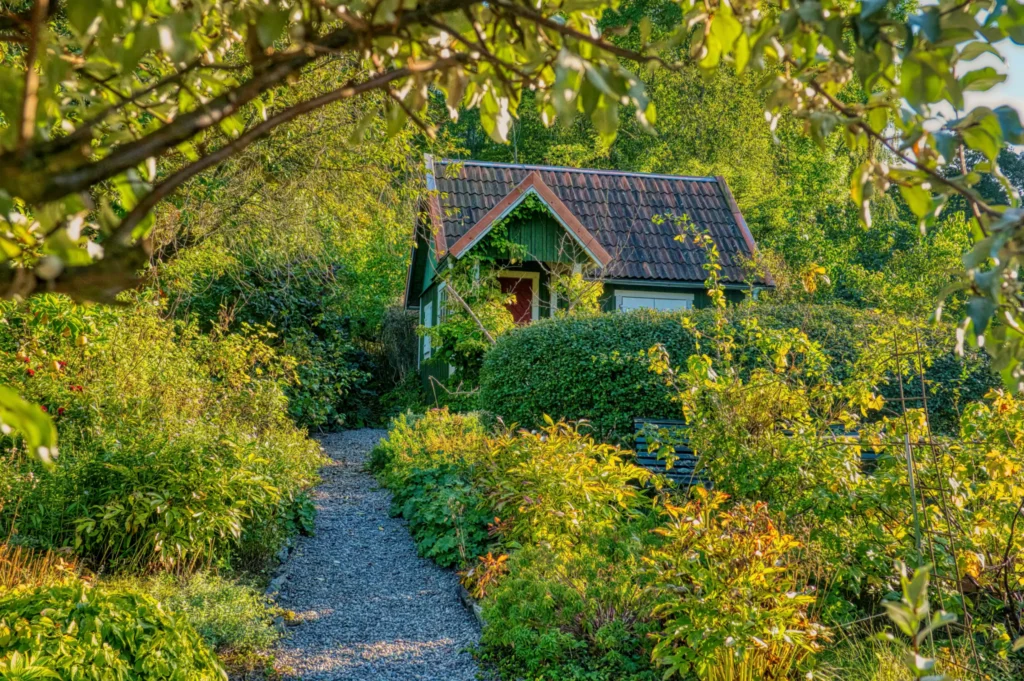
4. Woodland Cottage Garden
Shade-tolerant layering under trees. Hostas, astilbe, ferns, hellebores, bluebells. Best where you already have mature trees.
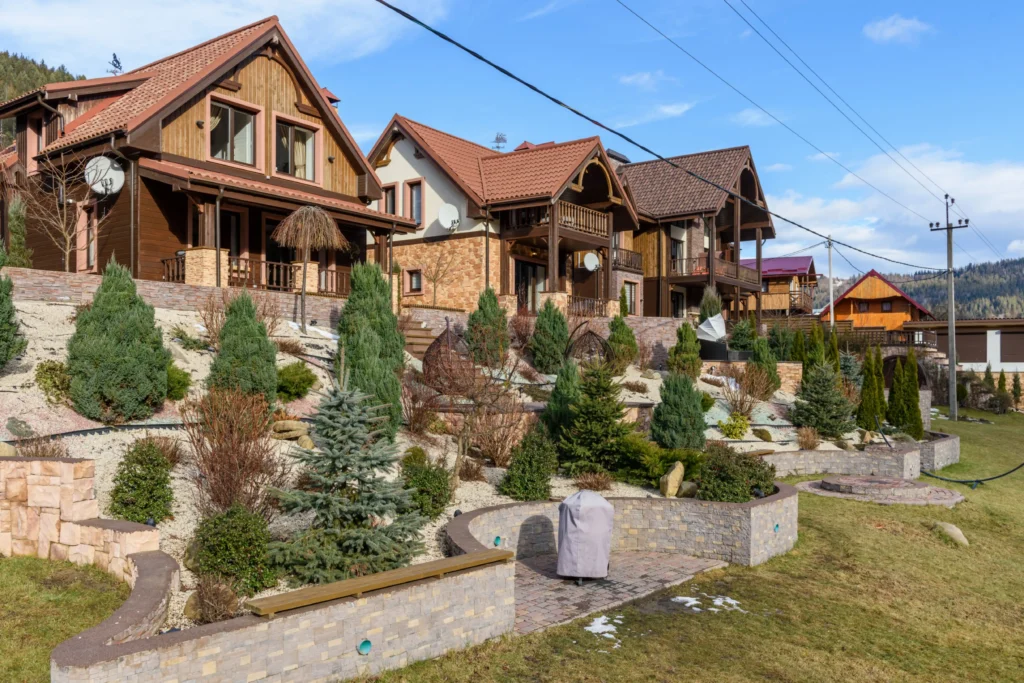
5. Modern Cottage Garden
A curated palette with more ornamental grasses. Miscanthus, salvia, echinacea, agapanthus. Repeat 3–5 varieties for cohesion.
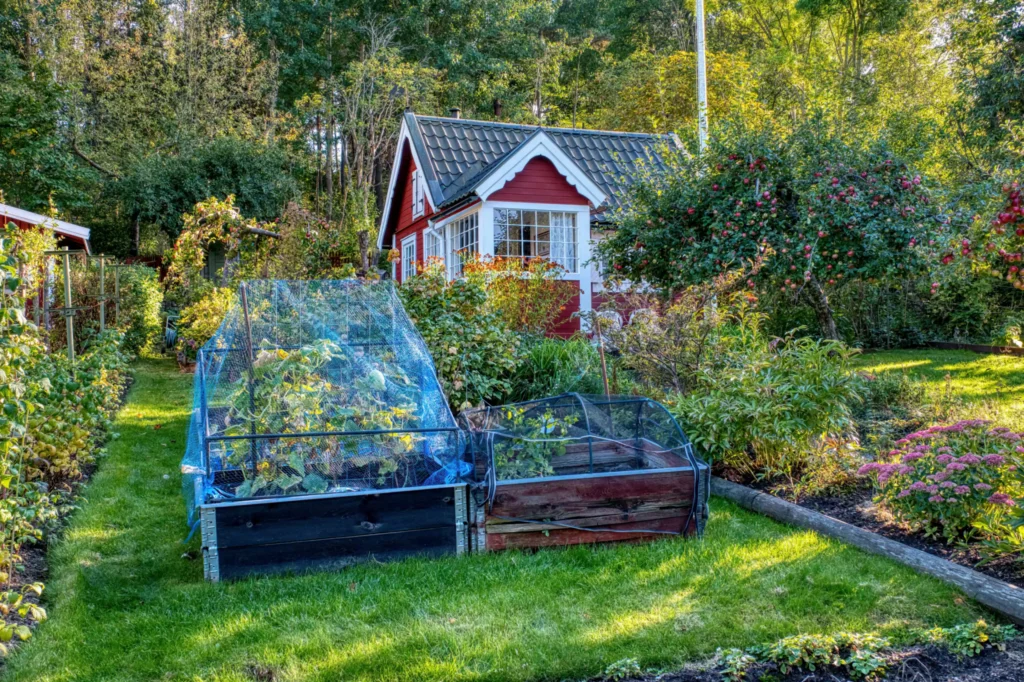
6. Small Cottage Garden
Go vertical — climbers on every fence and wall. Compact rose varieties. The full cottage effect from as little as 2m x 3m.
7. Low-Maintenance Cottage Garden
Long-lived perennials and self-seeders. Geranium ‘Rozanne’, Nepeta, Sedum. Just 2–3 hours of upkeep a month once established.
8. Cottage Courtyard Garden
Walls become canvases for climbers, containers replace borders. A single statement tree anchors the space.