Fire Pit Ideas: Designs, Costs, Seating, and the Safety Rules
A fire pit turns a garden you look at into a place you sit. Prices start under £100 for a portable bowl and climb past £3,000 for sunken stonework. Below: six types with real costs, seating layouts that actually work, and the clearance and permit rules most articles leave out.
Fire Pits: The Data
• The US fire pit market is worth ~$1.5 billion, growing 6% yearly.
• Fire pits are a top-5 ROI outdoor investment — 50–80% cost recovery on resale.
• 73% of owners use their outdoor space significantly more after installing one (Houzz 2024).
• “Fire pit ideas” gets 14,000 US / 23,000 global monthly searches — our highest-volume keyword.
• Gas fire pits now make up 40% of new installs, up from 22% in 2019.
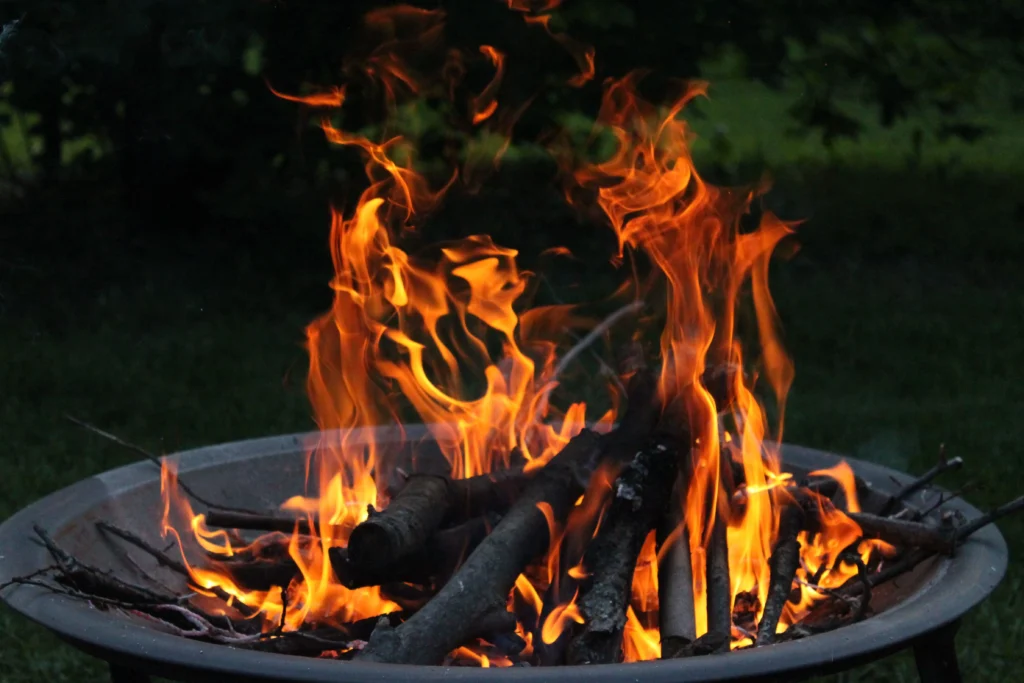
1. DIY Wood-Burning
£80–£300. A weekend build. Keep 3m clear of anything that burns.
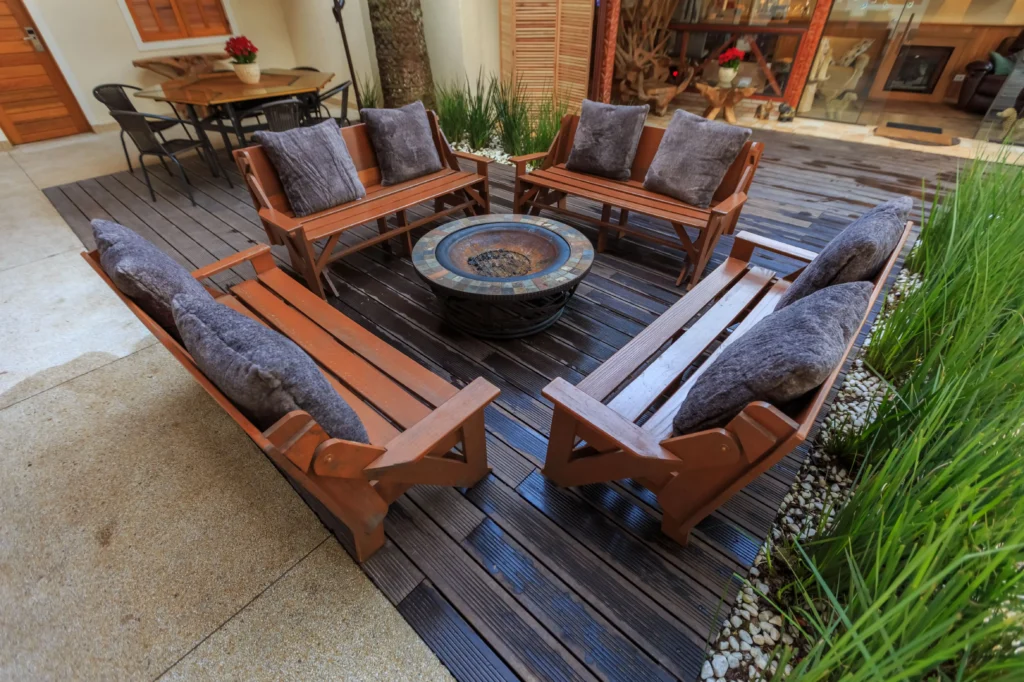
2. Sunken
£500–£3,000. Dramatic and the most photographed. Drainage decides whether it works.
3. Raised Paver
£200–£800. Concrete or stone to 40–50cm, 90–120cm interior diameter.
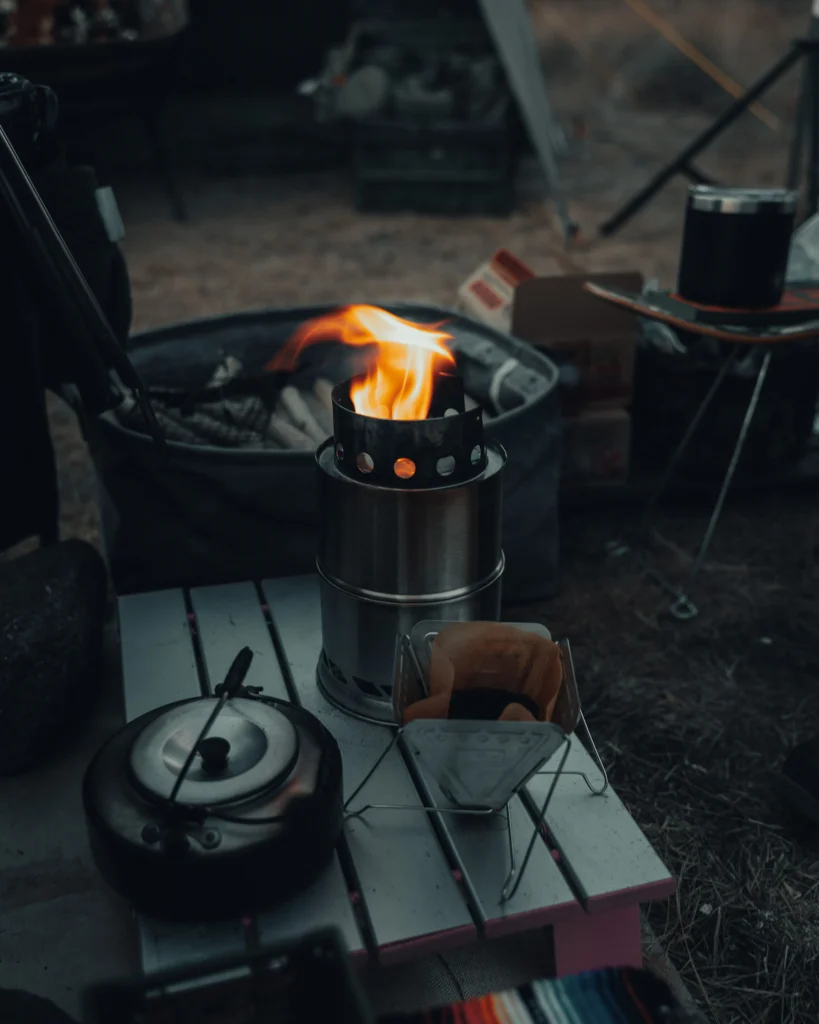
4. Smokeless
£180–£600. Solo Stove, Breeo, Tiki Brand. Wind direction stops dictating where you sit.
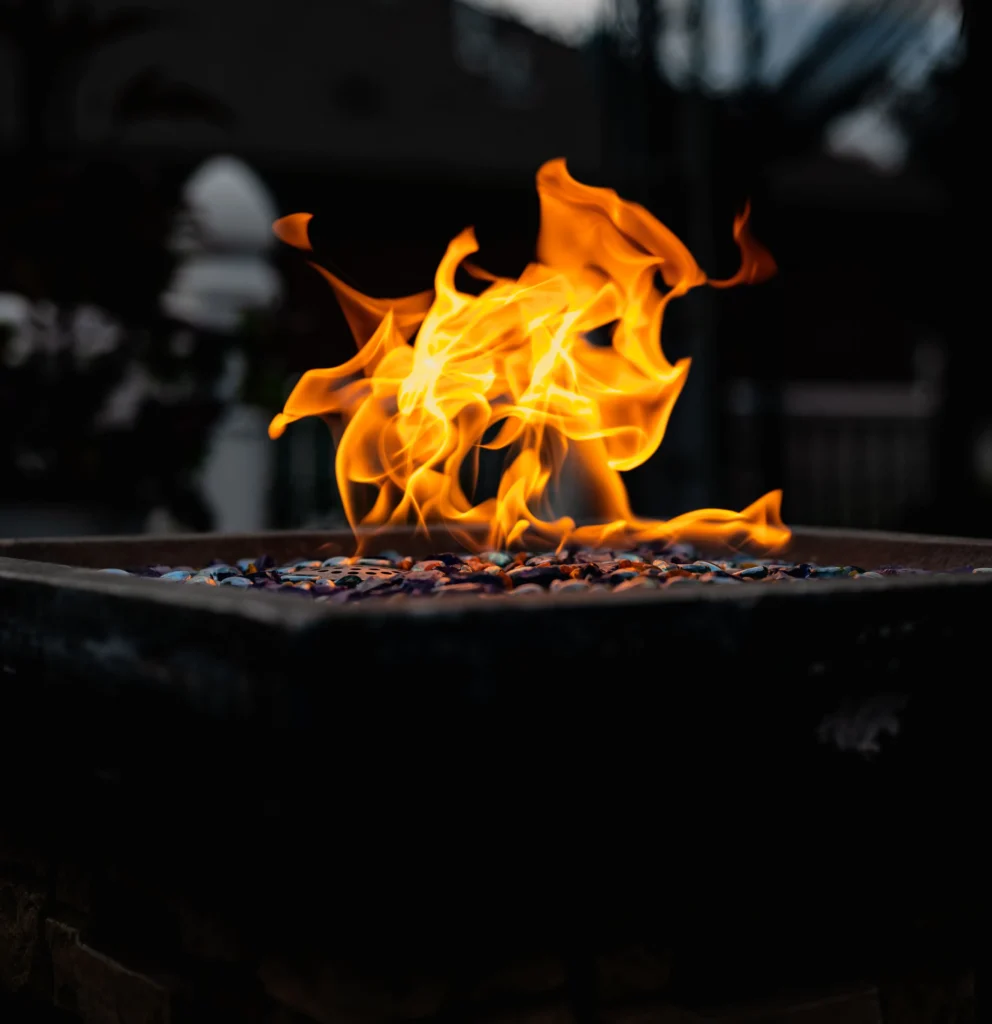
5. Gas
£400–£3,000+. Instant, no ash. Natural gas needs a fitter; propane is portable.
6. Fire Bowl & Chiminea
£50–£300. Open bowl for modern gardens; enclosed chiminea for directional heat.
6 Types of Fire Pit
🔥 Fire Pit Safety: The Rules Most Guides Miss
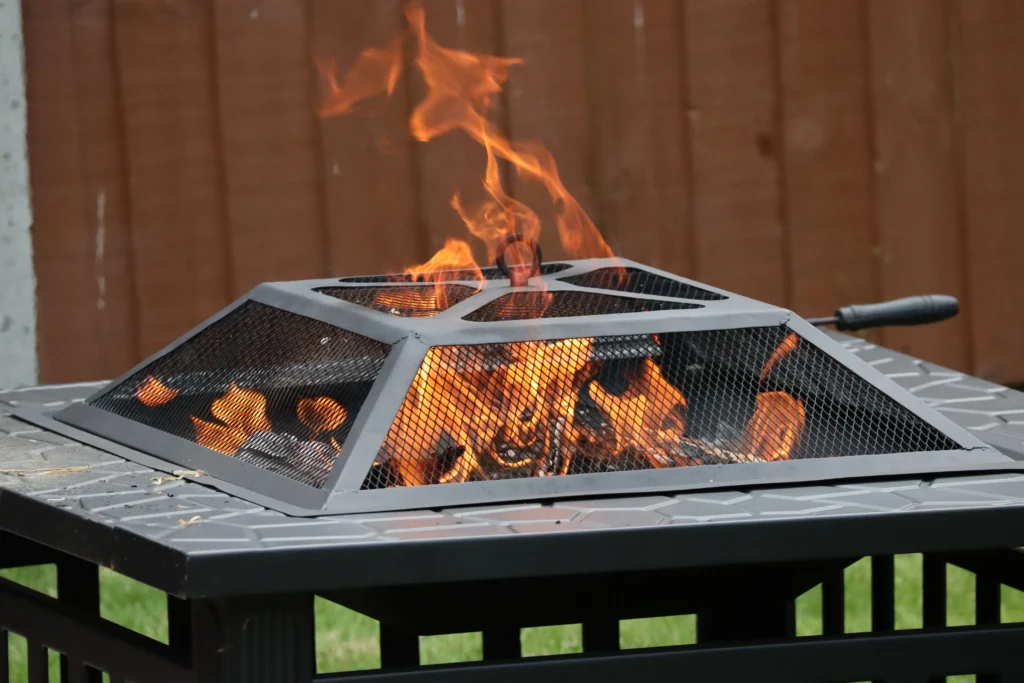
This is the part most fire pit articles skip, and it’s the part that matters.
Clearance: three metres (ten feet) from any structure, fence, tree, or overhanging branch. Eaves count. So do sheds.
Surface: never on decking. Concrete, stone, brick, or gravel only. A fire pit mat under a portable unit is cheap protection.
Wind: don’t light one above about 32kph, and don’t light one at all in drought conditions. Embers travel further than people expect.
Putting it out: keep water or sand within reach. Ash stays hot for far longer than it looks — give it 48 hours before you empty it.
Permits: plenty of councils and US fire departments require one for a permanent pit, and most set a minimum distance from the boundary. A five-minute phone call before you build beats a removal notice afterwards.
Fuel: dry seasoned hardwood or manufactured logs. Never treated timber, MDF, plywood, painted wood, or garden waste — all of it gives off fumes you don’t want to be sitting in.
Fire Pit Seating Layouts
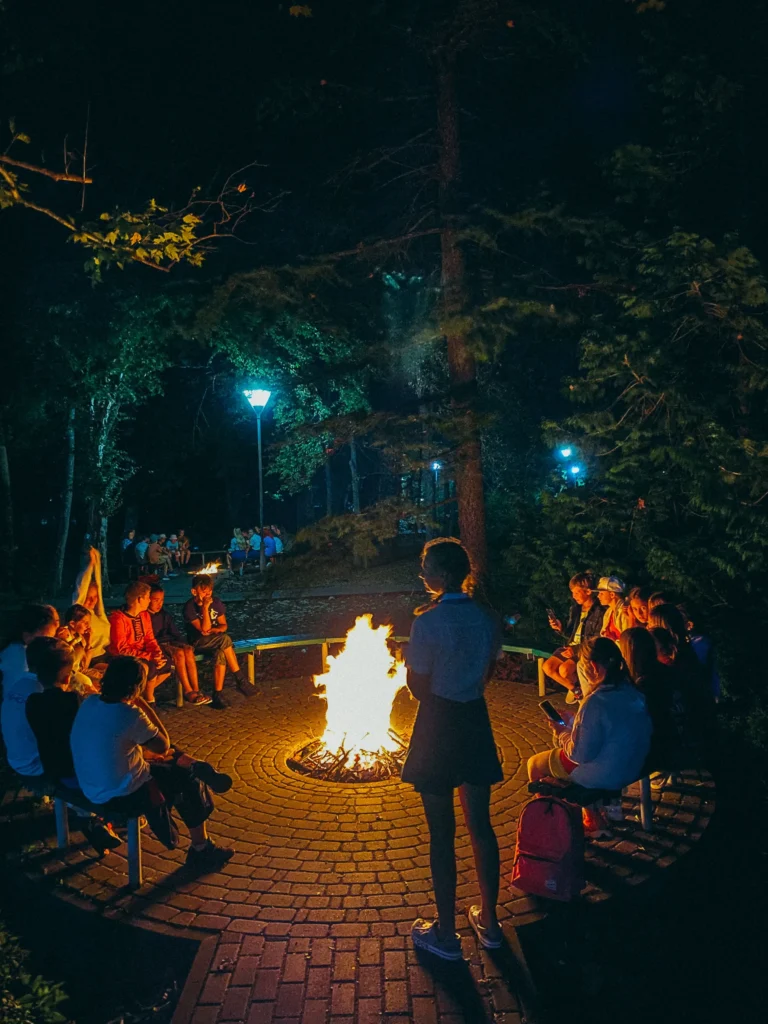
Where people sit decides whether the fire gets used. Five arrangements that work:
A circle — benches or chairs in a ring, everyone facing in. Leave 1.5 metres between the fire edge and the nearest seat, or the front of your shins will let you know.
A built-in seating wall in the same material as the pit. Permanent, tidy, and it defines the zone without furniture.
Sunken with bench seating cut into the surrounding walls. The most impressive of the lot and the one that fills Pinterest boards.
An outdoor living room — fire pit table, a sofa, a couple of armchairs. All-weather rattan or powder-coated metal survives being left out.
Log rounds as stools. Free if you know someone felling a tree, and they suit a cottage garden better than anything you can buy.
Pairing a Fire Pit With a Patio or Outdoor Kitchen
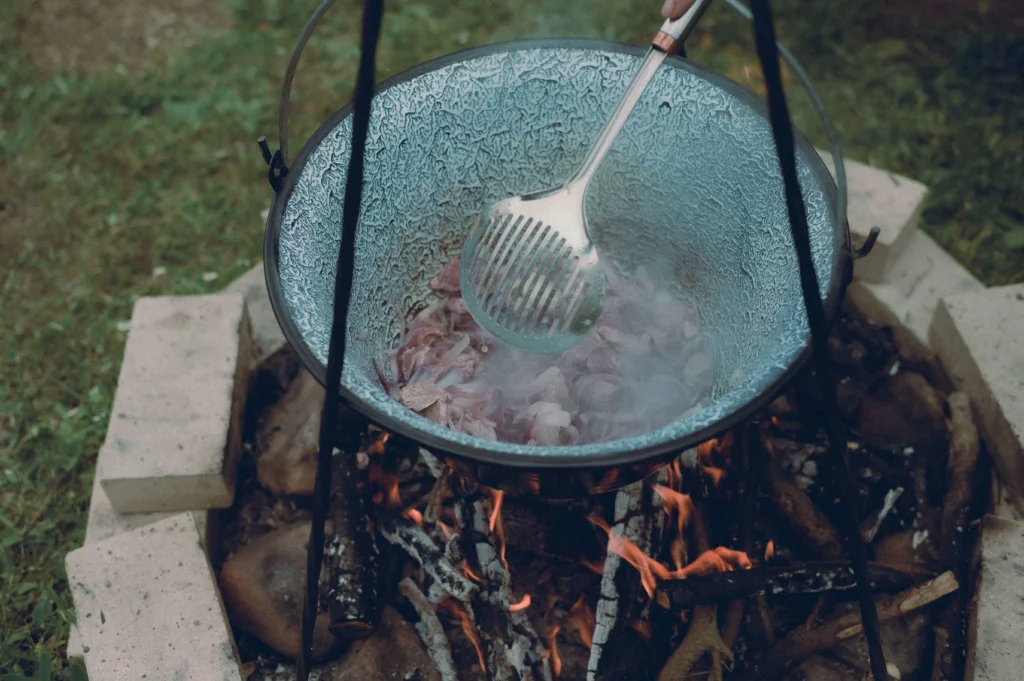
A fire pit on its own is a feature. A fire pit that sits inside a wider outdoor room is somewhere you actually spend evenings. The difference usually comes down to layout.
Put the fire and the cooking at opposite ends. Nobody wants to grill next to an open flame, and guests naturally drift between the two. Ten to twelve feet apart is comfortable on most patios.
Repeat one material. If the pit is built from the same stone as the patio edge or the retaining wall, the whole space reads as one thing rather than three separate projects.
A pergola works, with one condition. Overhead cover extends the season and makes the area feel enclosed — but keep at least two sides open and leave real headroom. Never roof over a wood-burning pit.
Light the path, not the pit. Low-level lighting along the route from the back door does more for atmosphere than anything aimed at the fire itself. The fire supplies its own light.