Flower Garden Ideas: Design, Plants, and Colour That Lasts
Most flower gardens peak in June and look tired by August. That’s a planning problem, not a plant problem. Below: the six kinds of flower garden and which one suits your space, a colour framework designers actually use, and a bloom calendar that keeps something flowering from March through November.
Why Flower Gardens Matter: The Data
• The global flower and ornamental plant market is worth over $250 billion (2025).
• 55% of US households maintain a garden — flower gardens are the most common type.
• Cut flower gardening interest is up 40% since 2020.
• Well-designed flower gardens host up to 30x more pollinators than lawn (RHS).
• “Flower garden ideas” gets 2,800 US / 4,000 global monthly searches.
6 Types of Flower Garden
1. Flower Bed
A defined planting area set into lawn or paving. The most versatile, beginner-friendly type. Tall plants at the back, low ground cover at the front.

2. Perennial Border
Colour across multiple seasons without replanting. Plan three waves of bloom — spring, summer, and autumn.
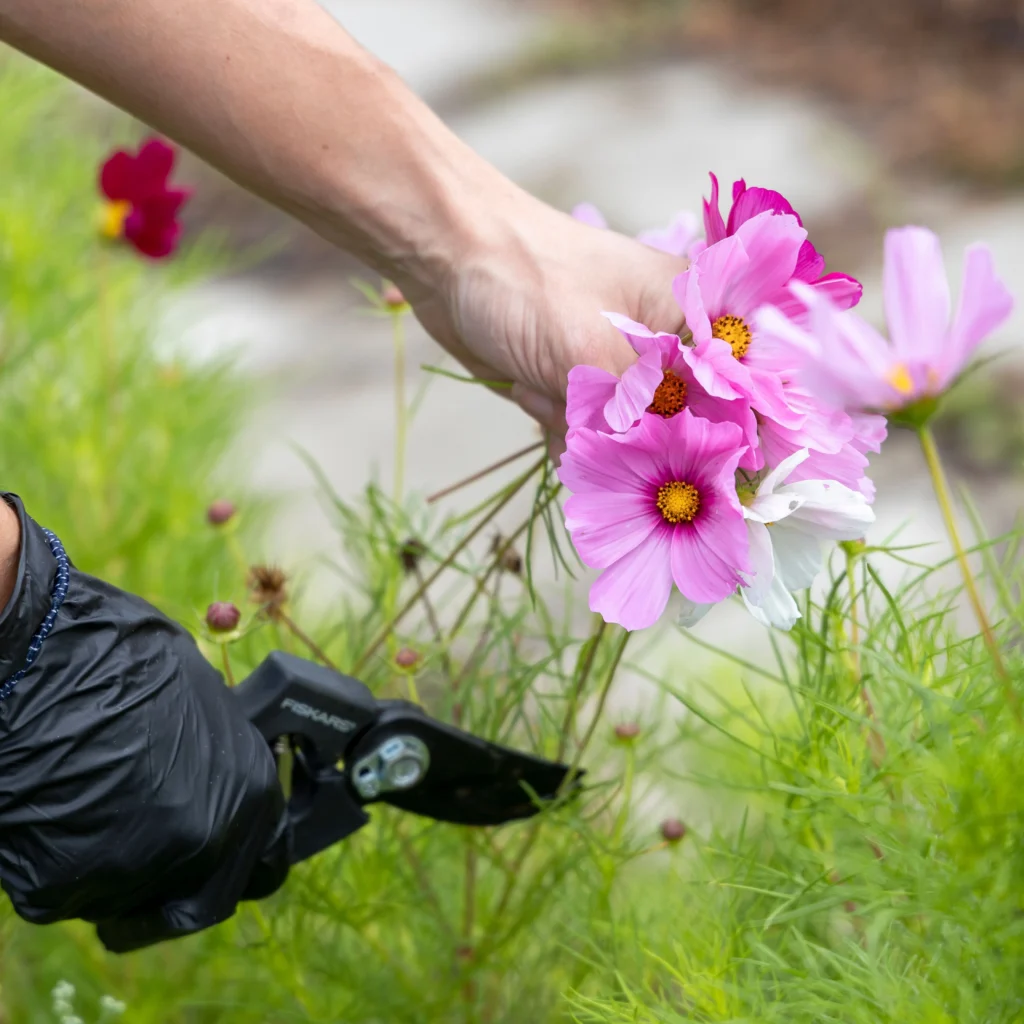
3. Cut Flower Garden
Grown for cutting, not just looking at. Zinnias, dahlias, sweet peas. Just 1.2m x 3m gives weekly bouquets May to October.
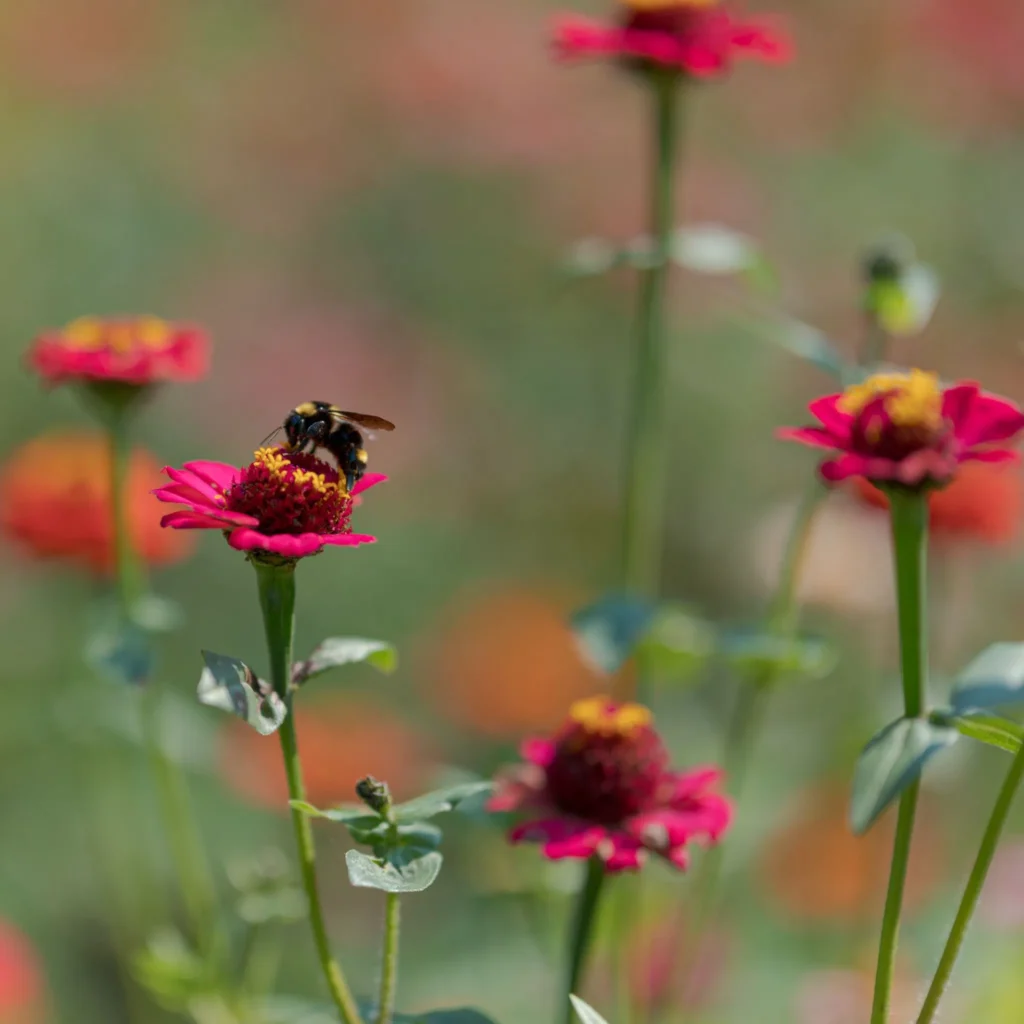
4. Pollinator Garden
Lavender, echinacea, salvia, catmint. Hosts 10–30x more insect species than double-flowered cultivars (RHS).
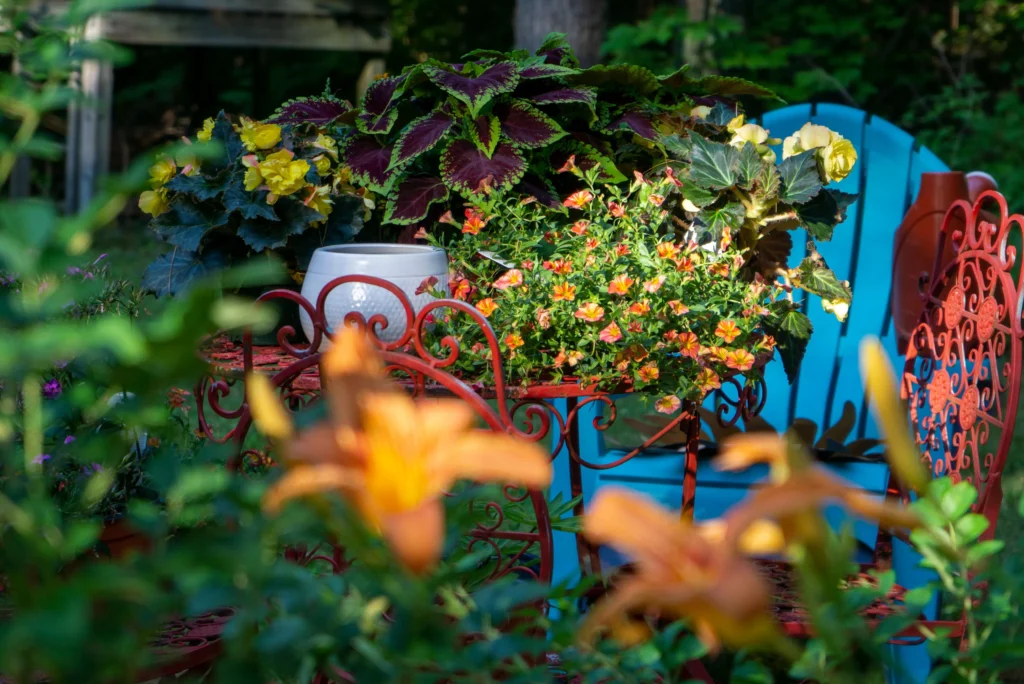
5. Shade Flower Garden
Hosta, astilbe, hellebore, ferns. Shade doesn’t mean no colour — hostas alone offer gold, blue, and variegated foliage.
6. Small Flower Garden
Layer spring bulbs beneath summer perennials so the same ground works twice. Lavender and Hardy Geranium earn their space in two seasons.
How to Plan Flower Garden Colour Schemes
Plant lists are easy to find. The logic behind putting colours together is not. There are three approaches, and picking one before you buy anything will save you money and regret.
One colour. All white, all blue and purple, or all hot yellows and oranges. It sounds limiting and it isn’t — a single-colour border reads as deliberate, and it makes a small garden feel larger because the eye isn’t stopping every two feet.
Complementary. Opposites on the colour wheel: purple with yellow, orange with blue. High energy, high contrast. Keep it roughly 60/40 rather than 50/50 or it starts to fight itself.
Analogous. Neighbours on the wheel: pink into purple into blue, or yellow into orange into red. This is what happens in nature, which is why it’s the most forgiving option and the hardest to get wrong.
One more thing worth knowing: colour shifts through the year whether you plan it or not. Spring arrives in pastels, midsummer brings the hot tones, and autumn hands you bronze and gold. Working with that is easier than fighting it.
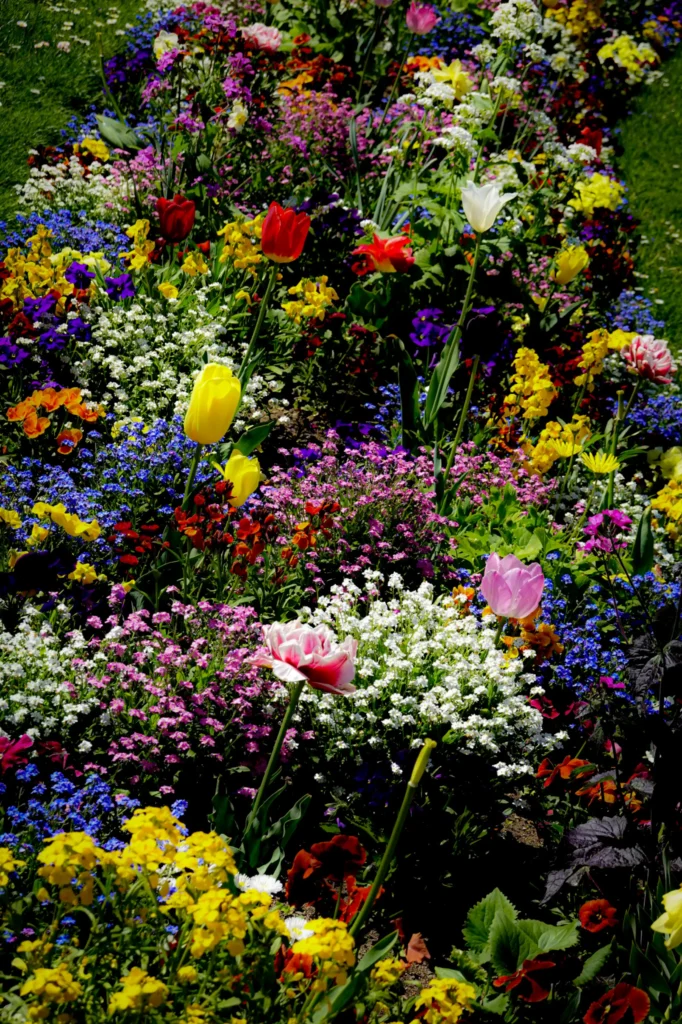
Bloom Succession: A Garden That Flowers All Year
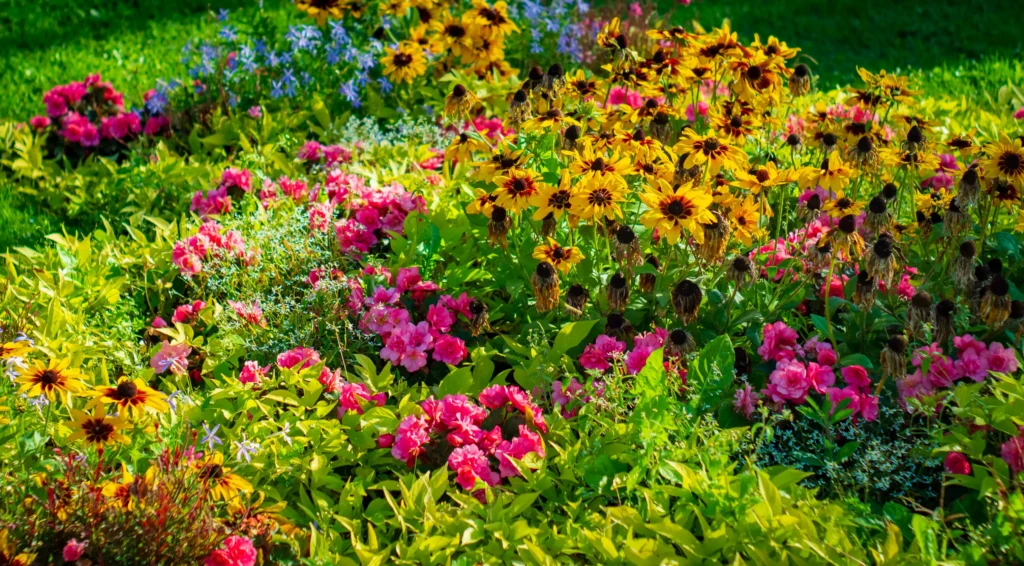
Spring (Mar–May)
Snowdrops, Crocus, Daffodils, Tulips, Alliums, Aquilegia, Hellebores. Plant spring bulbs the previous October–November.
Summer (Jun–Aug)
Roses, Delphiniums, Foxgloves, Lavender, Echinacea, Rudbeckia, Dahlias, Sweet Peas. Deadhead weekly to extend flowering.
Autumn (Sep–Nov)
Sedum, Asters, Anemone, late Dahlias, Nerines, Cyclamen. Leave seed heads for winter structure and birds. Plant next year’s bulbs now.
Front Yard Flower Beds That Work
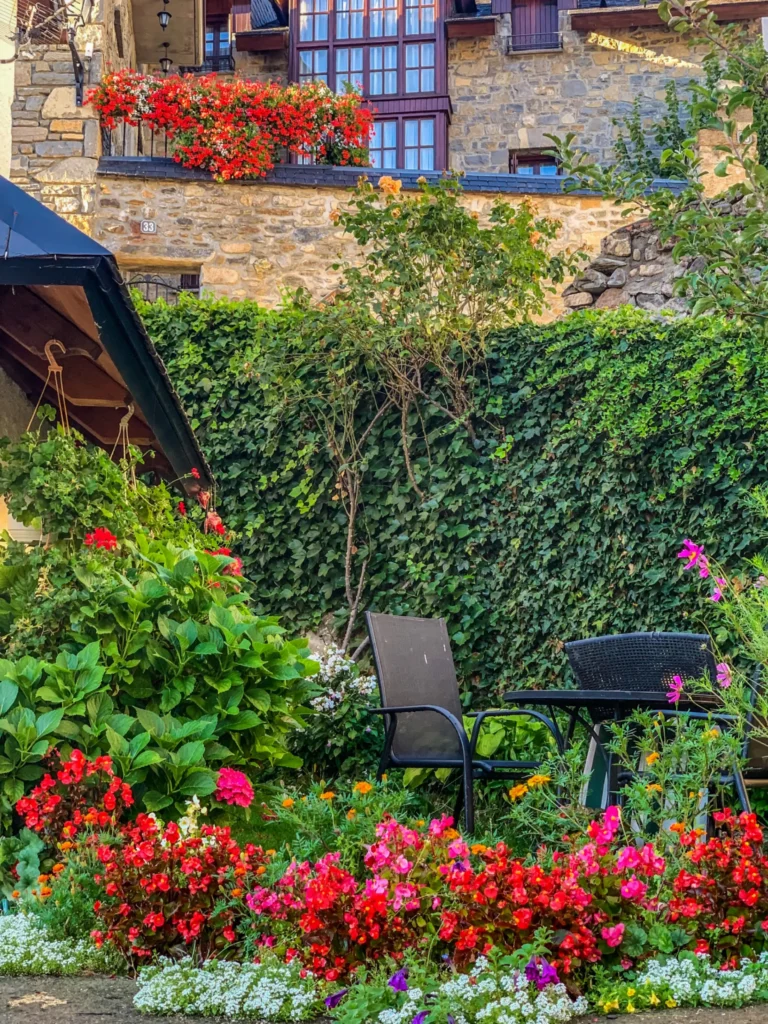
The front garden is the one everybody sees and the one most people get wrong. Four layouts that consistently work:
Foundation planting. Low shrubs and perennials along the base of the house. Keep everything below the windowsill or you’ll be cutting it back twice a year. Lavender, box, salvia, hardy geraniums, and heuchera all hold their shape.
Path edging. Planting either side of the front path frames the walk to the door. Catmint and Alchemilla mollis are ideal — they spill over the edge and soften the line without swallowing the path.
Corner beds. The junction where fence meets path is usually dead space. One taller structural plant with lower planting around it turns it into a focal point.
Mailbox or gatepost planting. A tight cluster of coneflower, black-eyed Susan, and day lilies gives you colour from July to October and asks for almost nothing in return.
Flower Garden FAQs
What is the easiest flower garden to start?
An annual bed with cosmos, zinnias, and sunflowers — fast from seed, abundant colour from early summer to frost. Add lavender and echinacea in year two.
What flowers bloom all summer?
Echinacea, Lavender, Salvia, Verbena bonariensis, repeat-flowering Roses, Rudbeckia, and Dahlias (July to frost).
How much space for a cut flower garden?
Just 1.2m x 3m gives weekly bouquets from May to October.
Best flowers for pollinators?
Lavender, Echinacea, Salvia, Catmint, Borage, Verbena bonariensis, Alliums, single-flowered Dahlias. Avoid double-flowered cultivars — bees can’t reach the nectar.