Flowers That Attract Hummingbirds to Your Porch, Patio or Back Fence
See 9 flowers that attract hummingbirds, from red bee balm to honeysuckle. Simple tips for porches, patios, pots, and back fences.
This post may contain affiliate links. If you buy through them we may earn a small commission at no extra cost to you. It never changes what we recommend — read our affiliate disclosure.
 pin it for later ✳
At a glance
TL;DR
In this list
9 ideas, each with a photo
Filed under
Read time
6 min · updated 12 Oct 2026
A hummingbird will check a porch rail, a patio pot, or a back fence in a few seconds. If there is nothing worth sipping, it moves on. The good news is that the right flowers that attract hummingbirds do most of the work for you. These birds look for tube shaped blooms, bold reds and pinks, and plants that keep flowering for weeks.
You do not need a big yard or years of experience. One hanging basket by the door can start the habit.
This list has nine real garden plants, from tall red bee balm to a honeysuckle climbing a fence. Each one comes with a note on where it fits, what it needs, and one thing to watch for. Some are tough perennials, some are shrubs, and a few look great in pots. A couple need warm winters, so check your own zone before you buy.
Start with one or two. Place them where you can see them from a chair, and give the birds a few weeks to find them.
1. Red Bee Balm Along a Lawn Edge
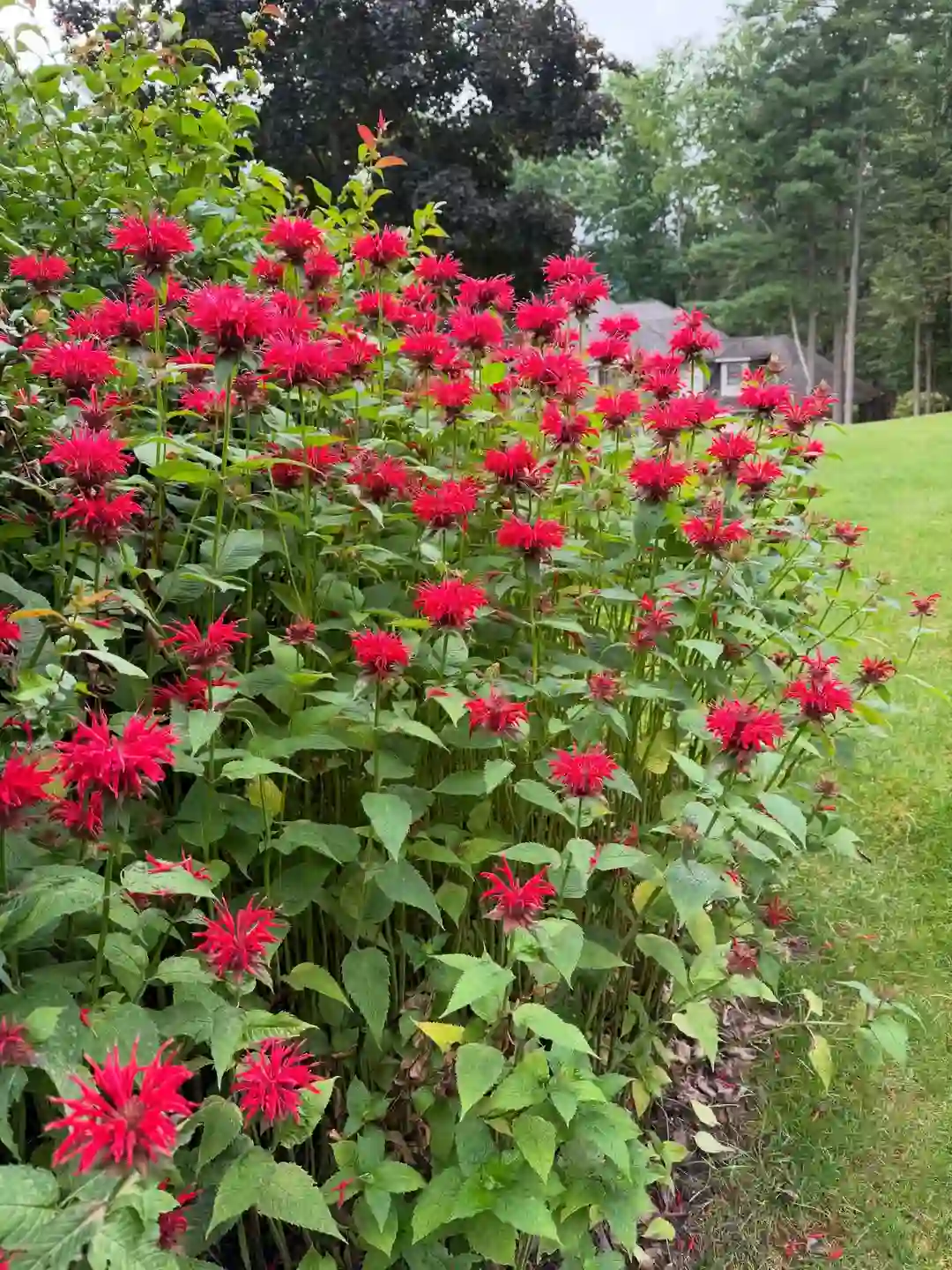
Shaggy red blooms stacked on tall stems, and a hummingbird can spot them from across the yard. This clump sits right at the edge of a lawn, which is a smart spot. The birds have a clear flight path in and out.
- Plant it in sun, where the flowers can open fully
- Leave space between plants so air can move through the leaves
- Cut spent stems back after the first wave to bring on more blooms
Bee balm spreads into a thick patch over time, so give it room along a fence or a bed edge.
2. Cardinal Flower for a Damp Corner
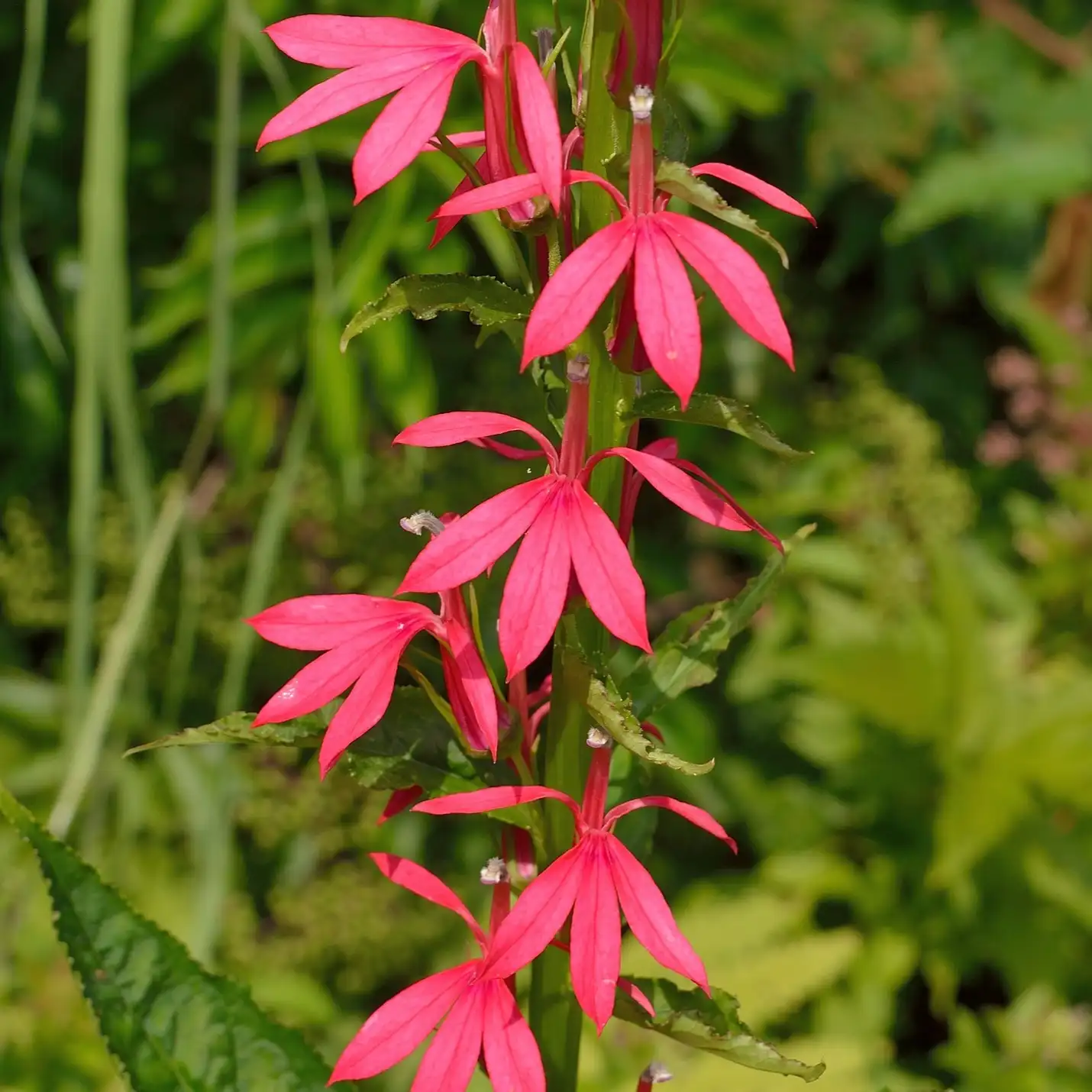
Cardinal flower is the one to grab if you have a soggy spot where other plants sulk. Its red, star shaped blooms climb a tall stem, one above the other, and hummingbirds work their way up the spike. In the photo, the green background makes the red look almost electric.
Here is a simple way to give it a good start:
- Choose a spot that stays damp, like the low end of a bed or near a downspout.
- Add a layer of mulch so the soil holds water.
- Water during dry spells, especially in the first summer.
⚠️ Watch Out
Cardinal flower hates drying out. If the soil turns dusty between waterings, the plant will drop leaves and skip blooms. Pair it with a rain barrel or a drip line.
3. Summersweet, the Shrub That Smells Like Summer
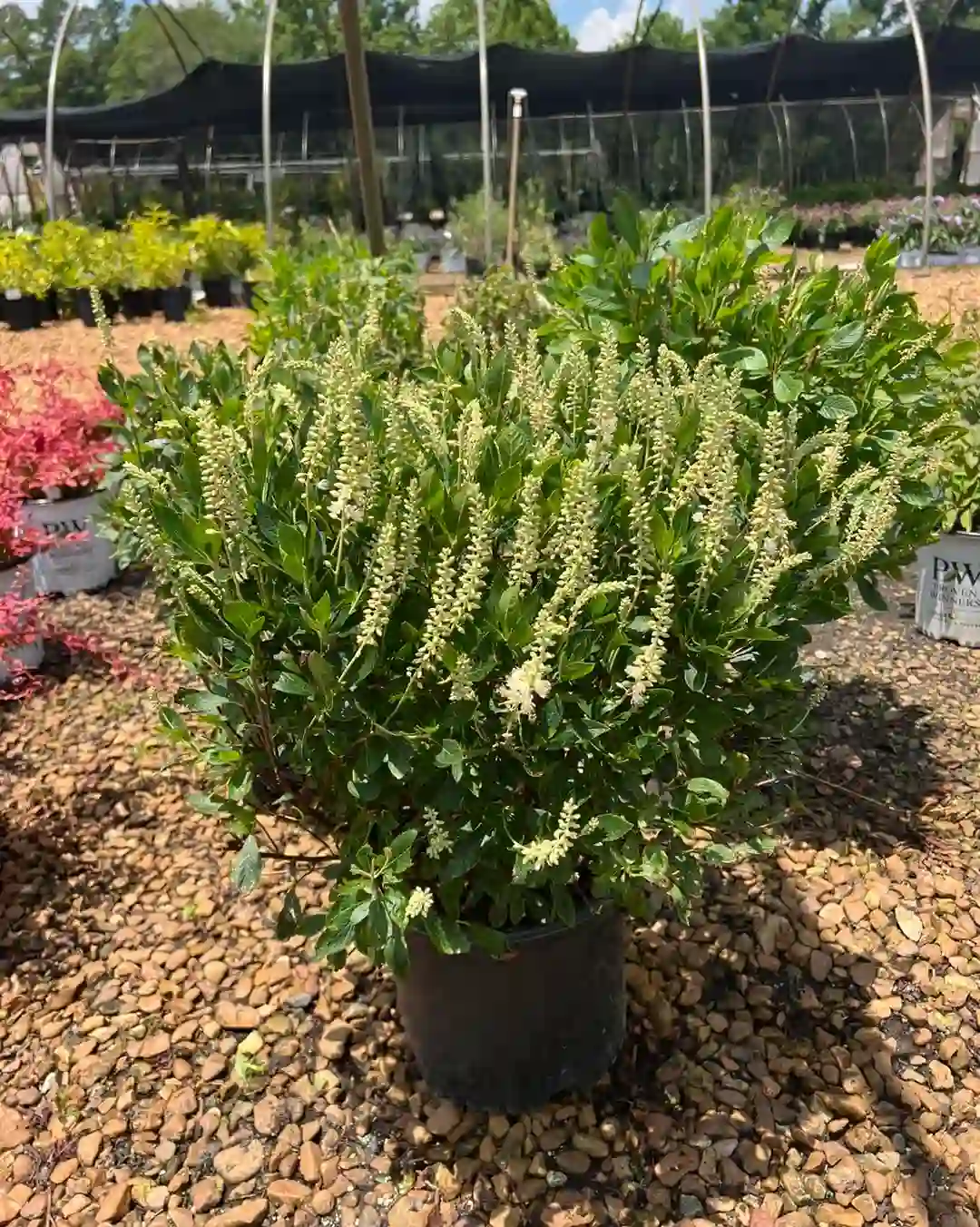
Not every hummingbird plant has to be red. Summersweet carries creamy white spikes in midsummer, and the sweet scent drifts across a patio. Hummingbirds, bees, and butterflies all stop by.
The plant in this photo is still in its nursery pot, which shows how full and rounded it grows even before it hits the ground. Plant it near a bench or a back gate so you catch the fragrance as you walk by.
It does best where the soil stays a little moist. A hot, dry corner is the quickest way to make it unhappy.
Plant it near a seat so you smell it.
Water well through the first summer.
A hot, dry spot against a wall.
Letting the soil bake between waterings.
Idea 04 of 9
4. A Black and Blue Salvia Hanging Basket
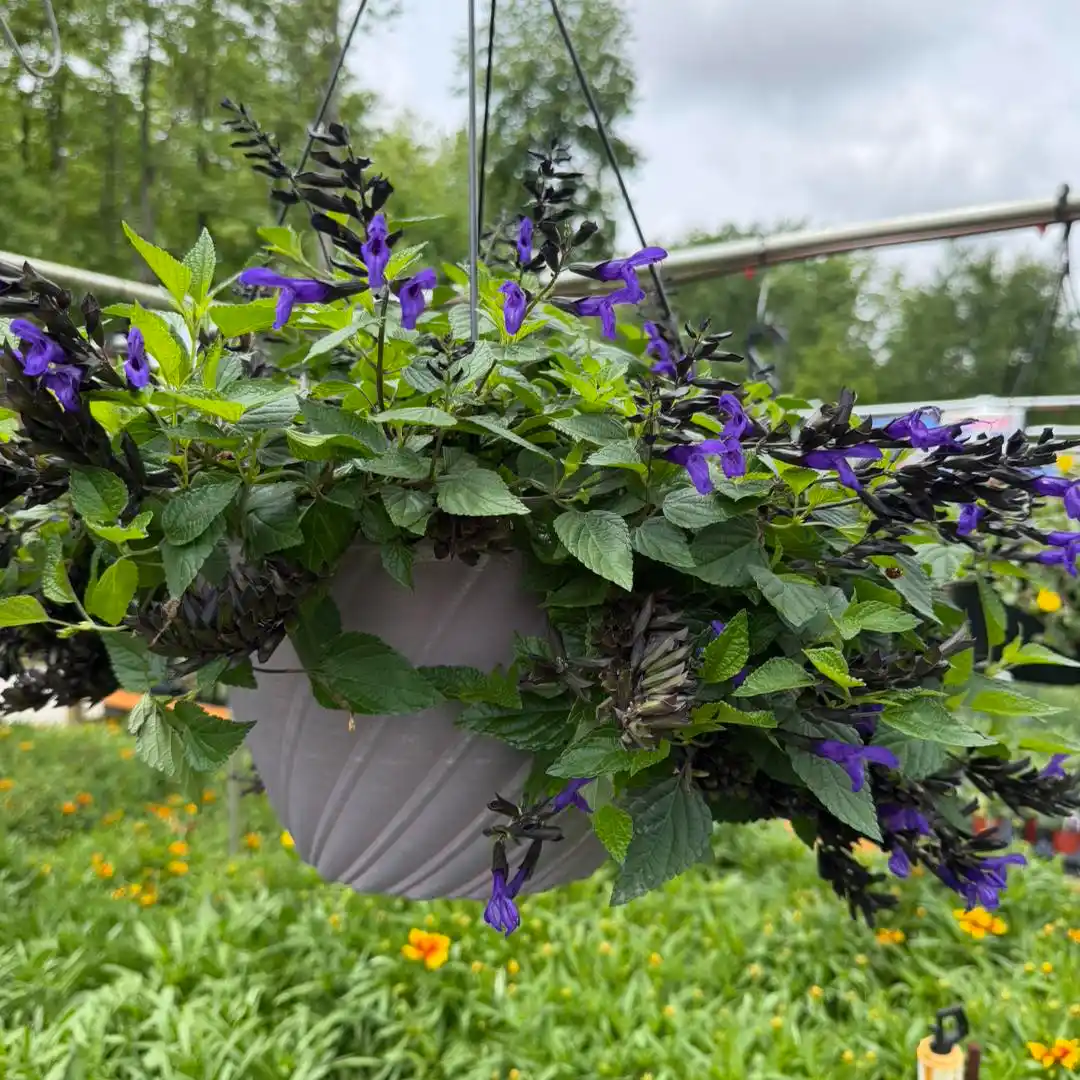
Hang one of these by the door and the hummingbirds will find your porch. The deep blue flowers sit on near black stems, so the color pops against a pale basket and green leaves.
In the ground, this kind of salvia gets big. A basket keeps it compact, and hanging it at eye level means you can watch the birds up close.
- Give it plenty of sun
- Check the soil often in hot weather, since baskets dry fast
- In cold winters, treat it as a summer plant or bring it indoors
A small stool or a hook near a chair makes a nice bird watching corner.
Hanging basket checklist
5. Honeysuckle Climbing a Back Fence
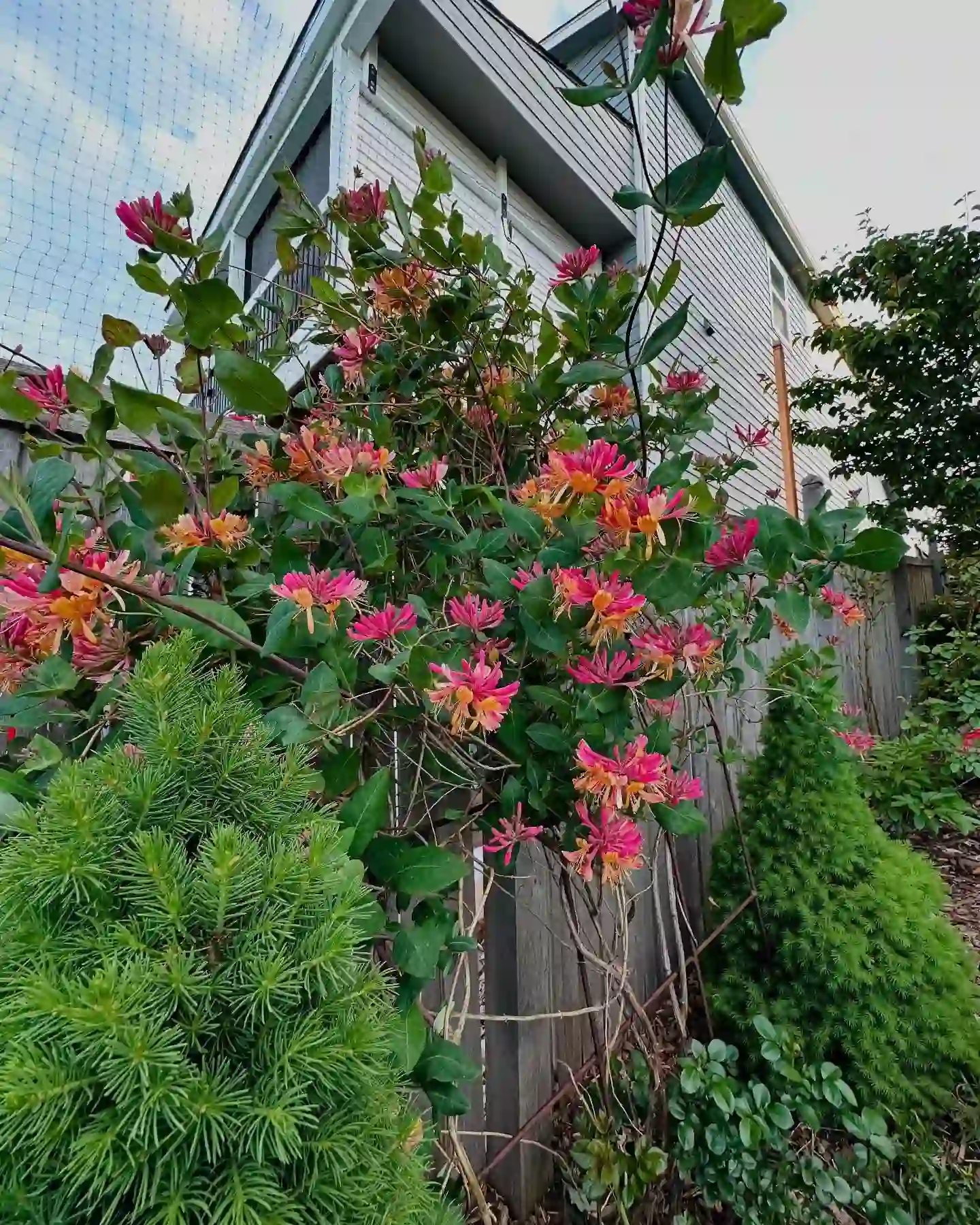
A plain fence panel is wasted space. Here, a honeysuckle has taken over the boards with clusters of pink and orange tubes, and the small evergreen below frames the whole scene.
The long, narrow flowers are shaped for a hummingbird’s bill. The vine does the work and you get a wall of color, with no extra beds to dig.
One warning. Some honeysuckles spread too hard and are a problem in many areas. Ask your local nursery for a native or well behaved type before you plant.
A bare wood fence with nothing for a hummingbird to visit.
A fence covered in tube shaped blooms that bring the birds to eye level.
6. Snail Vine on a Porch Trellis
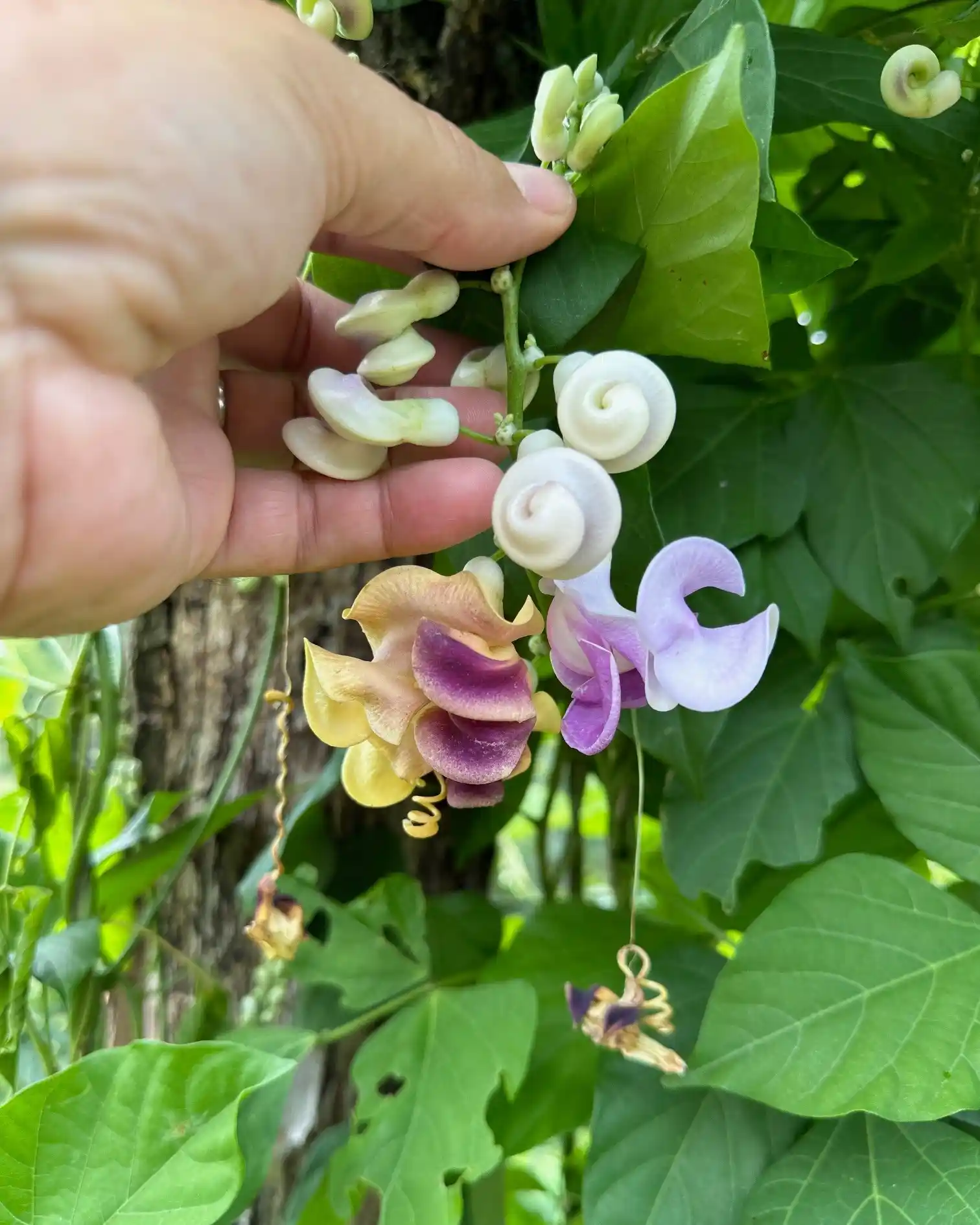
These flowers curl like little seashells, and that alone makes people stop at the porch. The blooms in this photo shift from cream to lilac to yellow and plum on the same vine.
Be honest about its role. Snail vine is loved by bees and butterflies, and hummingbirds may visit, but it is not the top pick on this list. Use it as a showpiece and plant a red tube flower close by to do the heavy lifting.
Set up a trellis, string, or rail before planting.
Plant in a sunny, warm spot after the last frost.
Add a red or orange tube flower nearby for the hummingbirds.
7. Red Fairy Duster in a Patio Pot
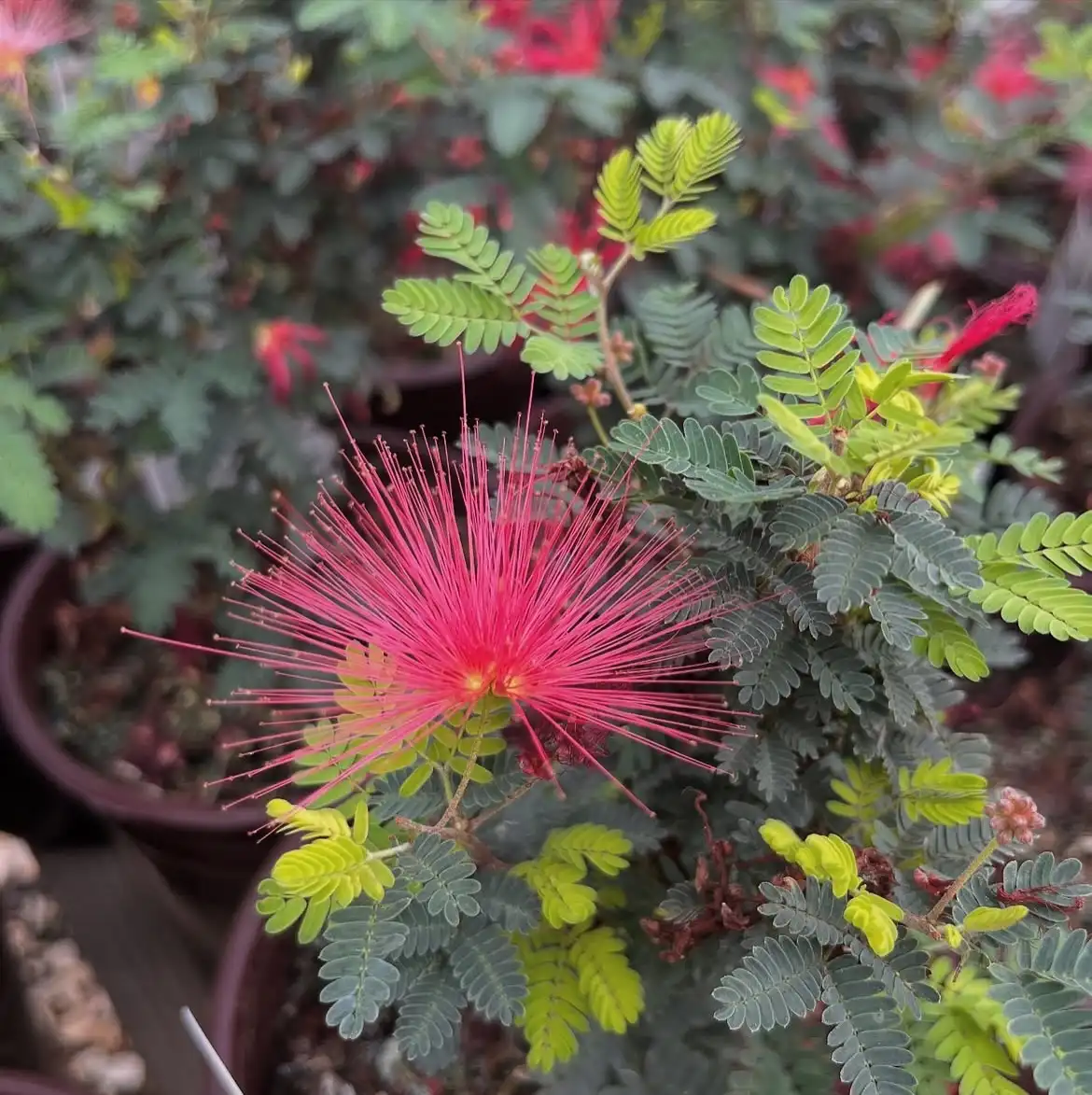
One red puff, hundreds of fine threads, and leaves like tiny green feathers. Fairy duster looks like nothing else on the patio, and the red color is a magnet for hummingbirds.
The nursery pots in this photo show how well it fits a container. Put it in a sunny corner, use a mix that drains fast, and let it dry a bit between drinks.
It likes warmth. In places with hard freezes, keep it in a pot so you can move it to shelter.
Idea 08 of 9
8. Texas Mountain Laurel as a Spring Backdrop
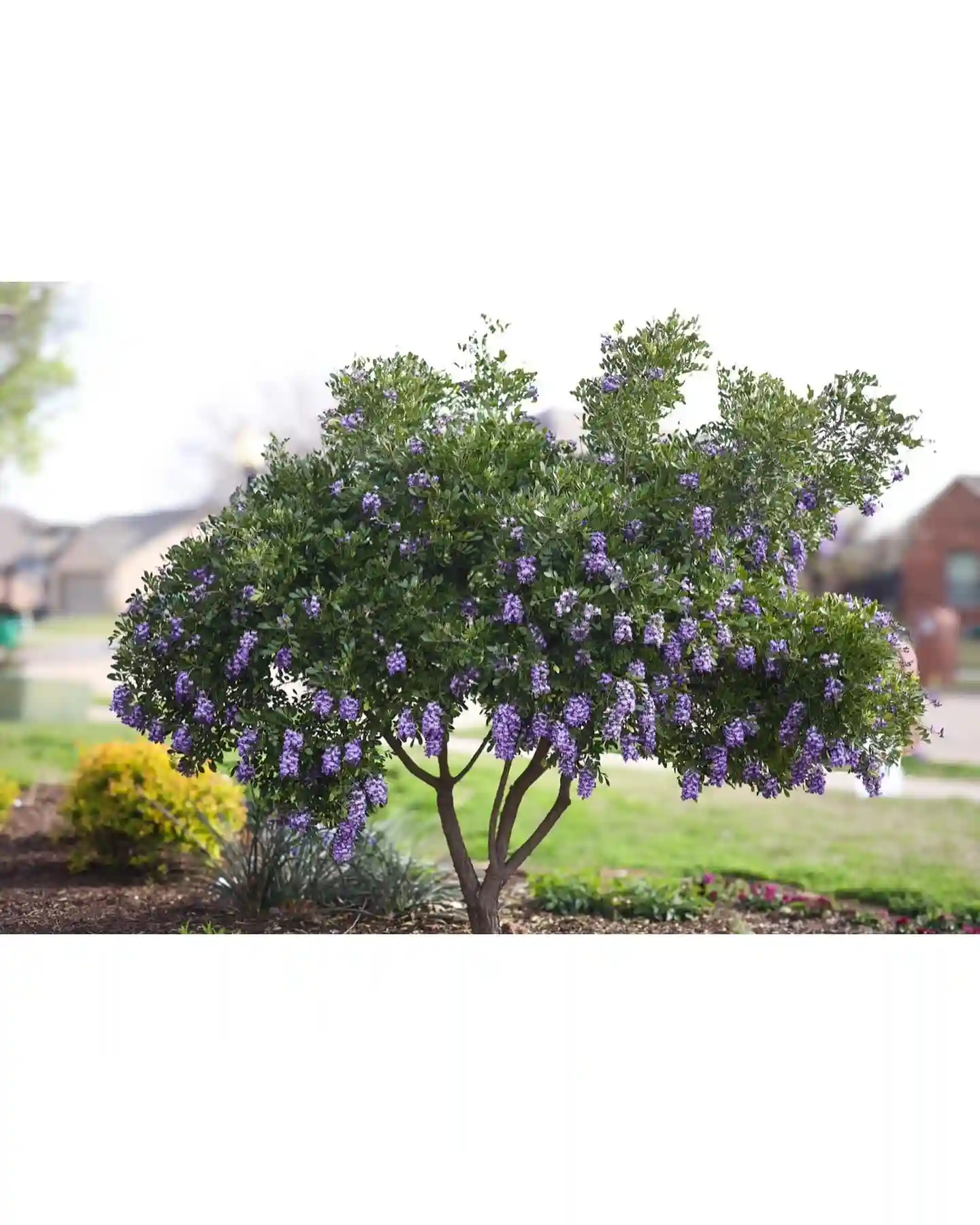
Small tree, big purple clusters, and a front yard that suddenly looks planned. Texas mountain laurel blooms early in spring with grape colored flowers that hang like wisteria.
Here is the honest part. It is better known as a bee plant than a hummingbird plant. Its job in this list is the backdrop. Plant red or orange perennials underneath, and the birds get a reason to stay long after the purple fades.
It wants sun and soil that drains well. One safety note: the seeds are poisonous, so think twice before planting it where small kids or pets play.
| The tree | Red perennials below |
|---|---|
| Blooms early in spring | Bloom through summer |
| Gives height and shape | Give the nectar hummingbirds want |
| Needs sharp drainage | Match them to the same sunny bed |
9. Pink Bell Flowers Hanging Under Green Leaves
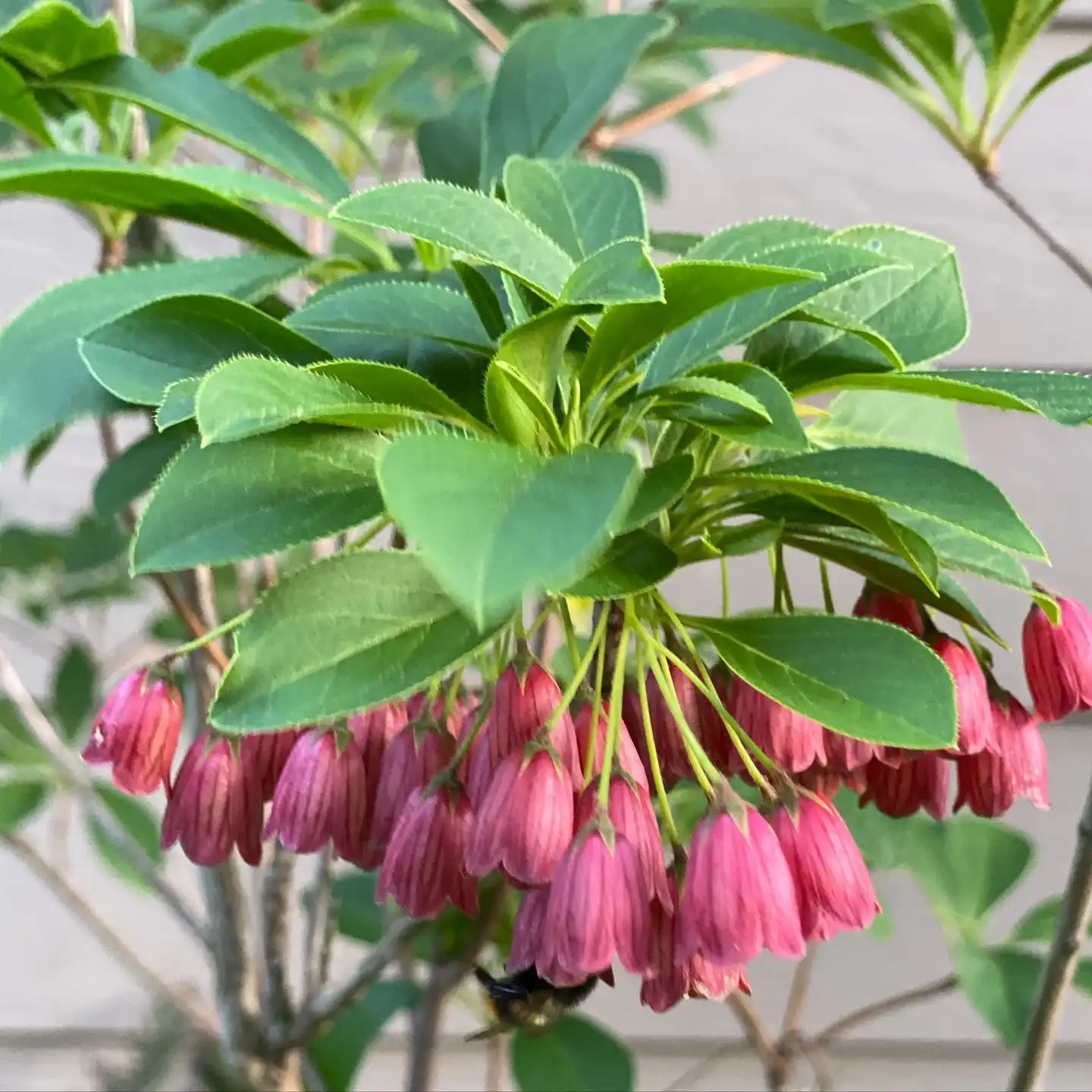
Look under the leaves. Pink bells with fine red stripes hang in a tight bunch, and a bumblebee is already working the cluster in this photo. Hanging, bell shaped blooms are easy for hovering birds to reach.
This shrub looks like a woodland plant that likes some shade and soil that is not too sweet. Put it where you can look up into the blooms, like beside a porch step or at the edge of a patio.
When the flowers hang low and the leaves cover the top, the plant stays tidy and the nectar stays easy to find.
Hanging bell flowers put nectar where a hovering bird can reach it, and the leaves above keep the blooms protected.
Final Thoughts on Flowers That Attract Hummingbirds
You do not need all nine plants. Pick one tall red perennial, one container plant, and one climber for the fence, and you have covered the porch, the patio, and the back fence. The best flowers that attract hummingbirds are the ones that bloom in your own yard for weeks, so match each plant to your sun, soil, and winter weather.
Place them where you can see them from a chair, keep the soil right, and give the birds time to learn your yard. Save your favorite idea from this list to your Pinterest board so it is ready when planting time comes around.
Related Garden Guides
- Dahlia flower gardens: late-summer color and armfuls of cut blooms.
- Hanging plants: 10 ways to hang plants at the right height.
- Pink flower gardens: 8 schemes that keep pink soft instead of loud.
- Browse every guide on flower garden ideas: beds, borders and color plans.
Written by
Nina Calloway
Nina founded gardenkinds after nine years of gardening, starting in a 200 sq ft London backyard and now on a half-acre cottage plot in Kent. She writes the cottage, flower and small-garden guides, and grows almost everything she recommends before it goes on the site.
Stuck on your own garden?
Send us your soil, light and a photo. Nina answers a few reader questions every month, and the best ones end up in an update to this list.
Keep Reading.