Tropical Garden Design for Cool Climates: 10 Lush Looks That Survive Winter
Try tropical garden design in a cold climate. See 10 lush ideas with hardy plants, bold leaves, and simple winter tricks that keep the jungle look alive.
This post may contain affiliate links. If you buy through them we may earn a small commission at no extra cost to you. It never changes what we recommend — read our affiliate disclosure.
 pin it for later ✳
At a glance
TL;DR
In this list
10 ideas, each with a photo
Filed under
Read time
6 min · updated 12 Oct 2026
Big leaves make a garden feel like a holiday. The trouble is that a cold winter does not care how good your garden looked in July. Many gardeners love the jungle look but assume it only works where frost never shows up.
It does not have to be that way. The trick is to borrow the shapes, layers, and textures of a tropical garden design, then fill them with plants that can handle a hard freeze, or with tender ones you can move and protect without much effort.
This post shows ten real gardens packed with giant leaves, slim palms, red foliage, and tidy paths. Under each one you get a plain plan for copying the look in a cooler place, with hardy swaps, simple winter habits, and small layout ideas. Some ideas suit a tiny courtyard. Others work along a long fence.
Save the ones that match your space, and start with the plants that give the most drama for the least work.
1. Pair Big Leaves With a White Fence So the Green Pops
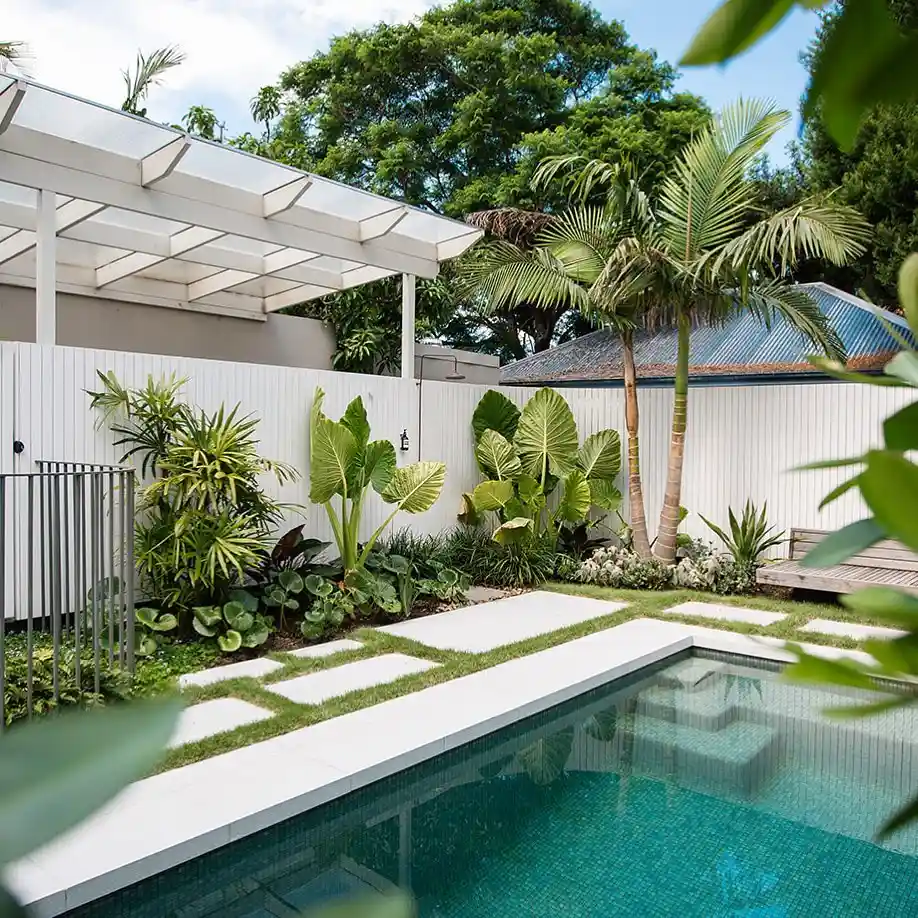
A pale fence does half the work here. Every leaf looks sharper against it.
- Slim palms add height without blocking the light.
- Wide, paddle shaped leaves sit low in front of them.
- Pale slabs set in grass keep the ground soft and simple.
For a cold garden, a windmill palm copies the trunk and fan shape and takes frost well once it has settled in. Fatsia fills the big leaf role and stays green all winter. Paint the fence white or soft grey before you plant anything. It costs less than any plant and changes the whole picture.
2. Light Up Banana Style Leaves With Low Spotlights
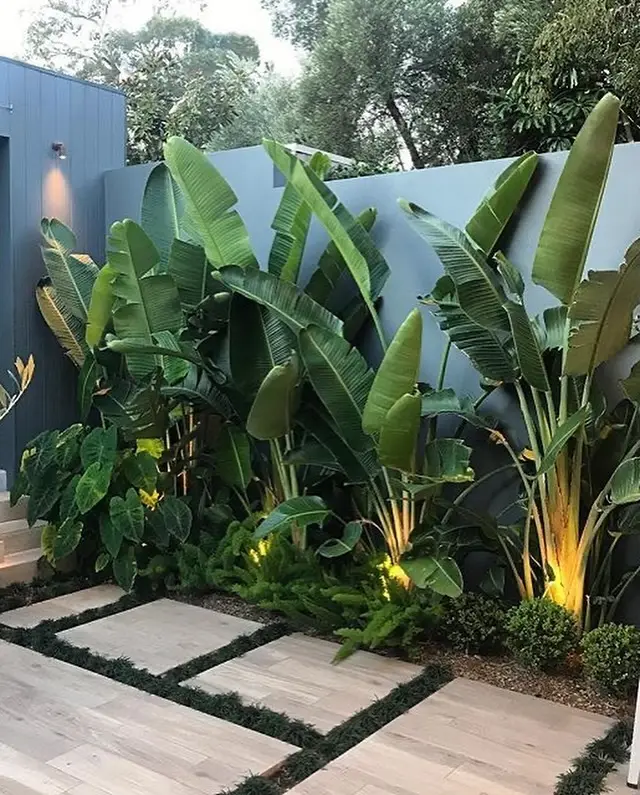
Winter nights come early in a cold climate, so garden lighting is not a bonus. It is how you enjoy the garden for half the year. Here, small ground lights point up through tall paddle leaves and throw a warm glow across a grey wall. Dark strips between the pavers draw tidy lines and keep the path crisp.
Copy it with a hardy banana or a big evergreen like fatsia, and tuck one light at the base of each clump. Ferns and clipped round shrubs can fill the lower layer.
💡 Quick Tip
Aim each light up from the base of the plant. The leaves catch the glow and the wall behind turns into a soft backdrop. Use outdoor rated low voltage lights and keep cables out of the way of your spade.
3. Turn a Small Courtyard Into a Leaf Wall
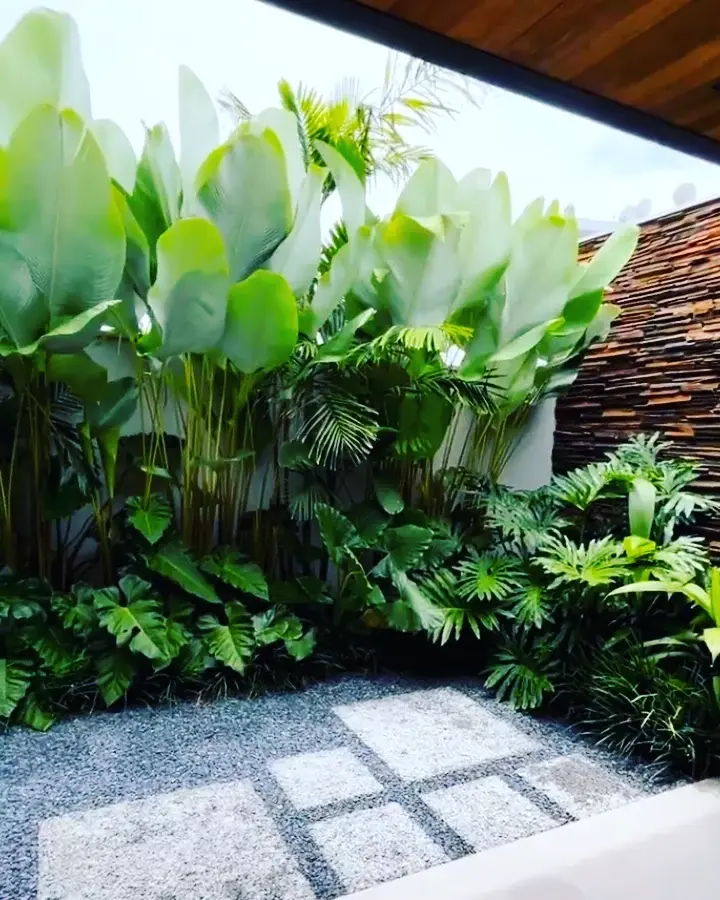
Tight space, big payoff. Build it from the back forward:
- Tall, pale green paddle leaves go against the wall.
- Feathery palm fronds and ferns fill the middle.
- Low, lobed leaves sit at the front, right beside the path.
The floor here is fine gravel with pale square pavers, which stays tidy and drains fast in wet months. In a cooler climate, a hardy banana and fatsia handle the top layers, and hardy ferns cover the middle. A warm wall also holds a little heat overnight, so plant against it.
Idea 04 of 10
4. Edge a Path With Dark Stones and Red Leaves
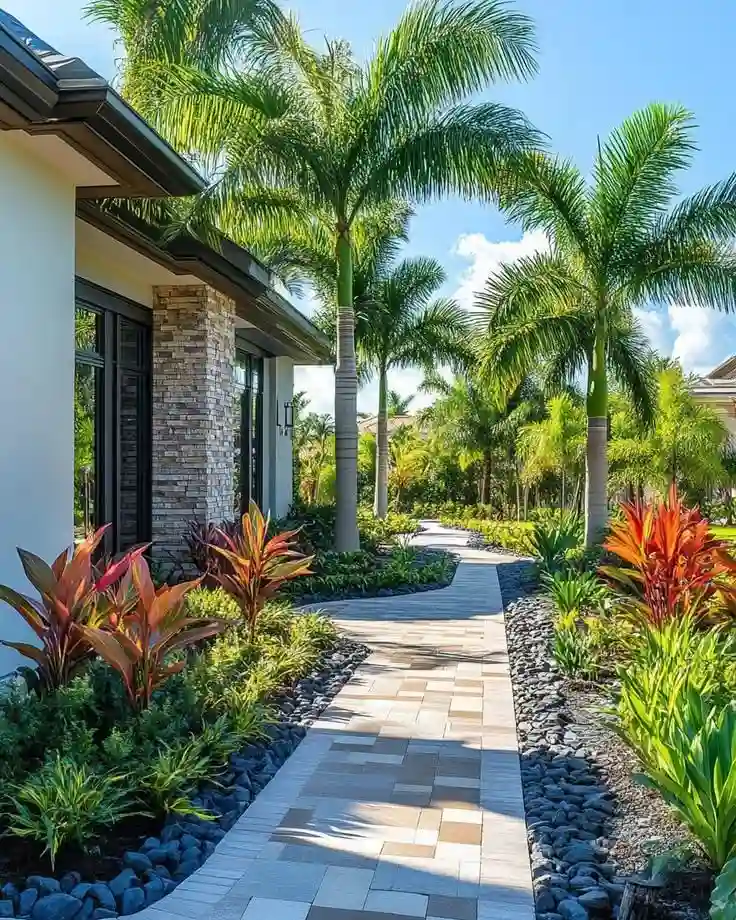
Red leaves stay put in January. Flowers do not.
In this photo, a paved path runs between two beds edged with dark river stones, and clumps of red and orange foliage sit right at the corners. The dark stones make the color look brighter, and the path pulls your eye straight to the tall palms at the back.
In a cold garden, swap the palms for a hardy fan palm and use red cordyline or phormium for the colored leaves. Plant them in groups of three, not as lonely singles.
Lay a path with a gentle bend so the beds on each side look full.
Line both edges with dark stones to hold the soil and sharpen the color.
Plant red leaves in groups of three, with green plants filling the gaps.
5. Curve the Lawn So a Small Garden Feels Bigger
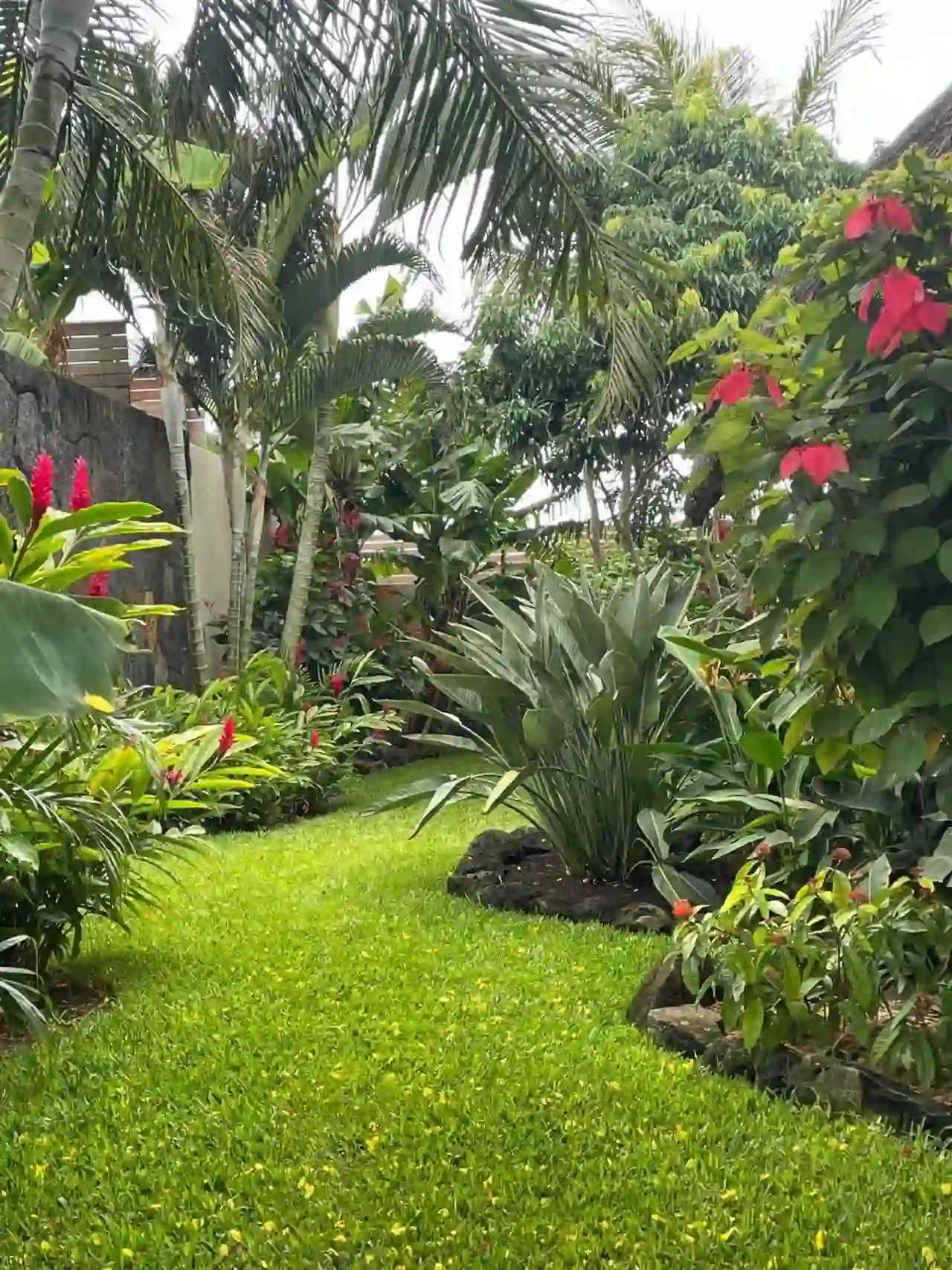
Here, the lawn bends around the beds, so you cannot see where the garden ends. That small trick makes a narrow yard feel like it keeps going. Dark rock edges mark the line between grass and plants, and red flower spikes and a leafy red shrub add color against a lot of green.
The layers do the rest. Palms stand at the back, broad leaves sit in the middle, and low plants hug the grass. For a cooler garden, use hardy ferns and fatsia for the mid layer, and keep the red spikes in pots you can move inside.
Curve the lawn edge around each bed.
Use dark rock to separate grass from soil.
Straight edges that show the whole yard at once.
Bare soil gaps between the plants.
6. Plant a Fence Line in Three Heights
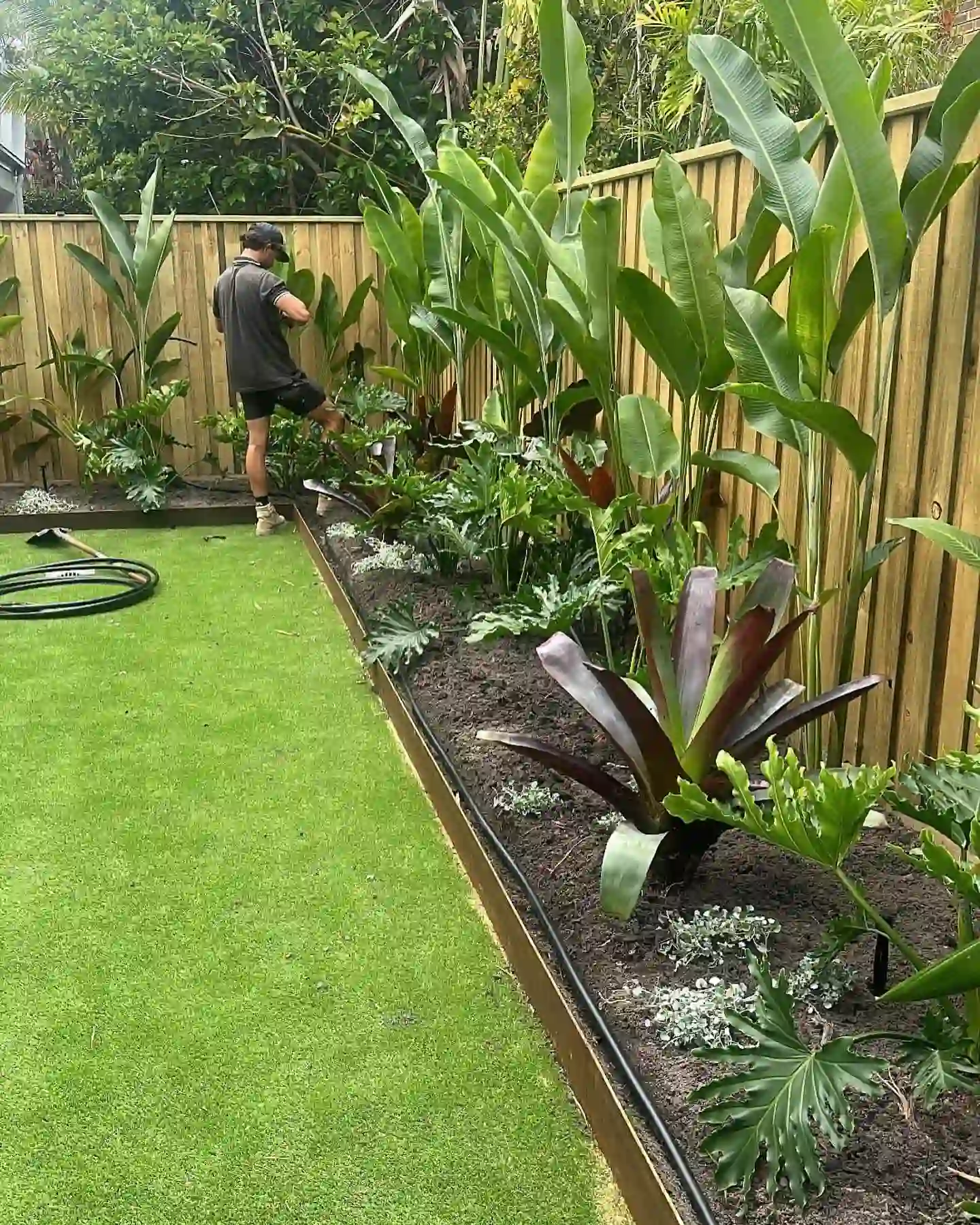
The person in this photo is mid planting, which makes it a handy build guide. Tall paddle leaves stand against the timber fence. Lobed leaves fill the middle. A dark spiky rosette and silvery trailing plants sit at the front. A thin black irrigation line runs along the bed, and a metal edge keeps the soil off the lawn.
Watch the wind. Big tropical leaves shred easily, so a solid fence like this one doubles as shelter.
Fence line plan
7. Mix Red and Yellow Leaves in Front of a Green Hedge
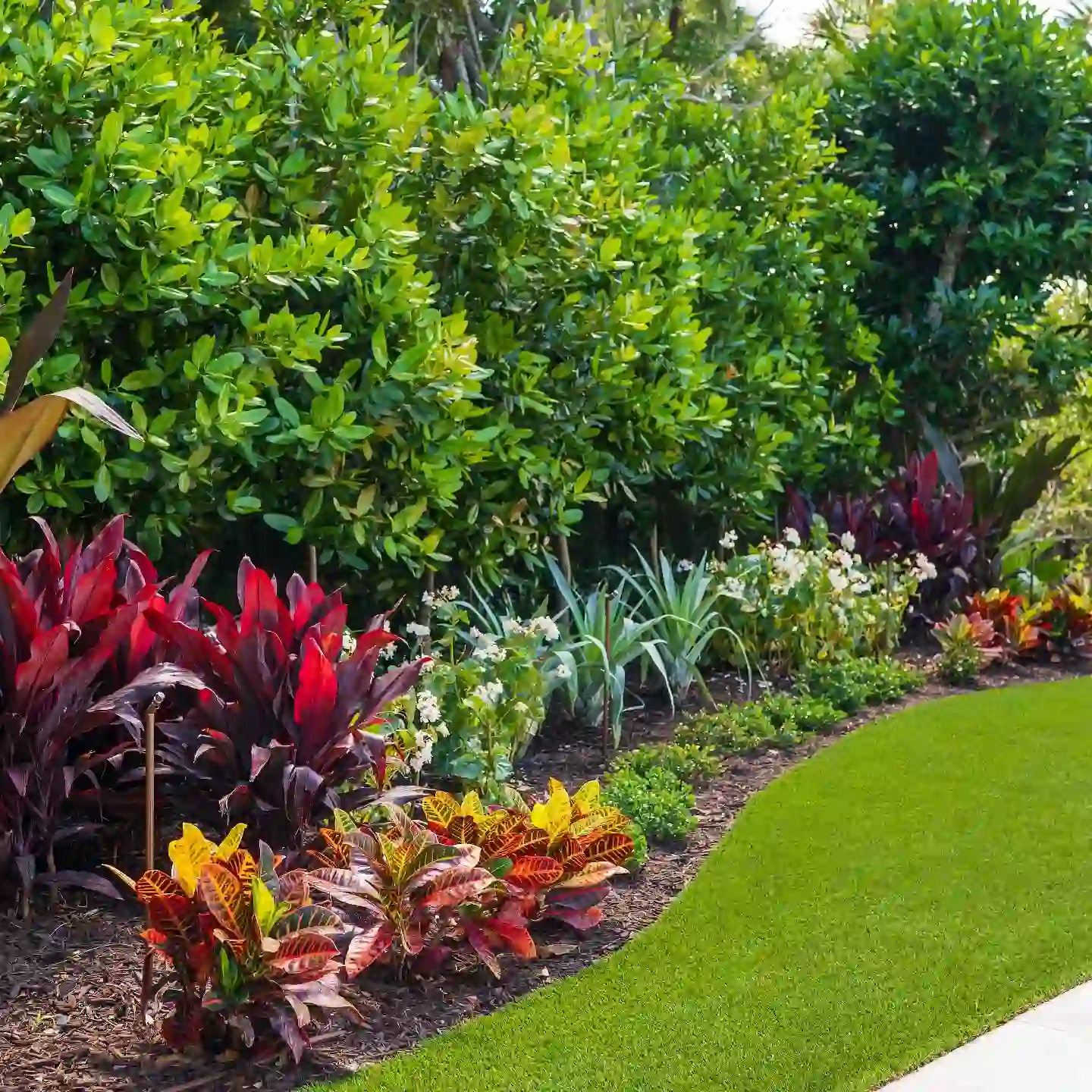
A solid green hedge is the best stage for color. In this photo, glossy shrubs rise at the back, while red spiky foliage, striped orange and yellow leaves, and a few white blooms sit in a curved mulch bed along the lawn.
- Colorful leaves go at the front, where you see them first.
- White flowers calm down the bright reds.
- Mulch keeps the bed neat and holds in moisture.
The striped orange plants like real warmth. In a cold climate, grow them in pots you bring indoors, or use coleus in summer and heuchera for leaf color that lasts through winter.
A green hedge with a bare strip of mulch at its foot.
The same strip with bands of red, orange, and yellow leaves and a few white flowers.
Idea 08 of 10
8. Soften Hard Concrete With Giant Leaves
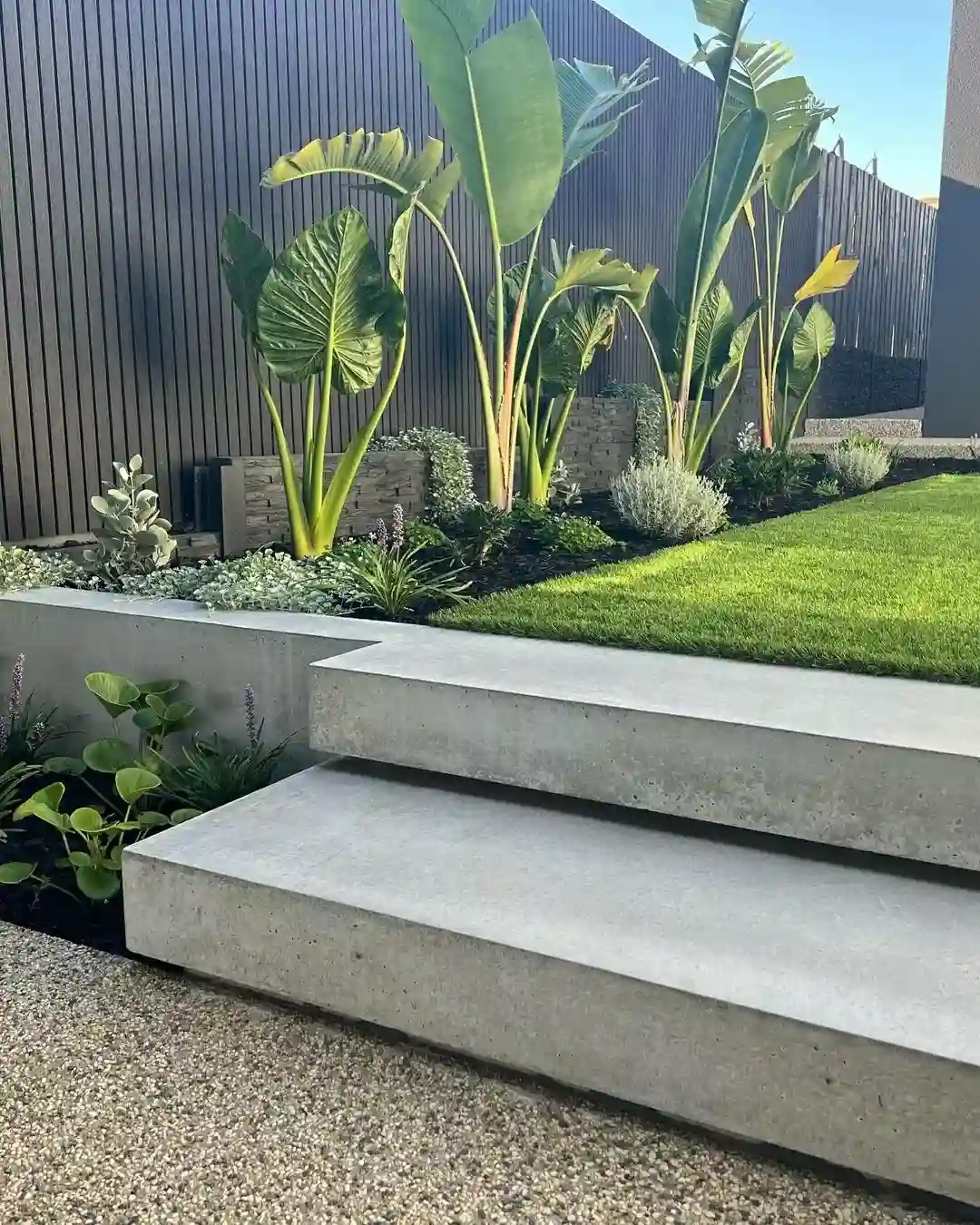
Concrete steps and a dark slatted fence can feel stark. Here, tall paddle leaves and one broad, arrow shaped leaf soften the lines, while silver foliage near the base repeats the grey of the concrete. Nothing fights, so the plants get all the attention.
In a cooler garden, hardy banana and fatsia handle the big leaf job. Lamb’s ear or dusty miller can play the silver part. Pair every hard surface with one soft partner, as the table shows.
| Hard feature | Soft partner |
|---|---|
| Concrete steps | Silver, trailing plants at the base |
| Dark slat fence | Pale green paddle leaves |
| Gravel drive | Low, glossy round leaves |
9. Keep Tender Plants in Pots Near the Door
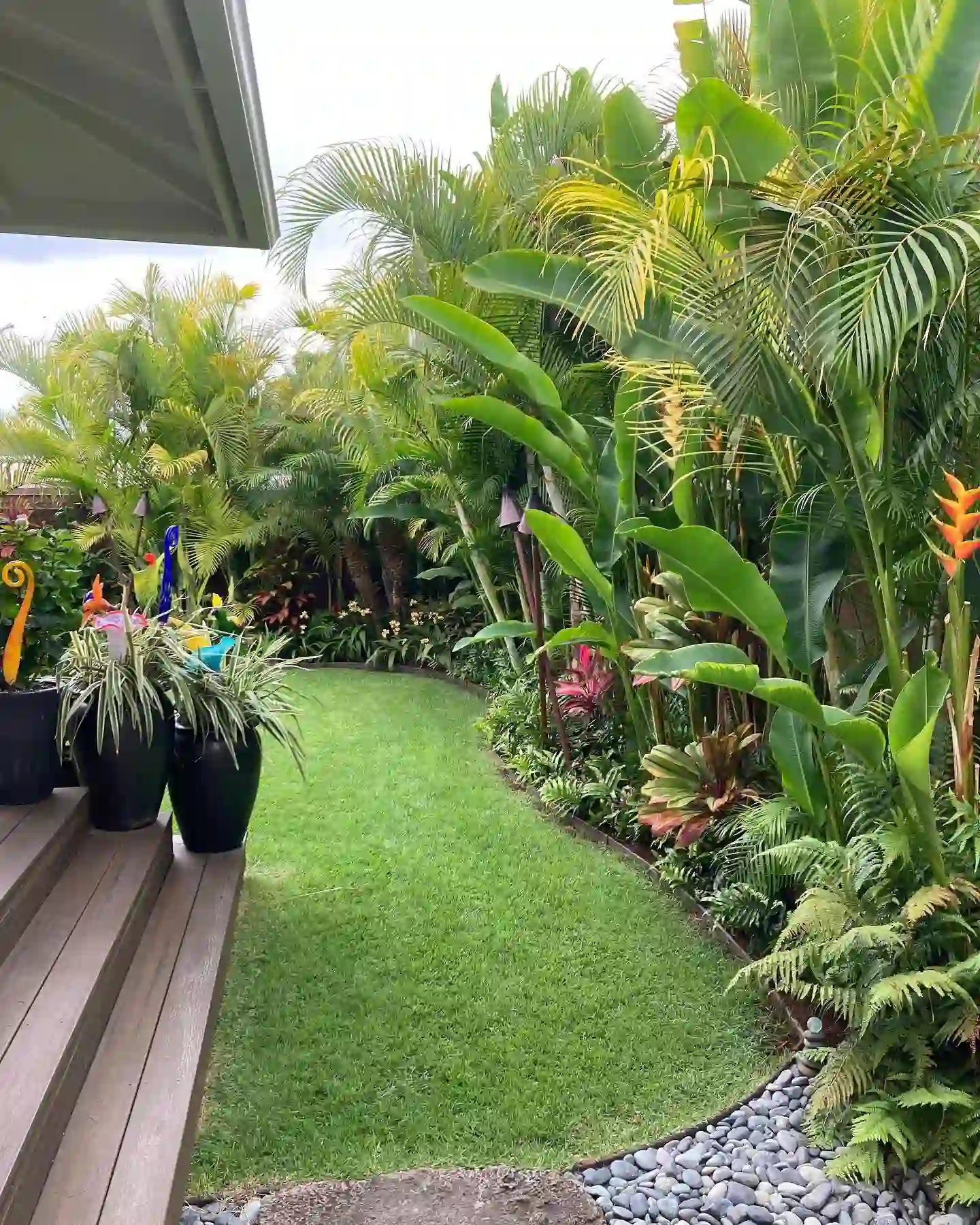
Every cold climate jungle needs a rescue plan. In this photo, big black pots sit on the deck steps, filled with a striped, grassy plant, with a curved lawn and a wall of palms, broad leaves, and ferns behind them.
- Plant the back wall with hardy choices that stay outside all winter.
- Put the tender favorites in pots near the steps.
- Move the pots to a bright porch or garage before the first hard frost.
A pebble edge along the bed keeps the curve crisp and drains well.
Hardy plants make the jungle. Potted plants add the wow. When frost comes, only the pots need to move.
10. Build a Raised Stone Bed for Winter Drainage
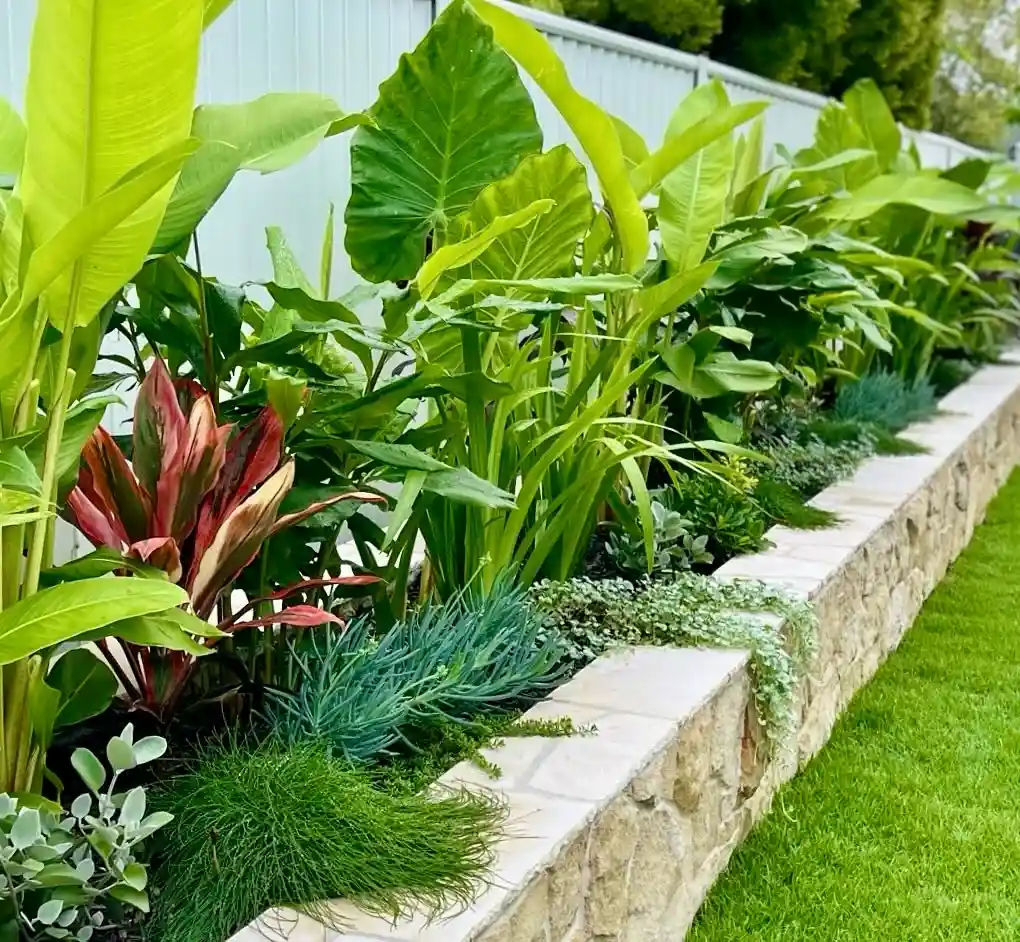
Cold and wet kills more tropical looking plants than cold alone. A raised bed with a stone cap lifts the roots out of soggy soil, and it gives you a neat seat or edge too.
This bed packs in a lot of texture. Broad leaves sit at the back, a red strappy plant adds color, blue grey spikes and fine grassy tufts fill the front, and silver trailing plants spill over the stone. Raise the soil, add grit for drainage, and your leafy plants have a much better shot at making it through a wet winter.
Raised bed layers
Final Thoughts on Tropical Garden Design in the Cold
A cold winter does not have to end the jungle look. Choose a few hardy plants with big, bold leaves, add a solid backdrop, give the roots good drainage, and keep your most tender favorites in pots you can move. Strong tropical garden design is mostly about shape and layers, not about a warm climate.
Start small. Plant one fence line or one courtyard corner this season, then add more as you see what thrives in your yard. Pick your favorite idea from this list and save it to your Pinterest board, so it is ready when planting time comes around.
Related Garden Guides
- Woodland garden design: fern paths and moss floors for shady yards.
- Greenhouse gardens: brick floors, bistro nooks and winter mornings outside.
- Flower beds with hostas: 11 shady layouts built on leaf texture.
- Browse every guide on flower garden ideas: beds, borders and color plans.
Written by
Nina Calloway
Nina founded gardenkinds after nine years of gardening, starting in a 200 sq ft London backyard and now on a half-acre cottage plot in Kent. She writes the cottage, flower and small-garden guides, and grows almost everything she recommends before it goes on the site.
Stuck on your own garden?
Send us your soil, light and a photo. Nina answers a few reader questions every month, and the best ones end up in an update to this list.
Keep Reading.