Brick Planters You Can Build in a Weekend (Even If You’ve Never Laid a Brick)
Eight real brick planter builds to copy, from stepped patio boxes and round upright-brick rings to a curved bed around an olive tree. Start small and finish in a weekend.
This post may contain affiliate links. If you buy through them we may earn a small commission at no extra cost to you. It never changes what we recommend — read our affiliate disclosure.
 pin it for later ✳
At a glance
TL;DR
In this list
8 ideas, each with a photo
Filed under
Read time
5 min · updated 9 Oct 2026
Laying brick sounds like a job for a professional, and that is what stops most people before they start. You see a curved wall or a neat raised bed and assume it took years of training. It did not have to. A planter is just a few courses of brick around a pile of good soil, and a short straight run is far easier than a house wall.
Below are eight real garden builds to copy. Some are tall and square, some are round, and one curves around an olive tree. Each shows a different way to use bricks: laid flat, stood on end, mixed colors, old reclaimed stock. They fit tiny courtyards and wide lawns alike.
The brick planters here hold herbs, vegetables, flowers, and even small fruit trees. Pick the shape that matches your space, then use the quick notes under each photo to plan your own. Keep the first build low and small. A weekend is plenty for that, and you will be laying your own bricks before you know it.
1. Stepped Brick Planters That Frame Your Patio
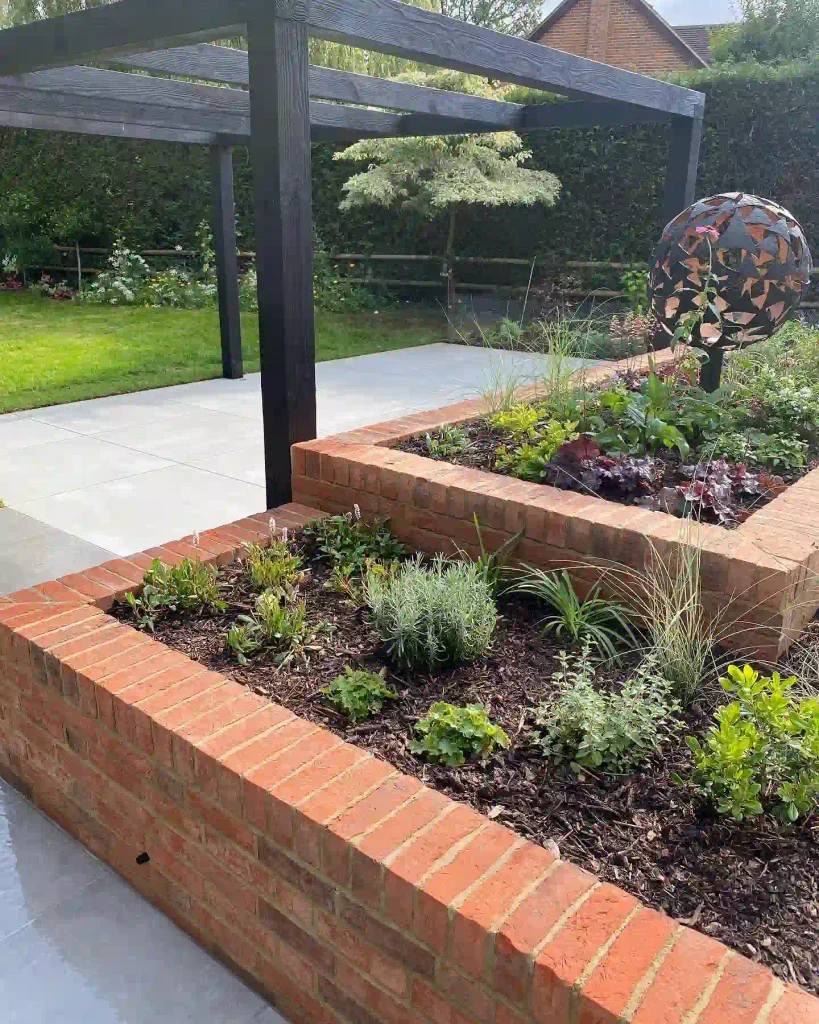
Two brick boxes are enough to give a plain patio some edges. Here they sit right at the paving, one stepping forward of the other, with a dark pergola behind.
- Bricks laid on their sides finish the top and make a neat ledge.
- Bark mulch covers the soil and keeps the surface tidy.
- Silver lavender, soft grasses, and deep purple foliage share the space.
Build one box first. By the time you start the second, the rhythm comes easy.
2. Round Brick Planters Built From Upright Bricks
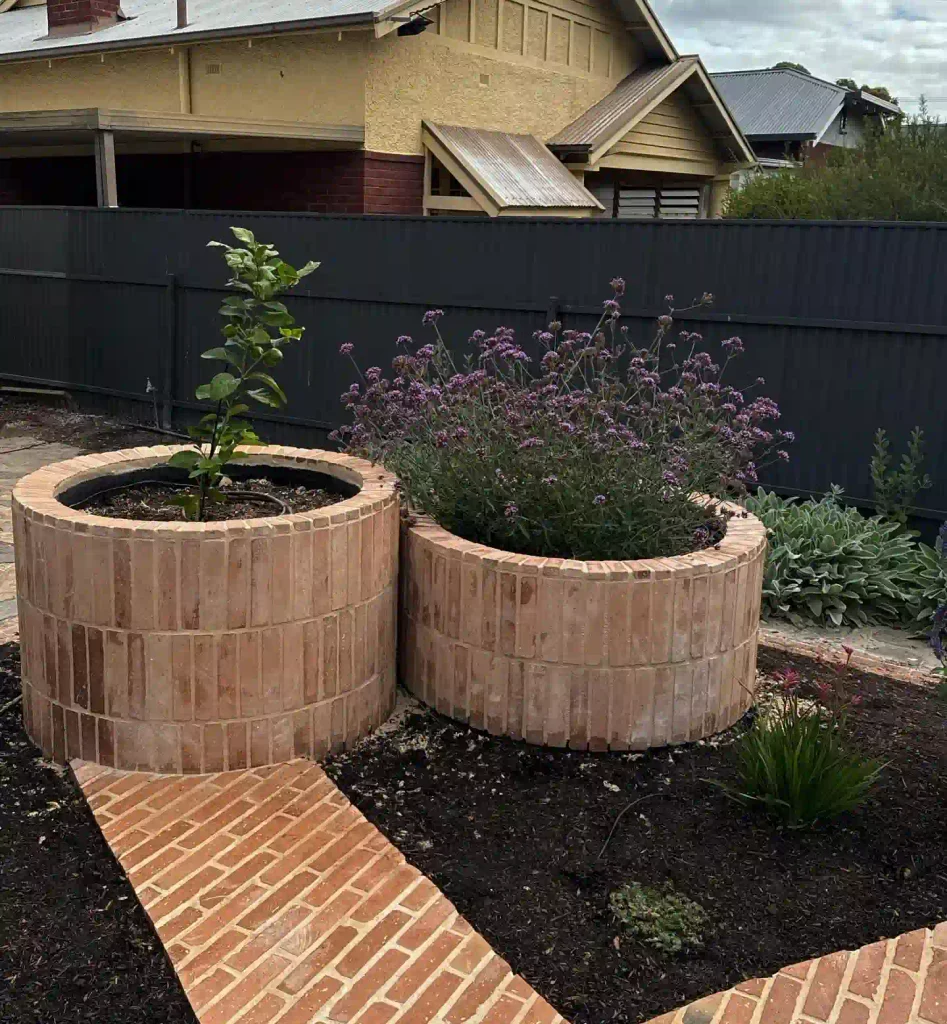
Round beats square when you want a soft focal point. These two planters are built from bricks stood on end, stacked in rings, so the walls look like neat pleated drums.
One holds a young citrus tree with a thin watering line running in. The other overflows with purple verbena. Set against a dark fence, the pale brick and the flowers really show.
Curves take more patience than straight walls, so lay the first ring dry before any mortar goes on.
Before you lay the first brick
3. A Simple Rectangle Along the Fence Line
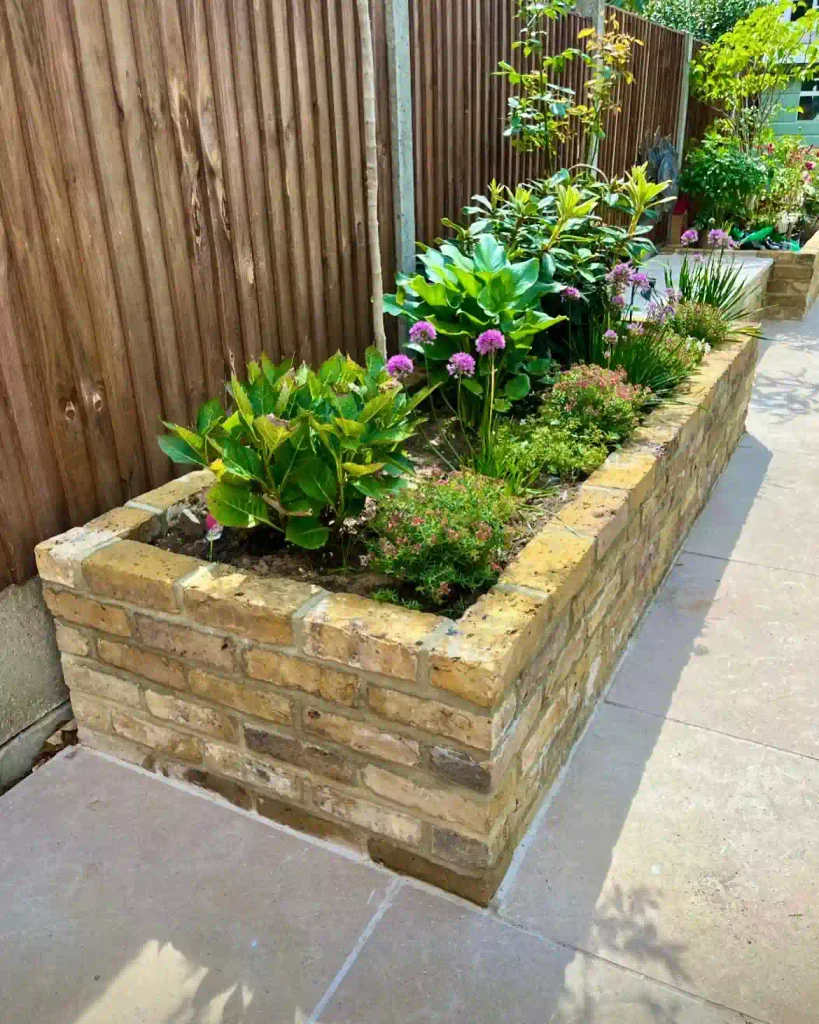
Worn yellow and cream bricks give this planter a lived in look from day one. It runs along a fence like a long bench for plants.
The shape is the easiest of all to build: four straight walls and square corners. Inside, leafy shrubs and big hosta leaves sit low, while purple alliums rise above them on tall stems.
Straight lines forgive beginners. Save the curves for your second project.
Check each corner is square before the mortar sets.
Put tall plants at the back and low leaves at the front.
Guessing the line by eye on a long wall.
Crowding every plant right at the brick edge.
Idea 04 of 08
4. A Curved Brick Planter Around a Tree
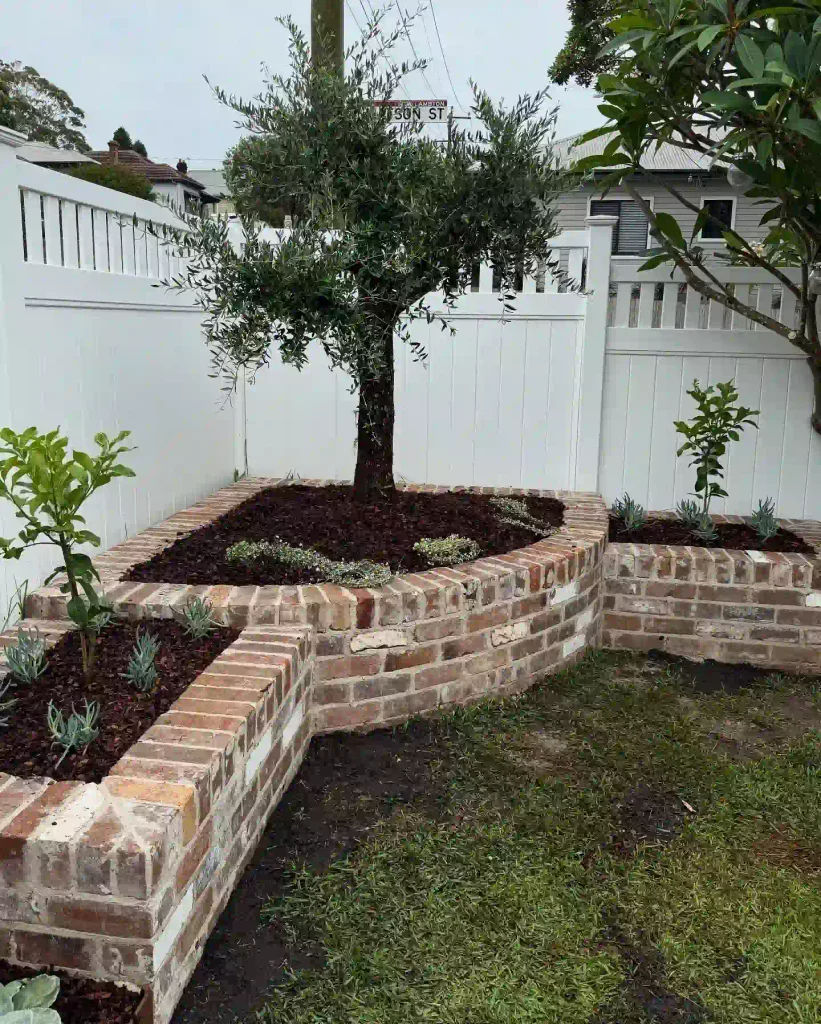
Corner looking empty? Build the planter around a tree. This one hugs a white fence in a gentle curve, then steps down in small sections, with an olive tree in the middle and young citrus on either side.
The mixed, weathered bricks have chalky patches and different shades, which hides small slips in your laying. Silvery blue plants and dark mulch keep the bed calm and tidy.
Lay a garden hose on the ground to mark the curve you like.
Set the first course of bricks dry along the hose.
Mortar it in, then build up in short steps, checking as you go.
5. A Soft Brick Planter Packed With Herbs and Veg
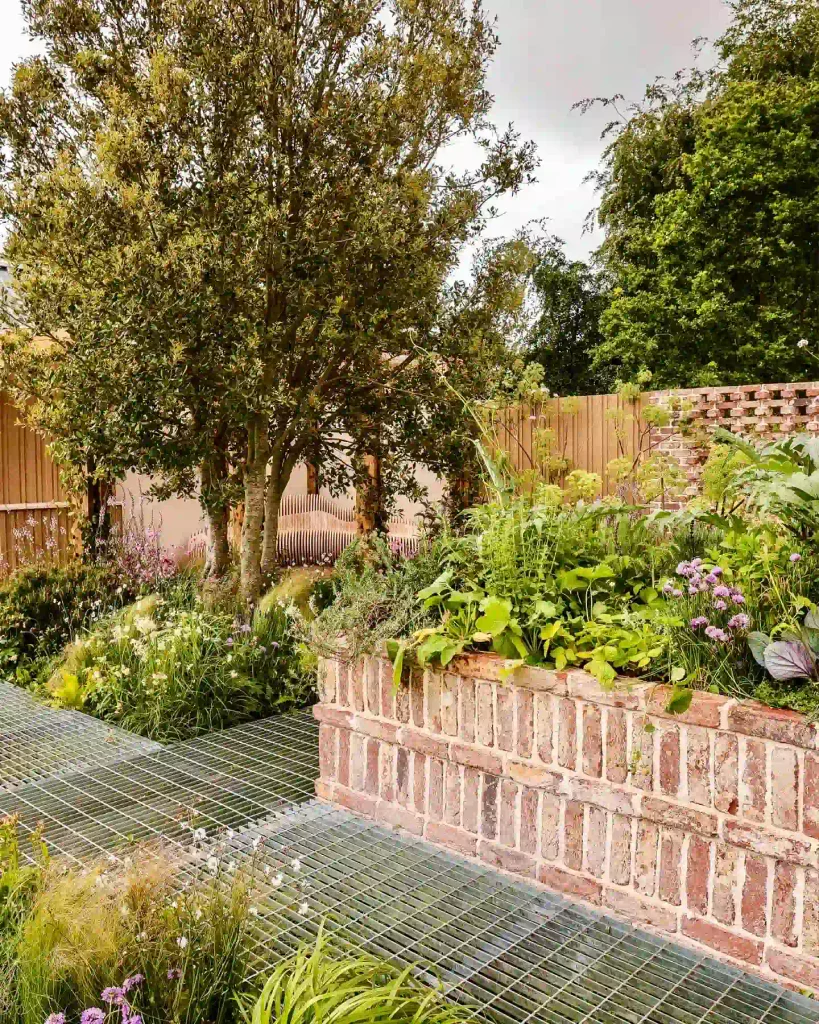
Plants spilling over the edge are the best sign a planter is working. This one is built from soft red and pink toned bricks with pale mortar, and it sits beside a metal grid path.
Herbs, leafy greens, and a red cabbage crowd the top, with purple chive flowers poking through. It looks like a kitchen garden you could snip from on your way inside.
Give roots room. A deep box of soil feeds this kind of full planting.
6. A Tall Corner Brick Planter for Salad Greens
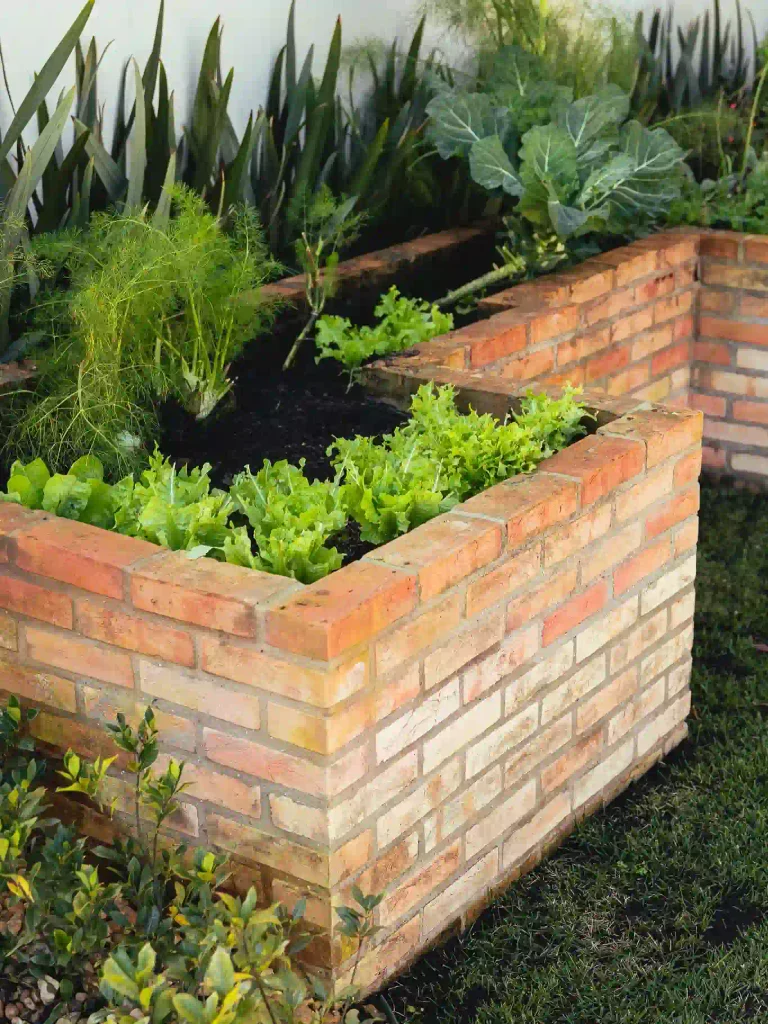
Lettuce sits right at the corner of this warm orange and cream brick bed, close enough to pick without kneeling. The walls zigzag, which gives you extra planting edge in a small footprint.
Plant it in layers:
- Low lettuce along the front edge.
- Feathery fennel in the middle.
- Big leafy cabbage type greens at the back.
Height decides everything here, so pick it before you buy a single brick.
| Tall bed | Low bed |
|---|---|
| Easier on your back when picking. | Fewer bricks, so it builds faster. |
| Needs more soil to fill. | Needs less soil. |
| Best for salad and herbs you pick often. | Best for a first build. |
7. Brick Raised Beds With Obelisks for Climbers
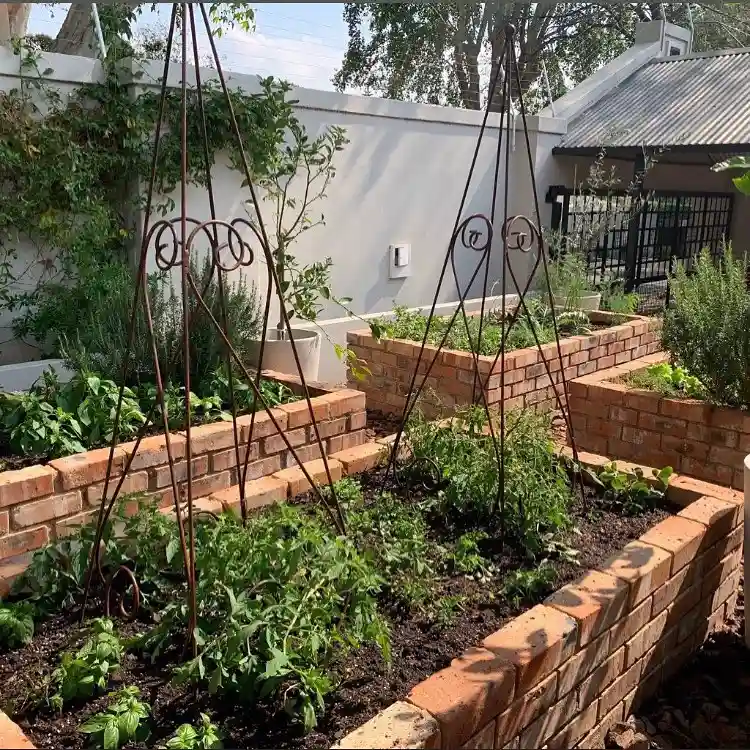
Beds at different heights make a small yard look planned. Here a cluster of red brick boxes sits against a white wall, with a rosemary bush at one end and tomato type plants filling the front bed.
The rusty metal obelisks do double duty. They give climbers something to grip and they add height to a garden that would otherwise sit flat.
More beds, more variety. Even a tiny plot starts to feel like a real potager.
One flat patch of ground with everything growing at the same height.
Brick beds at different heights, with obelisks lifting the climbers up.
Idea 08 of 08
8. A Long Brick Planter for Small Fruit Trees
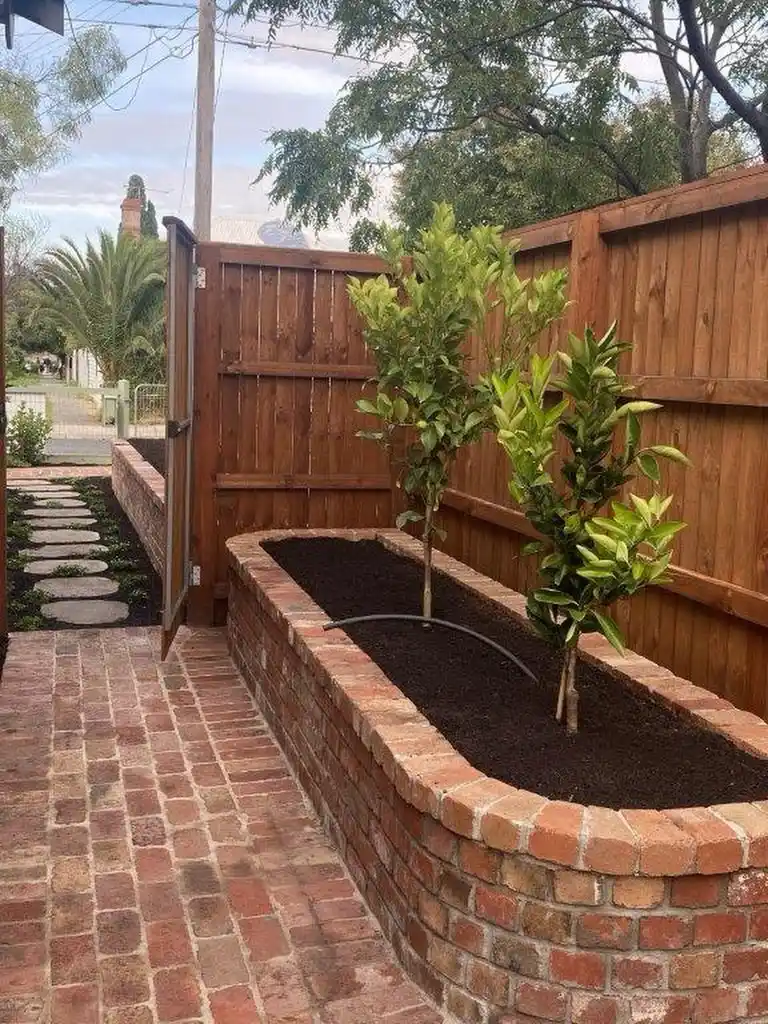
Young trees need room to spread their roots, and a long brick bed gives them plenty. This one runs along a timber fence beside a brick path, with two small citrus trees in dark, fresh soil and a thin watering line laid across the top.
You have two ways to plant it:
- Trees only, for a clean look and easy care.
- Trees with low herbs underneath, to use every inch.
The reclaimed bricks and rounded top edge match the path, so the whole side of the house feels like one project.
A long, narrow bed fits a side path and gives young trees one deep run of soil to grow into.
Conclusion
Brick planters look harder than they are. Start with a low rectangle, lay the first course dry, and let each row teach you the next one. Once the first bed is done, a curve or a round ring feels like a natural step up.
Match the plants to the shape. Herbs and greens like a tall bed you can reach. Trees want a long, deep run of soil. Flowers and grasses soften any corner.
Save this post to your garden board on Pinterest so your plan is ready when the weekend comes, and come back to share how your first build turned out.
Related Garden Guides
- Modern gardens with raised planters: layouts for small urban yards.
- Garden paths with bricks: patterns, bases and edges that soften with moss.
- Courtyard garden design: measuring, light, soil and budget for an enclosed space.
- Sloped backyard landscaping: 8 ideas that keep flat space for family life.
- Browse every guide on garden edging ideas: brick, stone and steel borders.
Written by
Nina Calloway
Nina founded gardenkinds after nine years of gardening, starting in a 200 sq ft London backyard and now on a half-acre cottage plot in Kent. She writes the cottage, flower and small-garden guides, and grows almost everything she recommends before it goes on the site.
Stuck on your own garden?
Send us your soil, light and a photo. Nina answers a few reader questions every month, and the best ones end up in an update to this list.
Keep Reading.