Small Garden Design Ideas: Layouts That Make Compact Spaces Feel Bigger
A small garden isn’t a scaled-down big garden. Different rules apply, and a few of them run against instinct — bigger paving makes a courtyard feel larger, not smaller. Below: seven principles that hold up in practice, layouts for courtyards, narrow strips and sloping plots, and the space-saving fixes worth the money.
Small Gardens: The Data
• Average UK garden size has shrunk 25% since the 1970s (RHS). New-builds are typically 40–70m².
• Over 60% of US city-dwellers have only a balcony or small patio.
• “Small garden design ideas” gets 4,400 monthly global searches — top markets UK, US, Australia.
• Small gardens get higher Pinterest engagement than large formal gardens — the scale is relatable.
7 Design Principles That Make Small Gardens Work
1. Pick one job and commit. Eating outside, growing food, somewhere for the kids, or something good to look at through the kitchen window. Small gardens that try to do all four end up doing none of them.
2. Use the walls. Height is the dimension nobody counts. Fences, walls, posts, and pergola uprights all carry climbers, wall planters, or espalier fruit. A vertical metre is as real as a horizontal one.
3. Lay paving on the diagonal. Running a path or deck at 45 degrees stretches a rectangle in both directions. It costs nothing beyond a few more cuts, and it’s the single most effective trick on this page.
4. Go bigger, not smaller. Large pots, large paving slabs, and full-size furniture make a small garden read as generous. Lots of little things read as clutter.
5. Hold the palette tight. You see the whole garden at once, so two or three colours plus green is plenty. A mixed palette in a small space just looks busy.
6. Make every plant work twice. Flowers and good foliage, or spring blossom and autumn berries. In a big border a plant can rest for ten months. Here it can’t.
7. Divide it anyway. A low hedge, a change of surface, or one trellis panel splits the space into two areas — and two defined areas read as larger than one open one. Counterintuitive, but it works every time.
Space-Saving Solutions
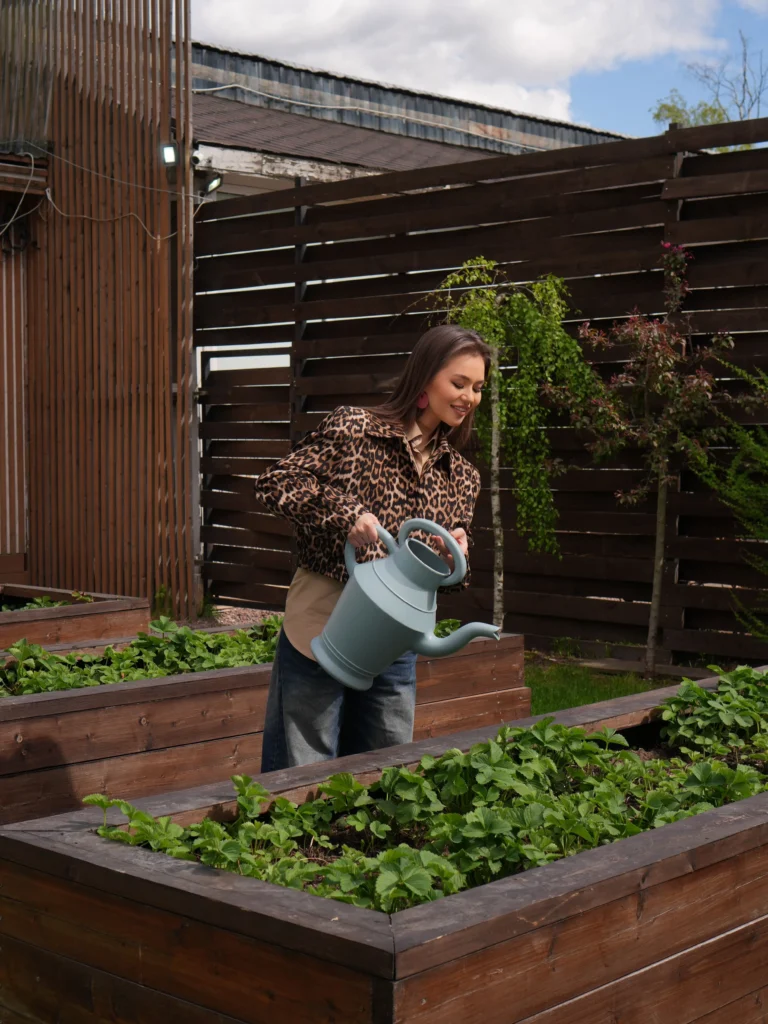
Raised Beds
Standard: 1.2m wide, 2–3m long, 30–60cm high. Timber (reclaimed sleepers) £60–£150; galvanised steel £200–£400.
Vertical Gardens
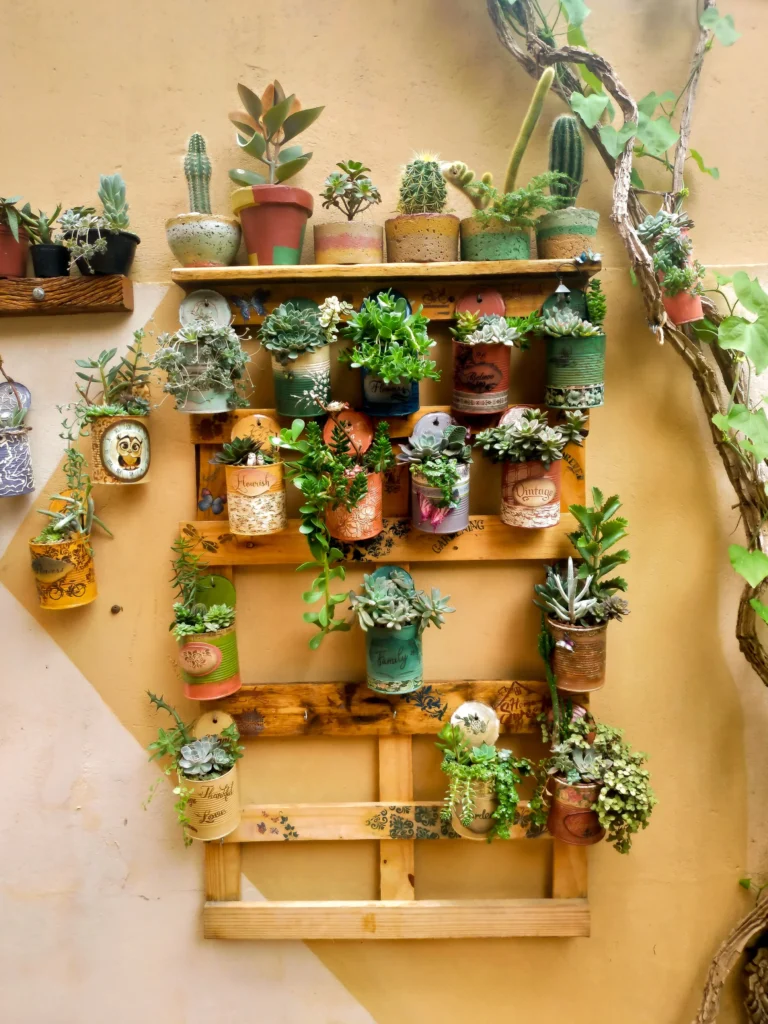
Wall planters, espalier trees, trellis with climbers, tower planters. A single 1.8m trellis panel adds 2–3m² of growing space for £20–£40.
Privacy
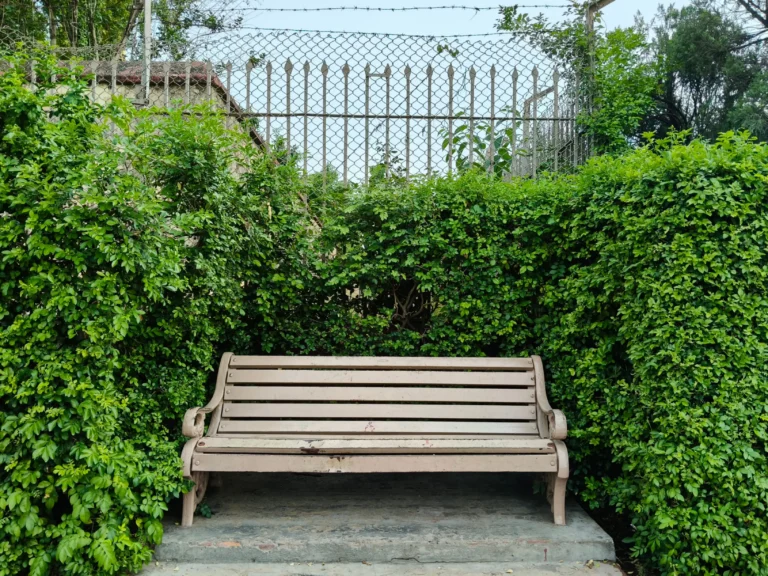
Clumping bamboo in containers (never running), pleached trees, or trellis with Clematis — dense coverage within 2–3 years.
Small Garden Questions
How do you make a small garden look bigger?
Lay paving or decking on the diagonal, use fewer and larger elements rather than many small ones, keep the planting palette to two or three colours, and hide the far boundary with planting so the eye can’t measure where the garden stops.
Should a small garden have a lawn?
Usually not. A lawn under about 20 square metres is hard to mow, wears out where people walk, and eats the space you’d rather sit in. Gravel, paving, or a low-growing ground cover like creeping thyme gives you the same open feel with none of the upkeep.
What size raised bed works in a small garden?
1.2 metres wide is the standard, because you can reach the middle from either side without standing on the soil. Length is whatever fits. Depth of 30cm suits most vegetables; 45–60cm if you want to grow carrots or parsnips properly.
Which trees suit a small garden?
Amelanchier, crab apple, Japanese maple, and multi-stem birch all stay under about five metres and won’t undermine foundations. Avoid willow, poplar, and anything described as fast-growing — speed is the problem, not the solution.
How much does a small garden redesign cost?
Planting alone on a 40 square metre plot runs roughly £400–£1,200. Add paving, a raised bed and a trellis and you’re at £2,000–£5,000. Full hard landscaping with levels and lighting goes past £8,000. Doing it in stages over two or three seasons spreads the cost and lets you see what works.