Balcony Garden Ideas: Containers, Plants, and What Your Floor Can Hold
A balcony the size of a dining table will grow enough basil, mint and cherry tomatoes to change how you cook. It will also hold a lot less weight than most people assume. Start with the load limit, then work through orientation, containers, and watering — in that order.
⚠️ First: Balcony Weight Limits
Before buying a single container, understand your balcony’s load capacity — the safety point almost every guide ignores.
• Typical residential balcony: 150–200 kg per m².
• A 50cm terracotta pot filled with wet soil weighs 40–60kg.
• A 1.2m x 2m raised bed of topsoil can weigh 400–600kg — far too much.
• Solution: lightweight media (perlite + coir + light compost) is 30–50% lighter; fibreglass and fabric grow bags are 60–80% lighter than terracotta.
• Keep total pot weight below 50% of the rated load.
Balcony Orientation & Microclimate
• South-facing: 6–8 hrs sun. Mediterranean herbs, tomatoes, citrus. Use self-watering pots for the heat.
• North-facing: 2–4 hrs indirect light. Mint, parsley, ferns, hostas, begonias, salad leaves.
• East-facing: morning sun — one of the best orientations, most plants thrive.
• West-facing: afternoon sun, can get hot. Monitor watering.
• High-rise (5th floor+): wind is the main challenge — use open-mesh screens, compact varieties, and group pots together.

Best Balcony Plants
Herbs
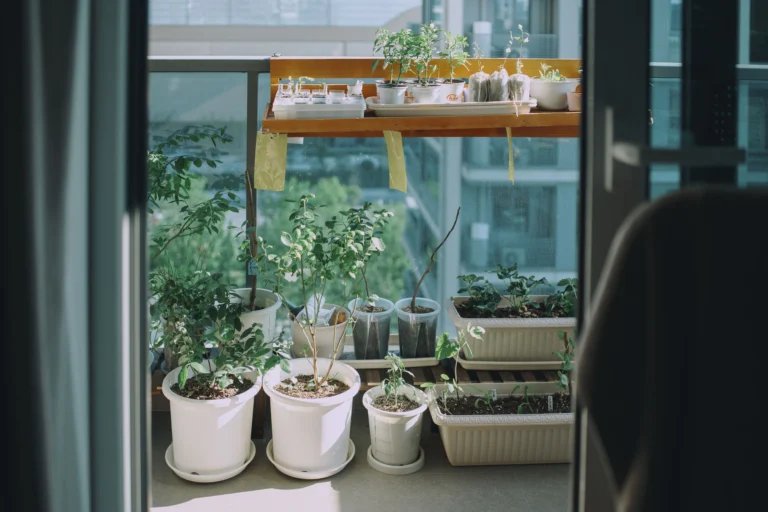
Basil (full sun), Mint (part shade, always contained), Rosemary, Chives, Thyme. The most popular balcony plants.
Flowers
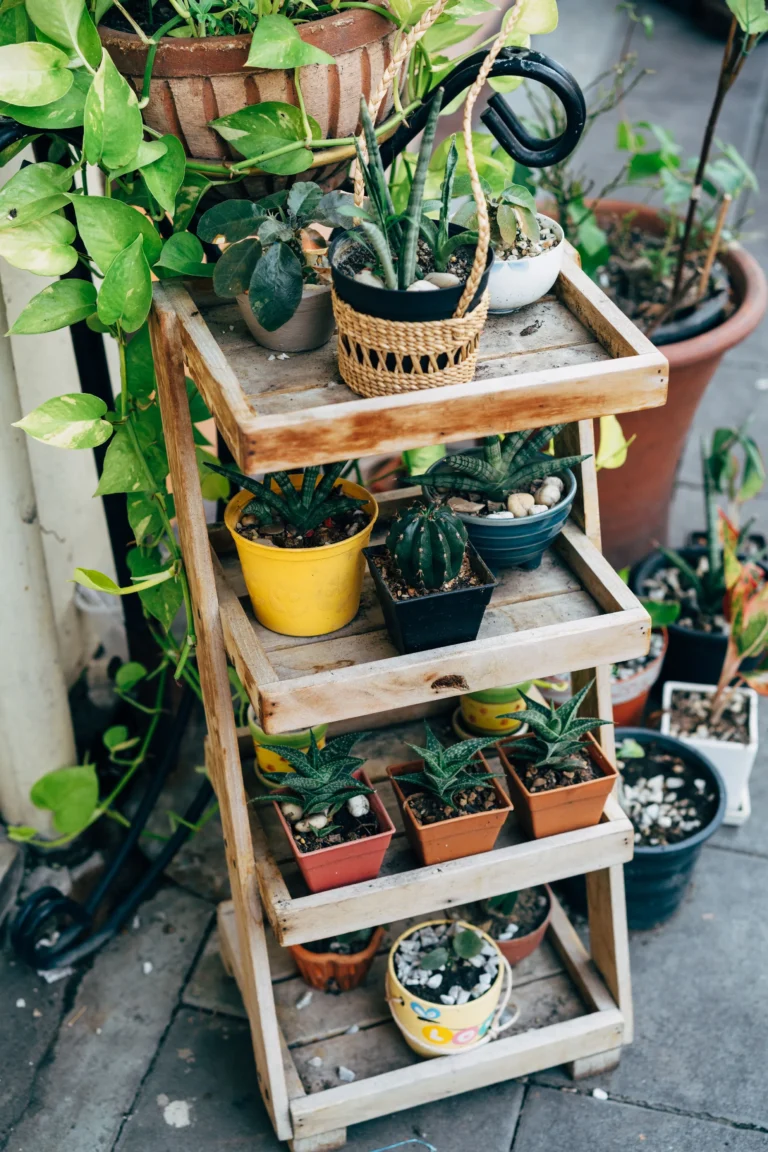
Pelargoniums, Calibrachoa (trailing), Begonias (shade), Sweet Peas (fragrant climbers for a trellis).
Vegetables
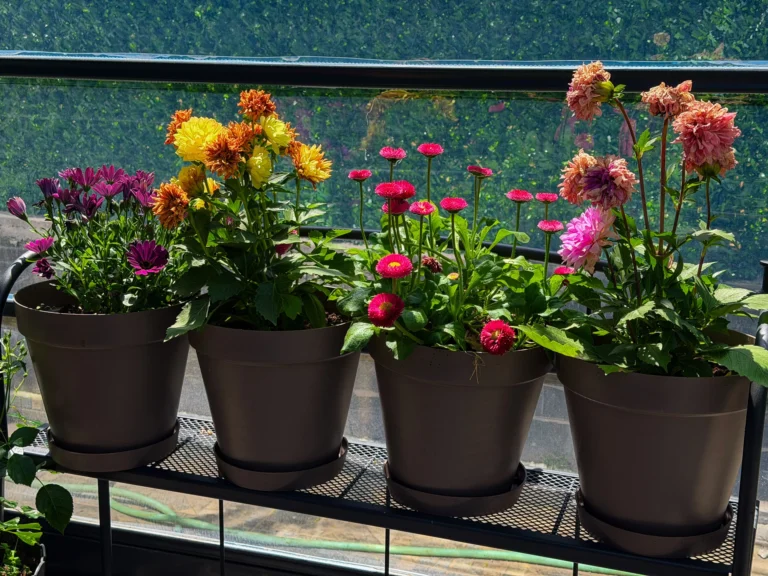
Cherry tomatoes (30cm+ pots), salad leaves (shallow), strawberries (hanging baskets), dwarf French beans.
Containers & Watering
Containers. Fibreglass is the sensible default up high — it looks like stone or terracotta and weighs a fraction as much. Fabric grow bags are lighter still, and air-prune the roots so plants don’t spiral and stall. Self-watering planters cut watering by half or better. Keep terracotta for drought-tolerant plants where the weight is worth it.
Sizing. Herbs and small flowers need 15–20cm across. Tomatoes, beans and courgettes want 30cm minimum and 30cm deep. Citrus and standards need 45–60cm. Undersized pots are the most common reason balcony vegetables disappoint.
Watering. A self-watering container holds two to five litres in reserve, which stretches summer watering to every three to five days. A timer-driven drip kit runs £30–£80 and removes the daily job entirely. Water-retention gel mixed into compost buys you another 30–40% on top.
Screening an Overlooked Balcony
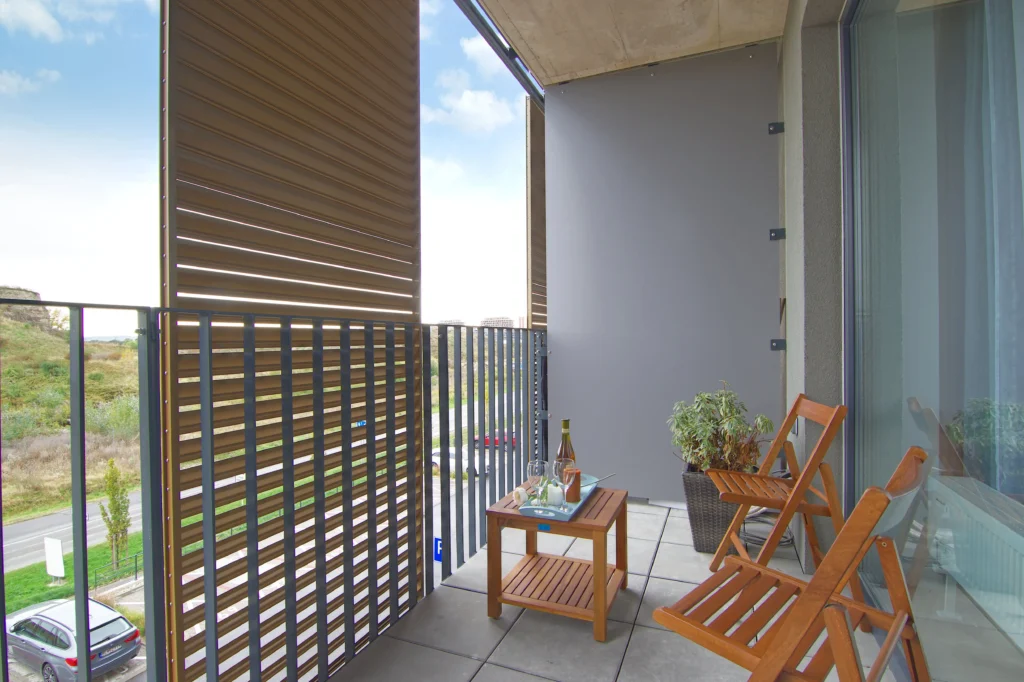
Being overlooked is the reason most balconies go unused. Four fixes, cheapest first.
Bamboo or reed panels cable-tied to the railing. Twenty minutes, minimal cost, instant. Check your lease first — some buildings ban anything fixed to the outside of a railing.
A trellis panel with annual climbers. Sweet peas or black-eyed Susan vine will cover 1.8 metres in a single season and give you flowers while they do it.
Clumping bamboo in a large container. Buy Fargesia, never Phyllostachys — the first stays put, the second runs and becomes somebody else’s problem. Expect a dense screen by year two.
Tall grasses in deep railing boxes. Miscanthus or pennisetum give you a soft, moving screen that doesn’t feel like a wall. They also survive wind better than most flowering plants, which matters higher up.
One thing to watch: a solid screen catches wind like a sail and creates turbulence behind it. Open mesh or planting filters the wind instead of fighting it, and your plants will be in better shape for it.