Ways to Block Neighbors View Without Building an Ugly Wall
Seven good-looking ways to block neighbors view, from pattern screens and wood slats to tall grasses and a trellis with a climber, with no ugly wall needed.
This post may contain affiliate links. If you buy through them we may earn a small commission at no extra cost to you. It never changes what we recommend — read our affiliate disclosure.
 pin it for later ✳
At a glance
TL;DRIn this list
7 ideas, each with a photo
Filed under
Read time
6 min · updated 5 Oct 2026
Someone is always looking. A kitchen window, an upstairs bedroom, a neighbor who waves every time you sit down with coffee. Most of us want to relax in our own garden without feeling watched, but a tall solid wall can feel heavy and cold.
The good news is that privacy does not need bricks or a row of plain fence panels. Below are seven ways to block neighbors view that still look good. Some use pattern cut metal screens that let light and shadow play through. Some use simple wood slats, tall grasses, or a climber on a trellis.
Each idea works a little differently, so you can match it to your own space, your budget, and how much time you want to spend. Start with the one that sounds closest to your garden, then mix in a second layer of plants. Save the ones you like, and keep scrolling to see how each one looks in a real garden.
1. Black Pattern Screen With Small Trees Planted in Front
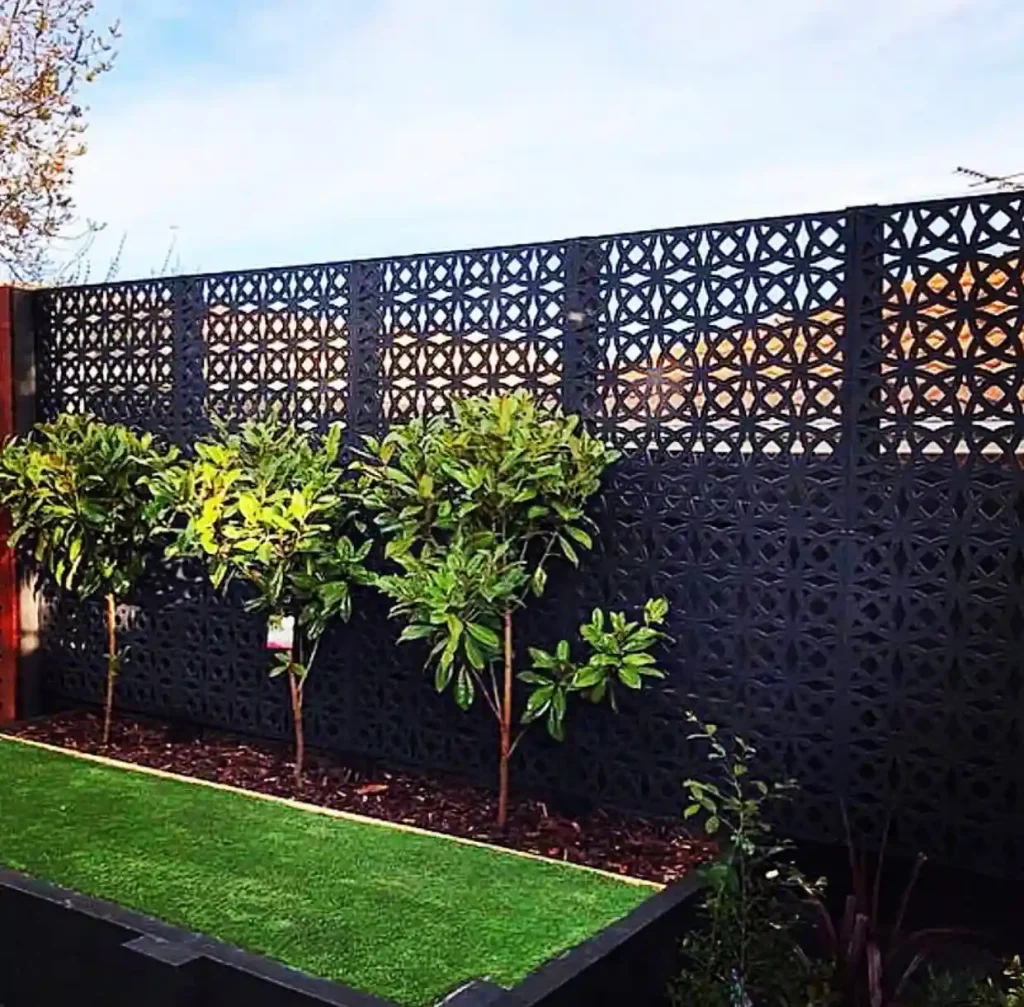
Dark screens look heavier than they are. Here the cut out pattern lets light through, so the fence feels more like lace than a wall.
- The tall panels hide most of the view toward the neighbors, with only a hint of the rooftop showing through the top holes
- Three small trees with bright green leaves pop against the near black color
- Dark mulch under the trees keeps the bed calm and simple
- A strip of lawn in front keeps the whole corner open
Keep the trees a small step away from the panels so the leaves have room and you can still reach behind them.
2. Terracotta Colored Panels That Paint Shadows on the Patio
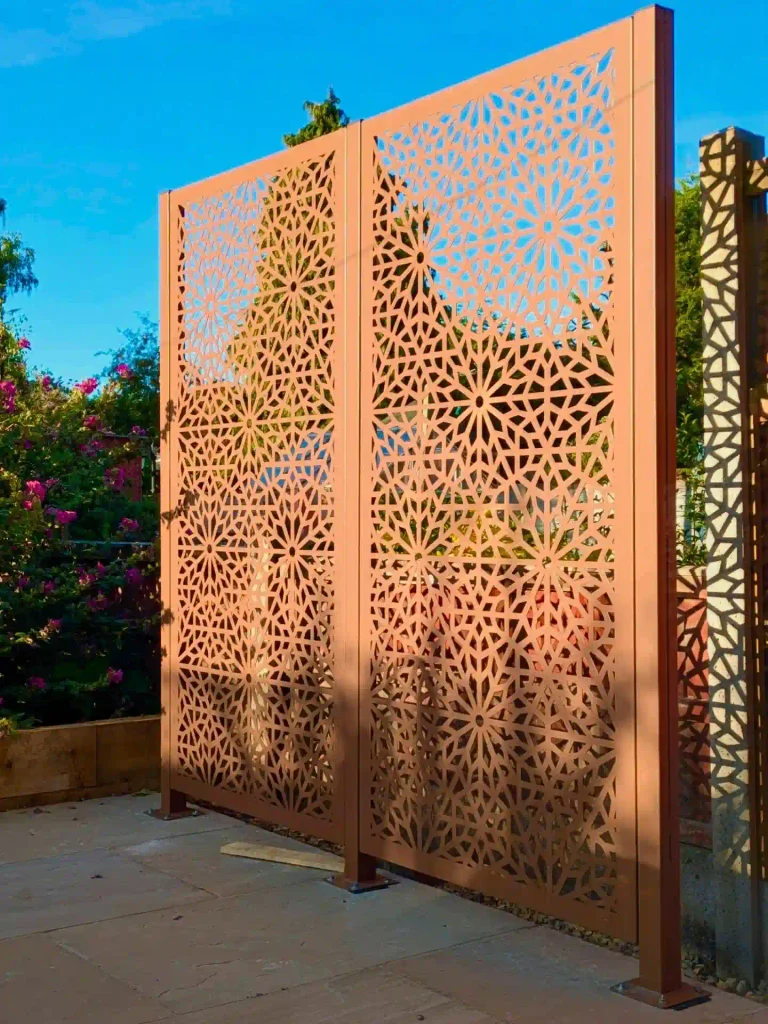
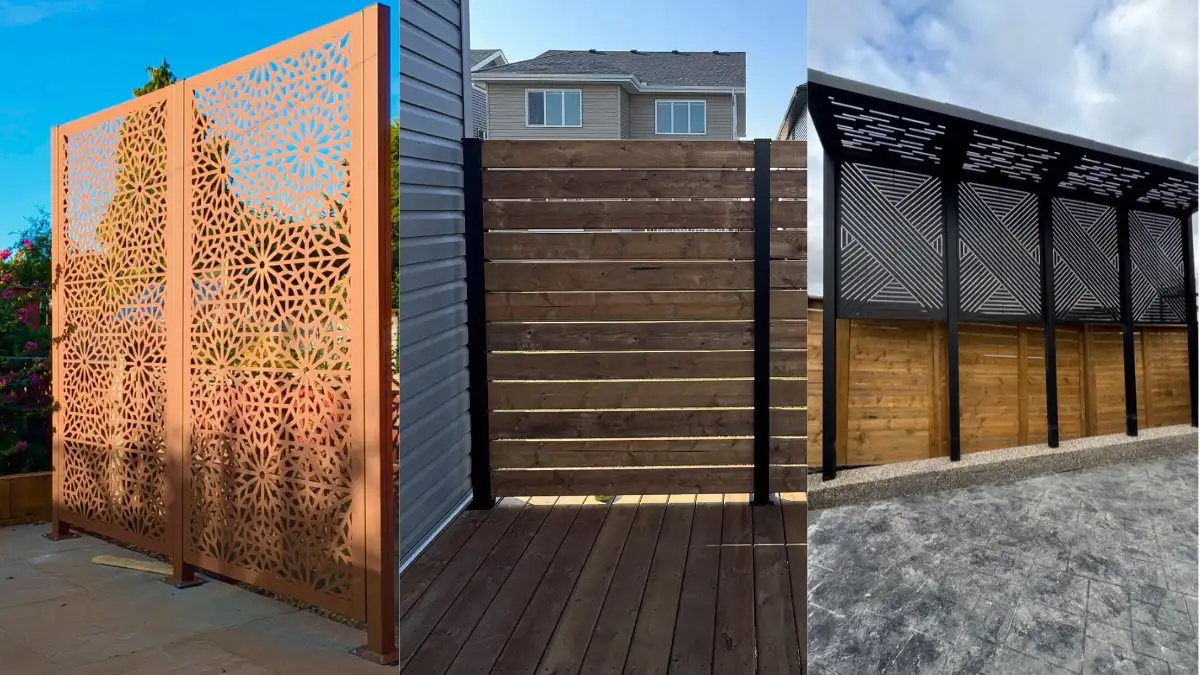
Not every screen has to be black. These tall panels have a warm, clay like color that catches the evening sun, and the star shaped pattern throws moving shadows across the paving.
Through the pattern you can spot pink flowers and green leaves beyond, so the screen frames the garden instead of closing it off. Two panels stand on slim posts with flat base plates fixed to the paving, which keeps the look light.
The shadows are the bonus, and they change all day.
💡 Quick Tip
Small cut outs hide more than big open shapes. Hold a sample panel up at eye level, then check what you can still see through it from your seat.
3. Horizontal Wood Slats Between Black Posts on a Deck
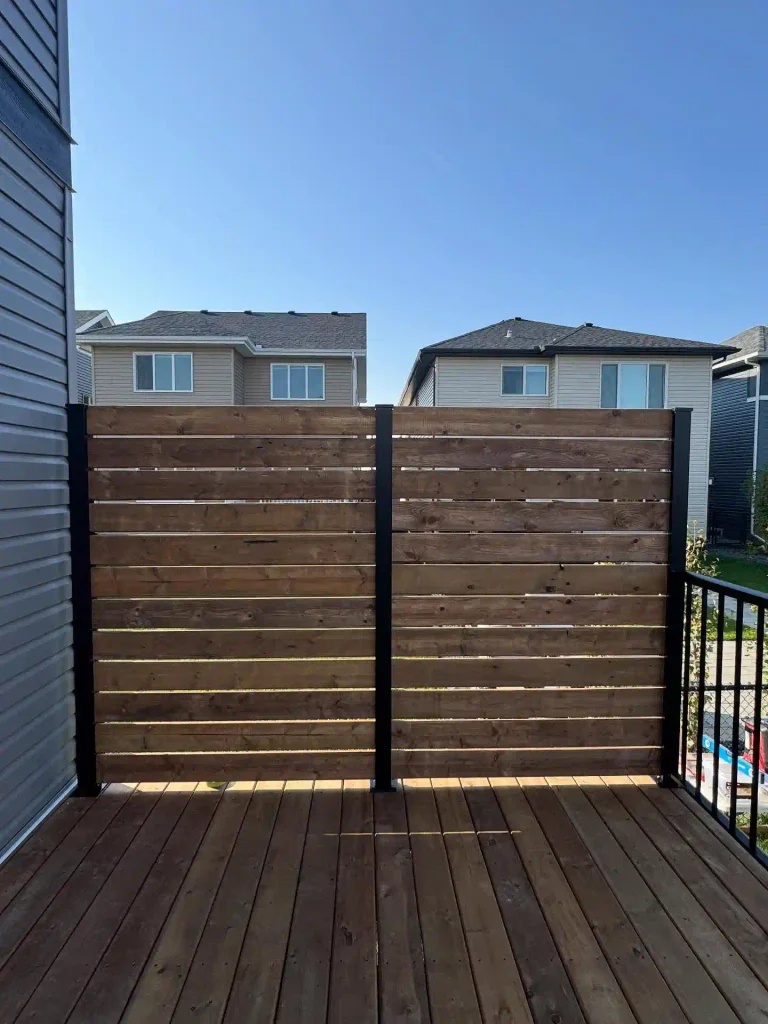
Sit down on this deck and the windows next door mostly disappear. The boards run sideways with thin, even gaps, so the screen blocks the direct view and still lets air through.
Black posts frame the wood and match the railing on the right, which makes the screen look planned, not tacked on. It covers just one corner of the deck, so the rest stays open.
How to plan yours
Sit where you sit most and notice which window looks back at you.
Mark the spot where that line of sight crosses the deck edge.
Pick post and board colors that echo your railing and decking.
Leave thin, even gaps between the boards so wind can pass through.
Idea 04 of 07
4. Pattern Panels Stacked Above an Existing Wood Fence
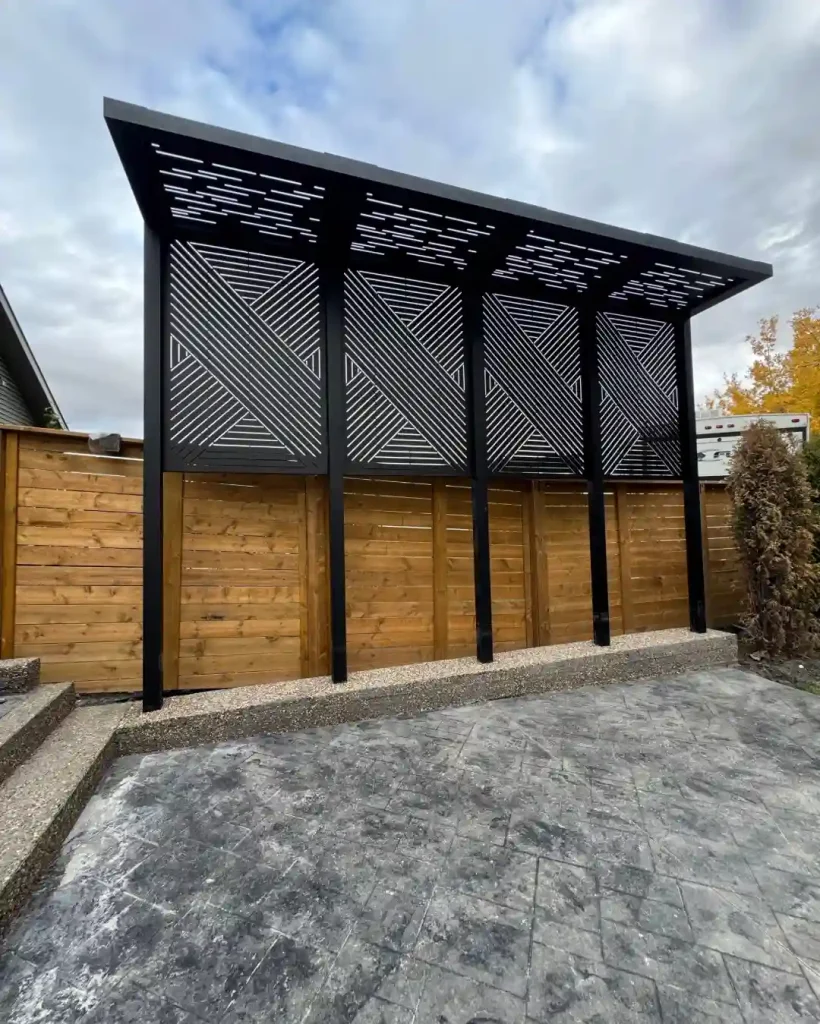
Fence too low to hide the yard next door? You may not need a new one.
Here the wood fence stays as the bottom layer, and four dark panels with a crisscross line pattern rise above it on tall black posts. A slanted top with slots adds cover overhead, and the slots still let daylight in. The black frame, warm wood, and stone base read as one plan.
One warning. A structure this tall may need approval, so check your local height rules before you order anything.
Keep a sound fence and build up from it.
Match post color to the screen color.
Size each panel to fit between two posts.
Going past your local height limit.
Closing in the overhead so no light gets through.
Adding a tall frame on a rotten old fence.
5. A Three Panel Corner Screen Around a Small Front Patio
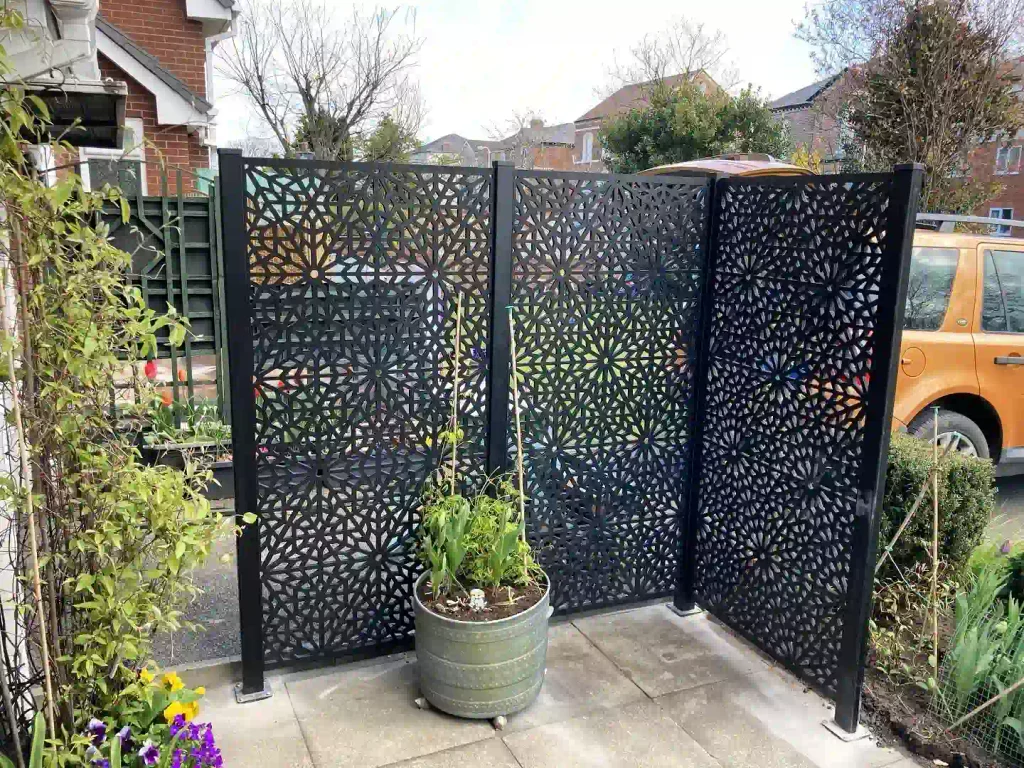
Three panels set in an L shape can wrap a small seating corner and hide two sides of it from the street. The pattern is dense enough to soften the view, though you can still make out colors and shapes beyond, like the parked car. That is fine. Soft is the goal.
A round metal tub of tulips with tall bamboo canes sits in front, and a climber on the left adds more green, so the plants do as much work as the panels.
Plan the corner first and the panels second.
6. Tall Grasses in Long Troughs Along the Patio Edge
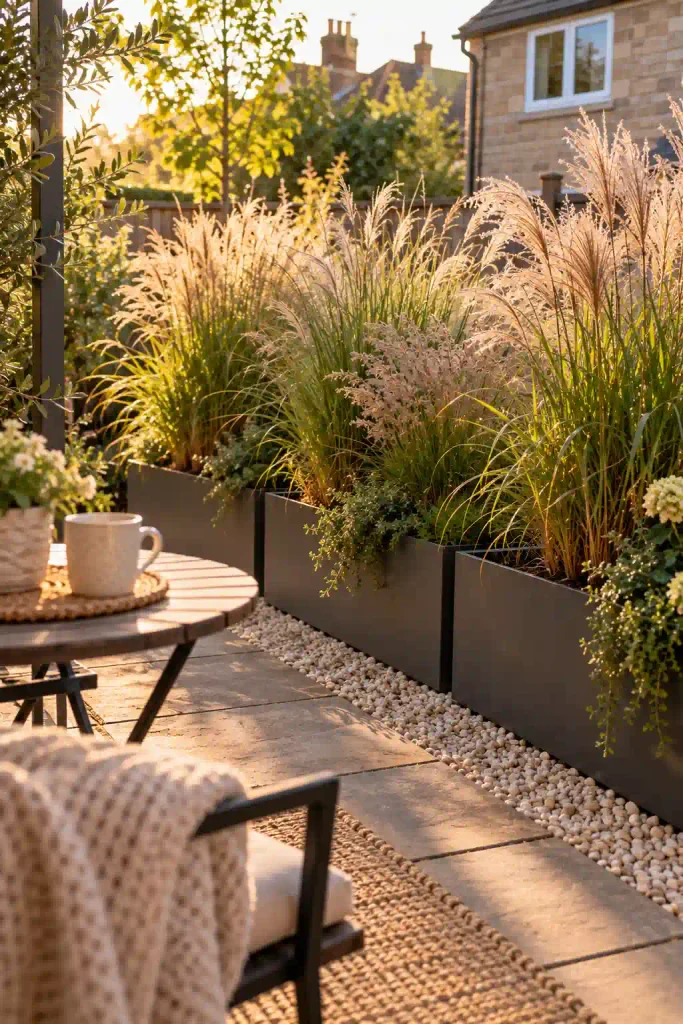
Grasses do something a fence cannot. They move, so the view behind them blurs instead of just stopping.
Line up two or three long troughs along the patio edge and fill each with one kind of tall grass. Two easy picks:
- Feather reed grass stays narrow and upright, which suits tight spots
- Miscanthus forms a wider, arching clump with soft plumes
Troughs dry out fast, so water often in summer. Cut the old stems back in late winter, and know the screen thins out in the cold months.
A bare patio edge with a clear line of sight to the window next door.
A row of troughs with swaying grasses that blur the view and add height.
7. A Freestanding Trellis With a Fast Climber Growing Up It
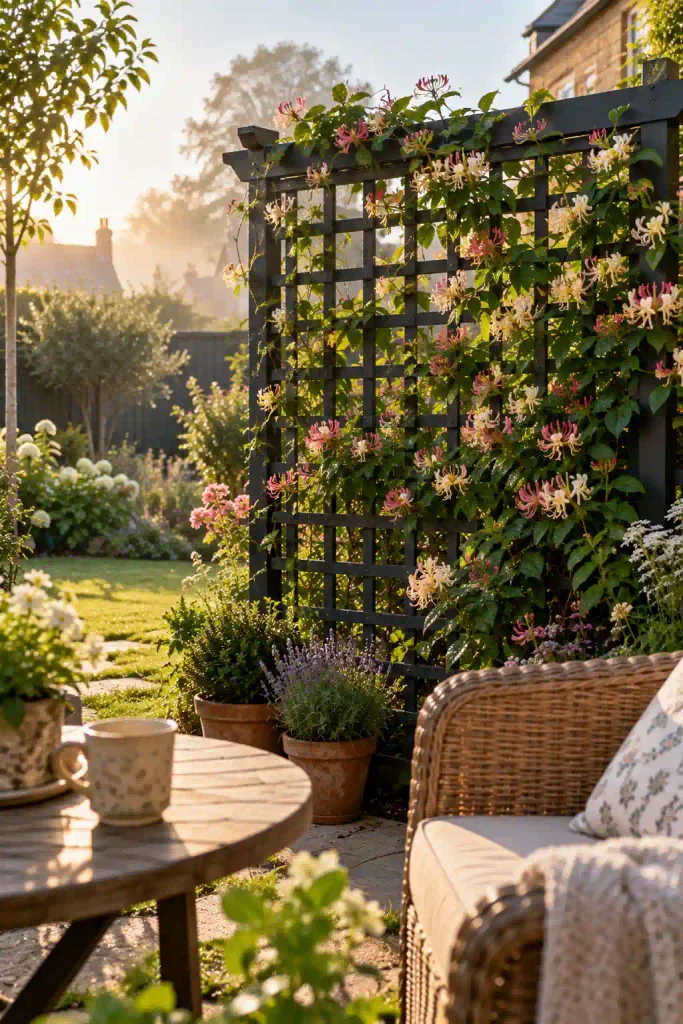
A trellis does not have to sit on a fence. Stand a wide one on its own, a few steps from your seating, and let a climber cover it. You screen only the line of sight that bothers you, so the rest of the garden stays open.
Fix it firmly. A leafy trellis catches wind like a sail, so sink the posts deep or bolt a base to solid ground.
The big choice is which kind of climber to grow.
| Annual climber, like sweet peas | Perennial climber, like honeysuckle |
|---|---|
| Covers the frame in a single summer | Slower at first, then returns every year |
| Sow again each spring | Plant once and prune each year |
| Bare frame in winter | Winter cover depends on the variety |
Conclusion: How to Block Neighbors View With Style
You do not need a big wall to get a quiet corner. A slatted screen, a patterned panel, a trough of tall grasses, or a trellis with a climber can all do the job, and they look better than a plain fence.
Start small. Stand where you sit, find the window that sees you most, and screen that line first. Often one panel or one row of plants is enough. The best ways to block neighbors view are the ones that fit your garden and still let light in.
Screen the line of sight, not the whole garden.
Save this post to your garden privacy board on Pinterest so you can come back when you are ready to plan.
Related Garden Guides
- Front house landscaping ideas: curb appeal fixes you can finish in a weekend.
- Modern gardens with raised planters: layouts for small urban yards.
- Ornamental grass gardens: 7 low-care grass borders, paths and patios.
- Small garden wildlife pond ideas: 8 real ponds for frogs, dragonflies and kids.
- Browse every guide on small garden design ideas: layouts that make every foot count.
Written by
Nina Calloway
Nina founded gardenkinds after nine years of gardening, starting in a 200 sq ft London backyard and now on a half-acre cottage plot in Kent. She writes the cottage, flower and small-garden guides, and grows almost everything she recommends before it goes on the site.
Stuck on your own garden?
Send us your soil, light and a photo. Nina answers a few reader questions every month, and the best ones end up in an update to this list.
Keep Reading.