Small Garden Wildlife Pond Ideas for Frogs, Dragonflies and Curious Kids
Eight small garden wildlife pond ideas with simple steps for frogs, dragonflies and curious kids.
This post may contain affiliate links. If you buy through them we may earn a small commission at no extra cost to you. It never changes what we recommend — read our affiliate disclosure.
 pin it for later ✳
At a glance
TL;DR
In this list
8 ideas, each with a photo
Filed under
Read time
5 min · updated 22 Oct 2026
Frogs, dragonflies and kids all want the same thing from a garden: somewhere interesting to look. A small garden wildlife pond gives them that, even when your space is only a few steps wide.
You do not need a huge dig or a big budget. The eight real gardens below show how much a tiny patch of water can do. Some use a ready made shell. Some use a simple liner hidden by stones. One has a very curious cat sitting beside it.
Look for the same few things in each one. A shallow edge so small creatures can climb out. Plants that give cover. Stones or logs for resting. Quiet corners where nothing gets disturbed.
Each idea comes with a quick visual you can borrow and a simple tip to try. Kids can help with most of it, from picking pebbles to spotting the first dragonfly.
Pick the one that fits your space and start there.
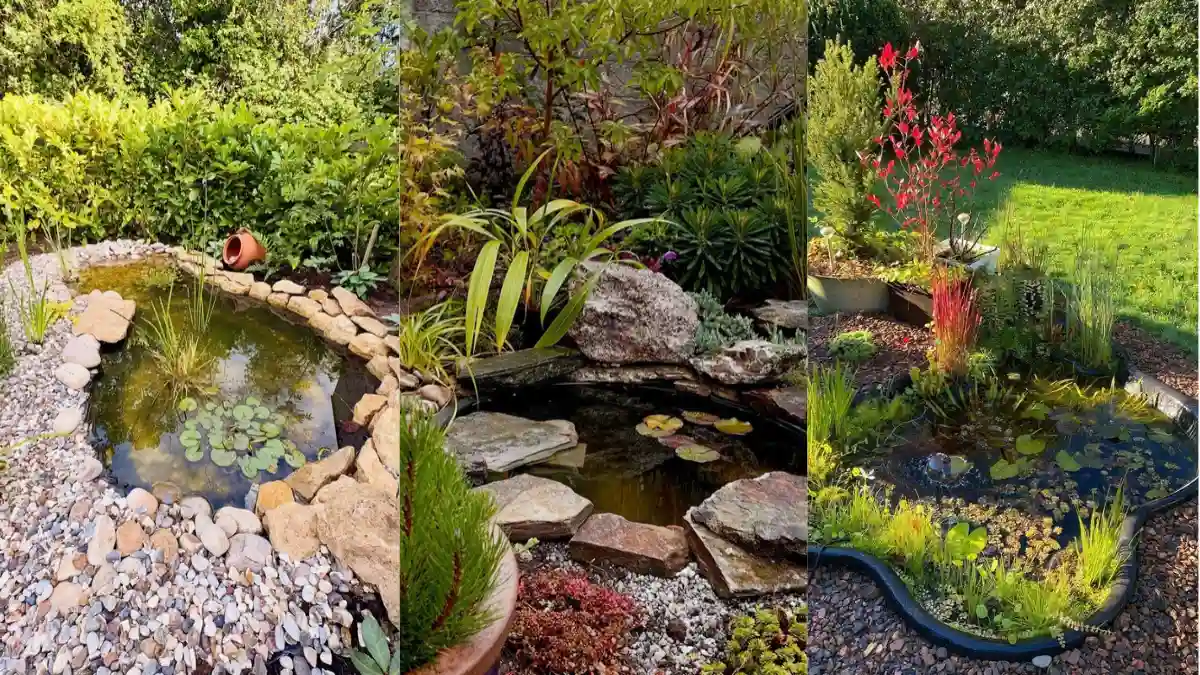
1. A Ready Made Pond Shell Packed With Planting
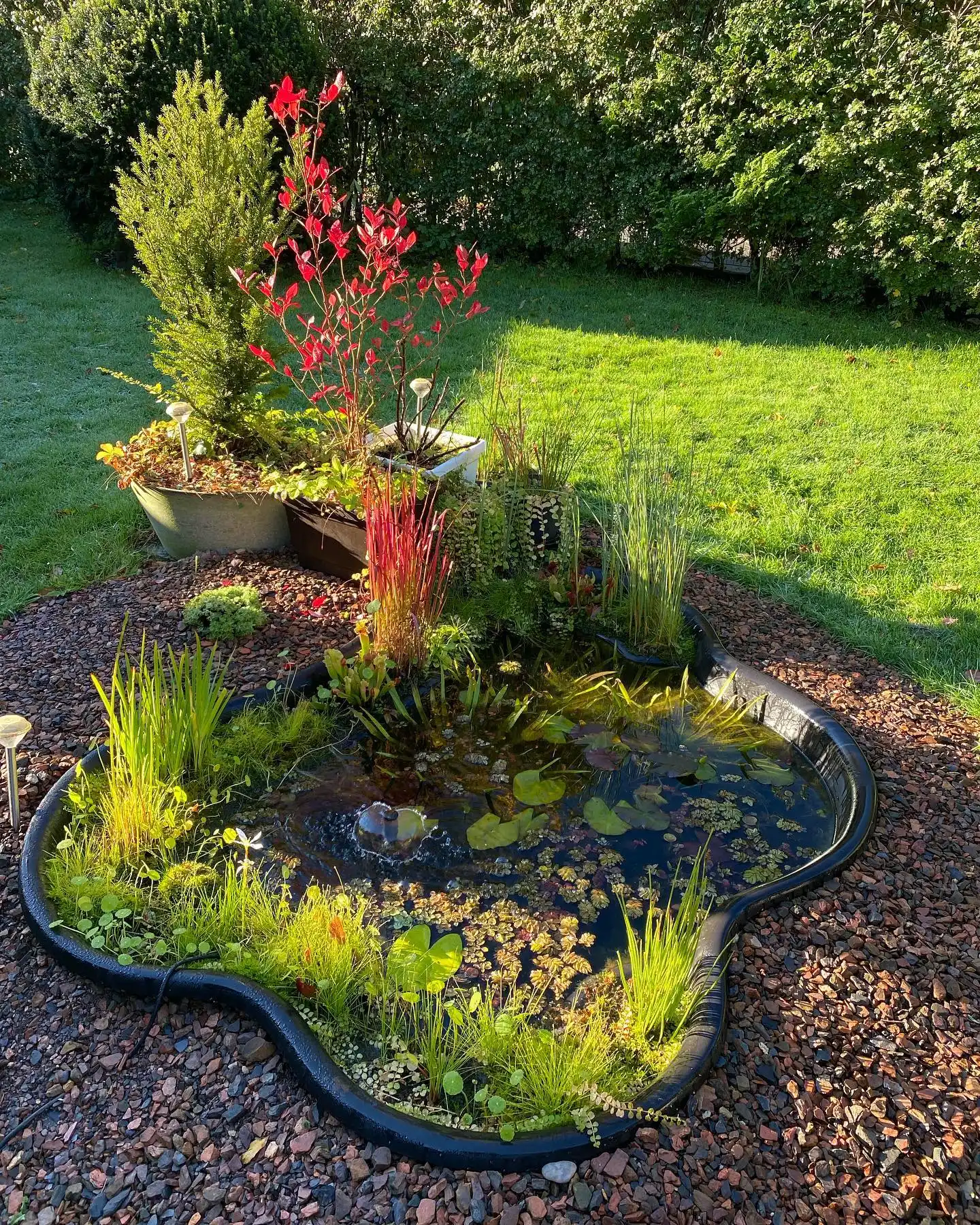
A plastic pond shell only looks plastic until the plants arrive.
- The black rim almost vanishes under grasses and trailing plants
- Floating leaves cover part of the water, which gives small creatures some shade
- A ring of gravel keeps the lawn mower away from the edge
- Potted shrubs behind add height and a flash of red autumn leaves
The little bubbler is a nice touch, but frogs and dragonflies like calm water too. Leave one corner still.
2. Pebble Beach on One Side, Big Stones on the Other
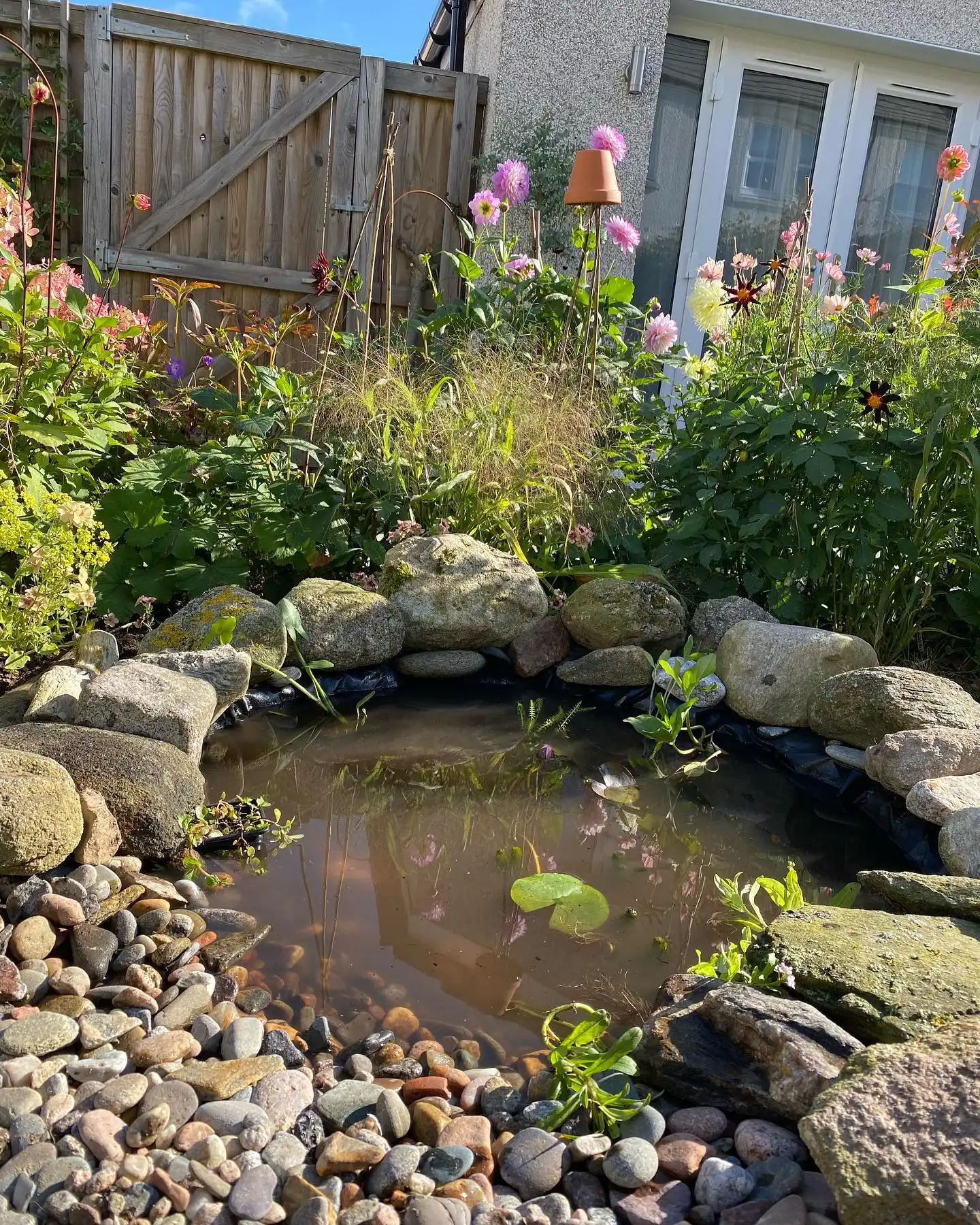
Two kinds of stone, two jobs. The rounded pebbles in front slope gently into the water, so a frog or a thirsty bird can walk in and out. The big mossy boulders at the back hide the liner and leave cool, damp gaps to hide in.
Behind them, dahlias and daisy like flowers crowd close, so insects have something to feed on before they ever reach the water. Kids can sit on the pebble side and watch the surface without leaning over a deep end.
The water looks brown, and that is normal in a young pond. Give it time to settle.
💡 Quick Tip
Top up with rainwater when you can. It is gentler on a young pond than tap water, and a water butt makes it easy.
3. A Small Garden Wildlife Pond Can Start as Bare Soil
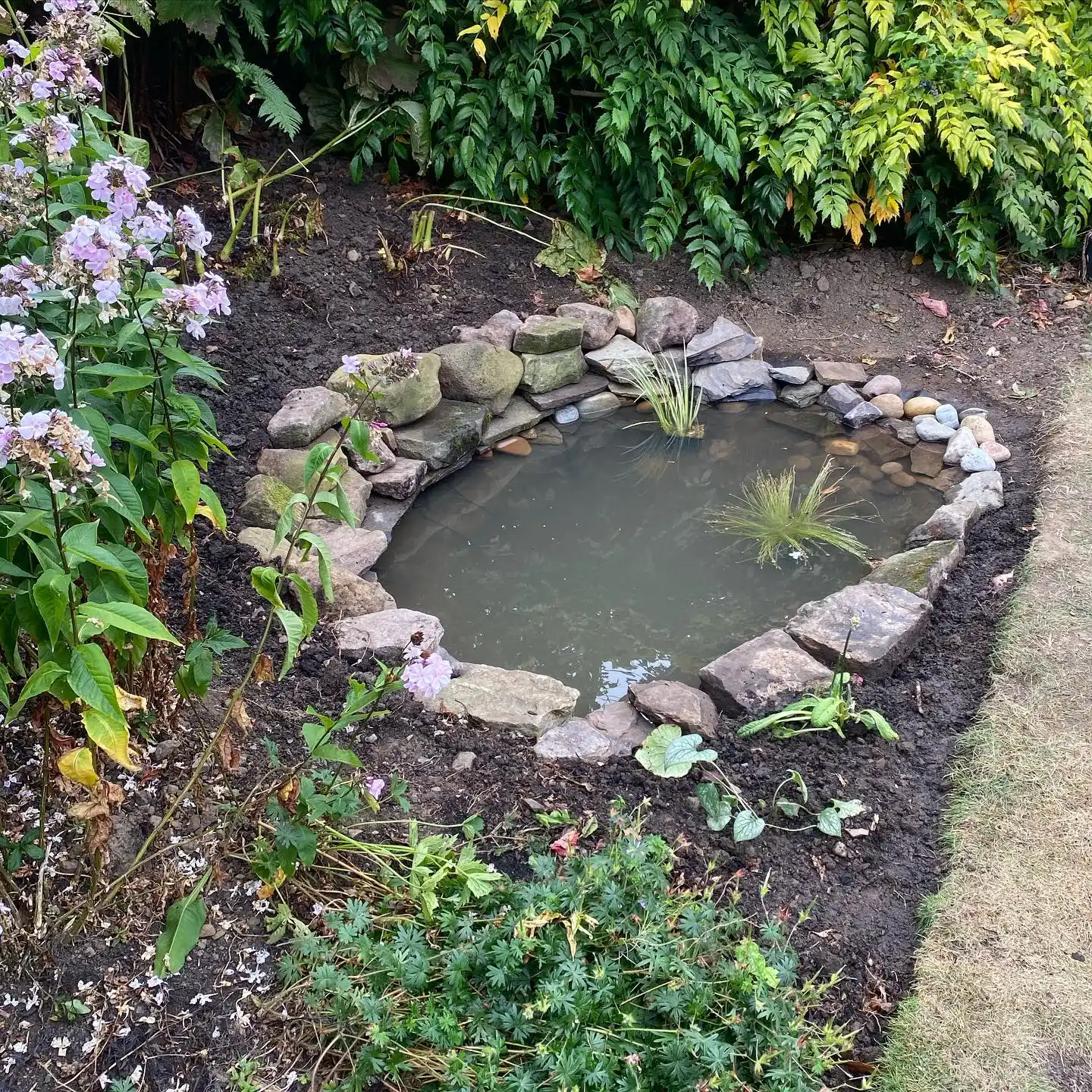
Nothing here is finished, and that is the point. There is fresh soil, a stack of flat stones on one side, rounded pebbles on the other and two young clumps of plants in the water. Tall pale purple flowers lean in from the left.
Wildlife tends to find new water faster than most people expect. The plants will fill in, and the soil will soon hide under leaves. Here is how to build the same shape.
Mark a rounded shape on the soil with a hose or rope.
Dig one gently sloping side and one deeper end.
Lay the liner, smooth it out and tuck the edges under stones.
Fill with water and add a few plants. Stack stones on the high side and pebbles on the low side.
Idea 04 of 08
4. A Pond You Can Sit Beside Without Spooking Anyone
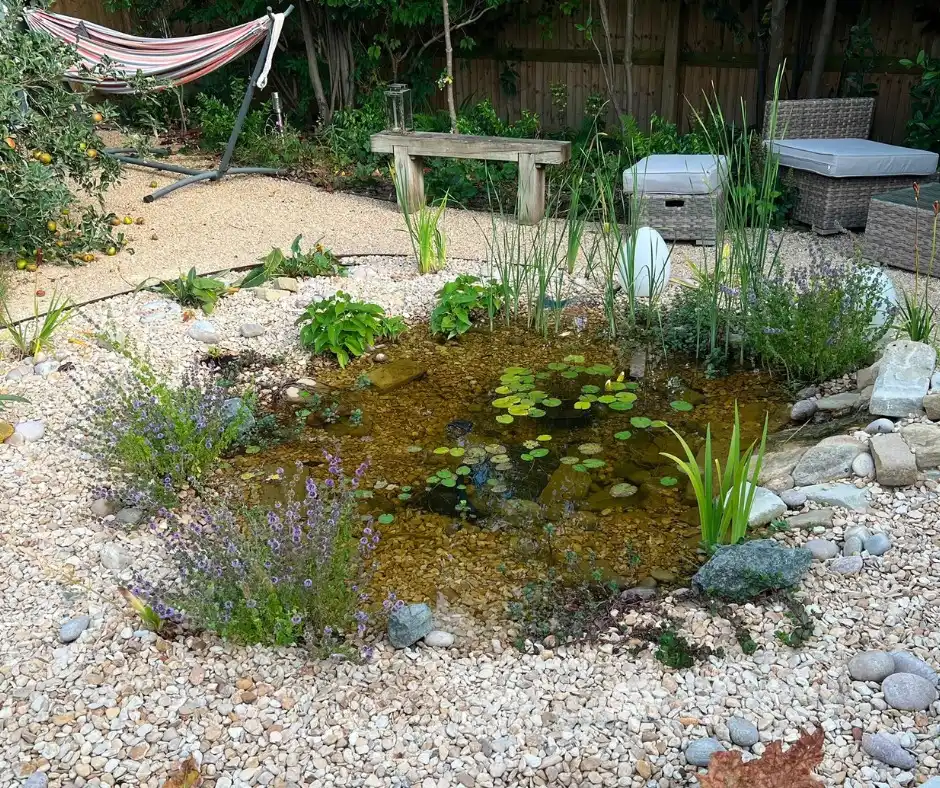
Quiet seating changes how you watch a pond. A plain wooden bench sits a few steps back here, with a hammock and a cushioned seat close by.
Tall leaves along the back edge screen the water from the seats, so nobody looms over it. Purple flower spikes fill the front corner, and small lily pads float on clear, golden bottomed water. Pale gravel runs right to the edge with no steep drop.
Sit still for two minutes and something usually moves.
Put seats a few steps back from the water.
Plant tall leaves between you and the pond.
Keep the gravel edge gently sloped.
Seating right on the rim.
Bright lamps shining on the water at night.
Steep, slippery sides.
5. Flat Slabs That Work Like Stepping Stones
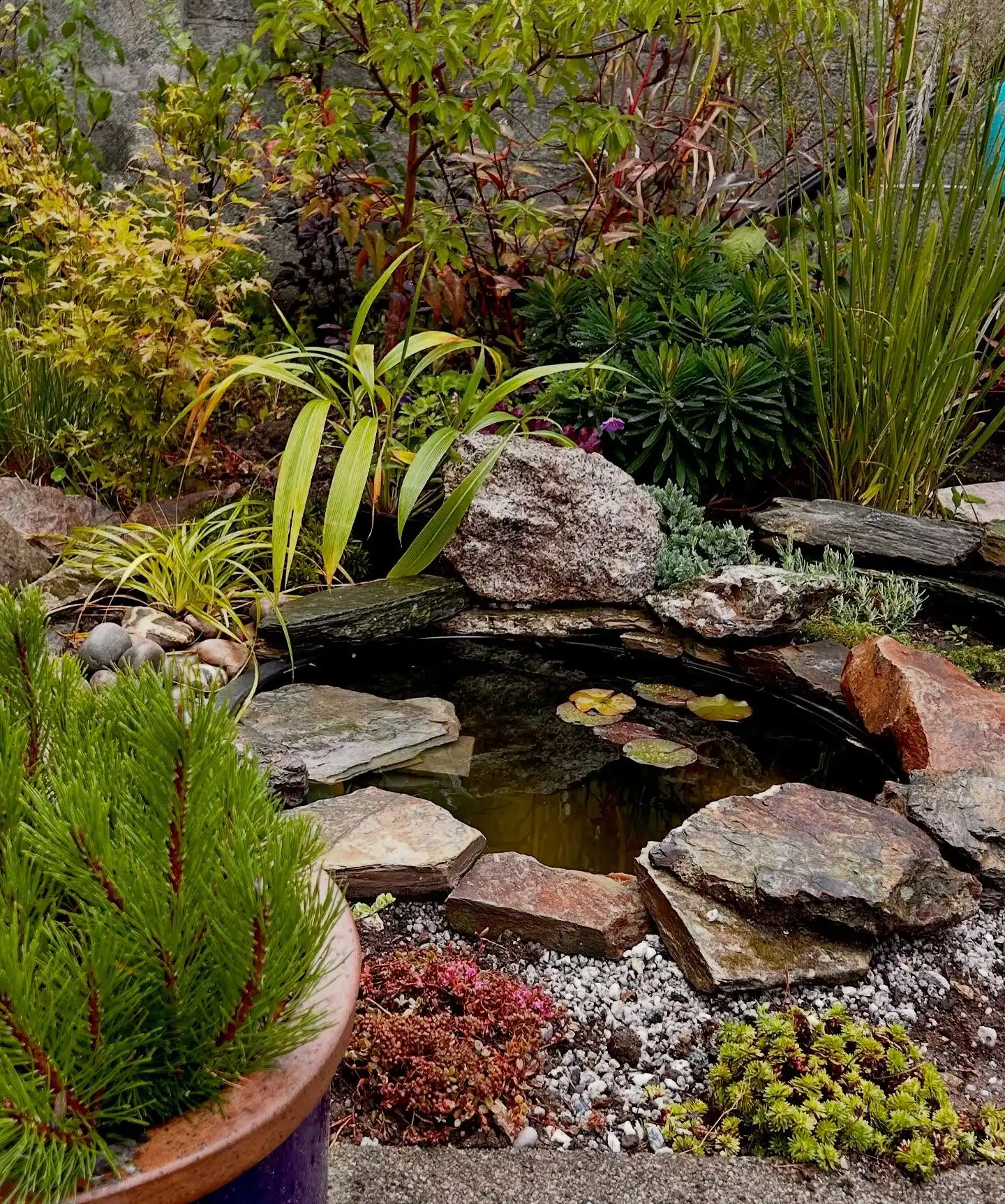
Stone choice shapes the whole pond. Here, flat layered slabs step down toward dark water, with one big speckled rock sitting behind them like a headboard.
Lily pads cover part of the surface. Tall grasses, a pot of pine and low red and green sedums in the gravel fill every gap, so there is no bare corner. Flat slabs make easy spots for kids to crouch and point.
Test each slab for wobble before little feet use it.
| Flat slabs | Round pebbles |
|---|---|
| Steady footing for kids | Soft, natural look |
| Flat spot for resting insects | Easy slope for climbing out |
| Gaps underneath to hide in | Shifts under your feet |
6. Tuck the Pond Between the Lawn and the Border
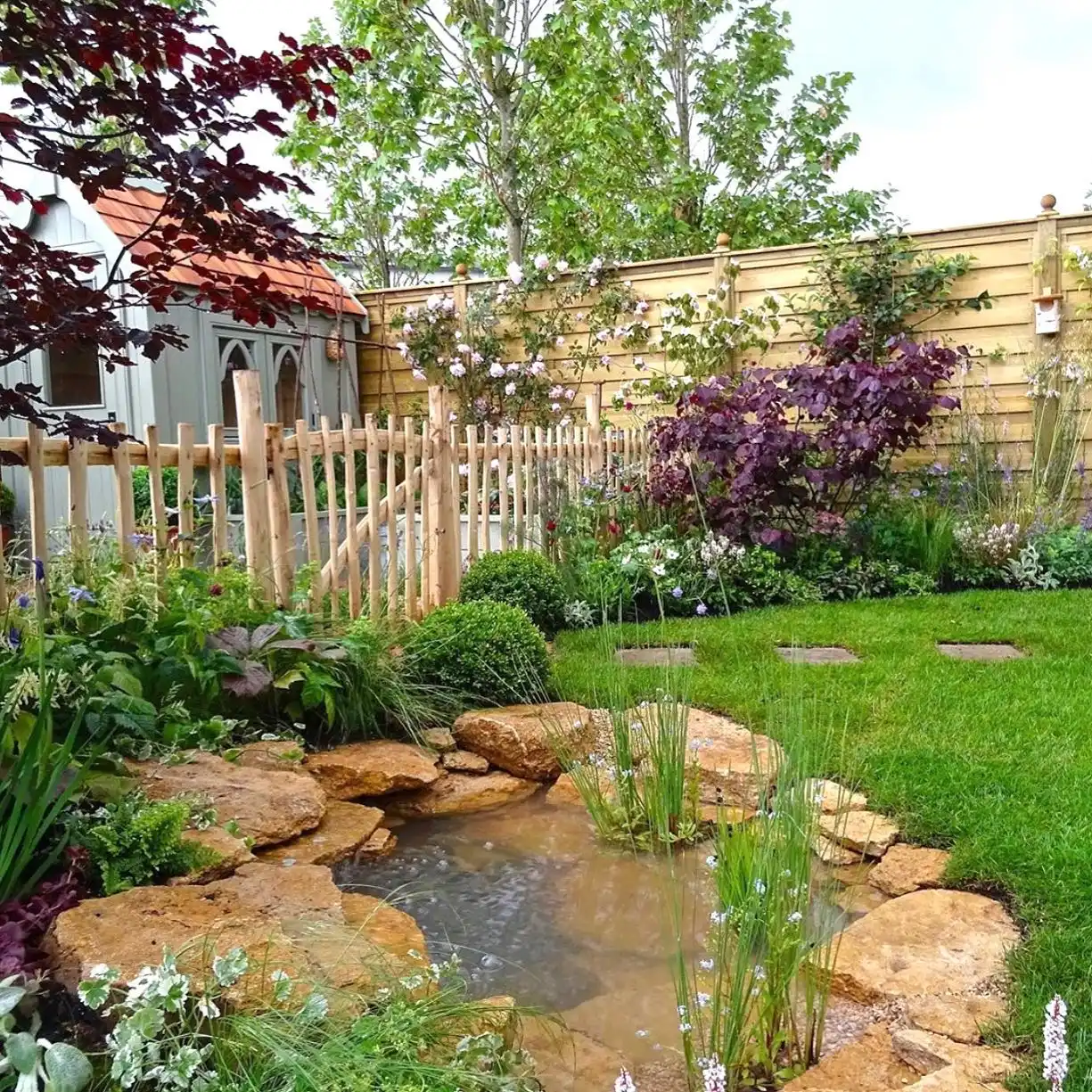
Lawn on one side, planted border on the other. That mix suits a family garden.
Kids get open grass and stepping stones to run along. Frogs and insects get tall rush like plants with tiny white flowers, plus a thick border to slip into. Pale golden stone frames the water, and a small ripple near the back shows where it moves. A chestnut paling fence and a grey shed behind keep the whole corner private.
Give the pond a busy side and a quiet side, and both groups of visitors are happy.
Open lawn on one side is for play. Thick planting on the other side is for hiding. The pond sits right where the two meet.
7. Floating Plants, a Log and One Very Interested Cat
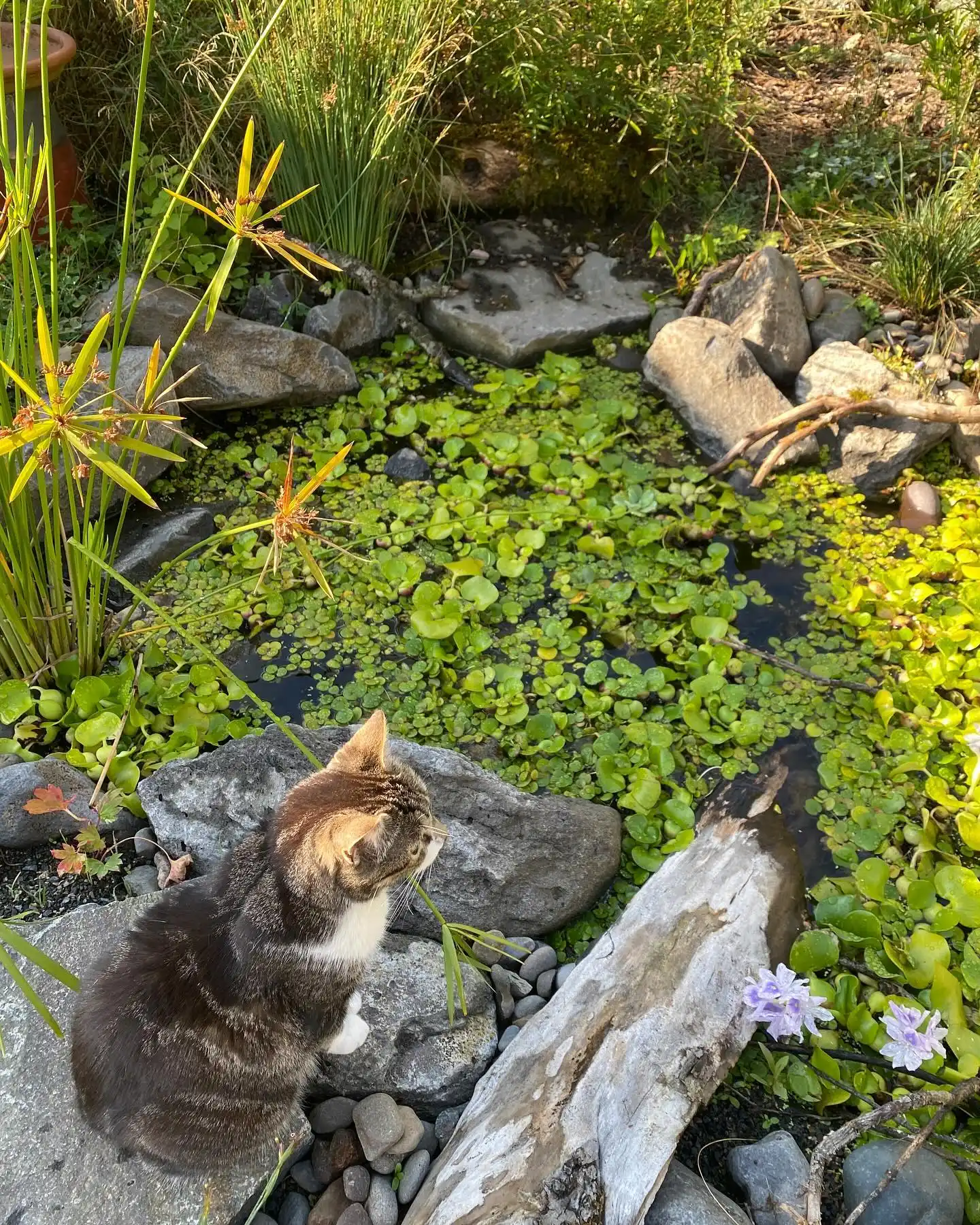
The water here is almost hidden under a green carpet of floating leaves. A weathered log lies half in the pond like a bridge for small visitors, and tall sedge and grass layer up behind the rocks. A tabby cat sits on a flat stone, watching closely.
One warning. The purple flowers look like water hyacinth, which is restricted in some places because it spreads fast. Check your local rules and choose a native floating plant instead.
Recreate this look
Idea 08 of 08
8. A Tipped Terracotta Pot Makes an Instant Frog Hideout
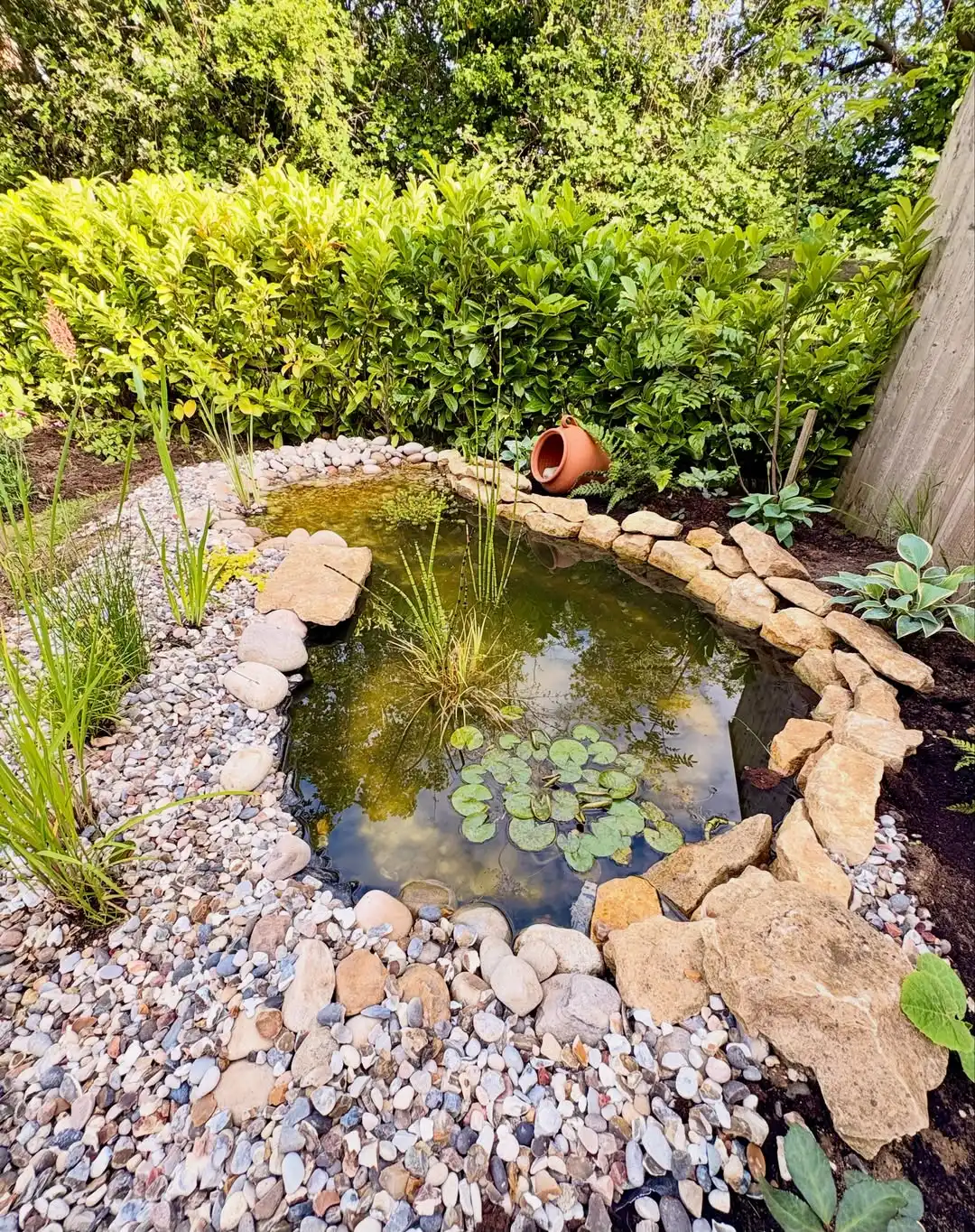
Five minutes and one old pot.
Lay it on its side near the water, half hidden by plants, and you have a cool, damp shelter. This one sits at the back of the pond in the shade of a thick hedge, with hostas close by. Pebbles slope into the water at the front, and stone steps rise up the other side. Lily pads and a clump of tall green stems fill the middle.
Face the opening toward the water and keep it out of the sun.
Your Turn
A small garden wildlife pond does not need to be big, fancy or finished. Every garden above started with a hole, some stones and a few plants, then let nature do the rest.
Pick one idea, maybe the pebble beach or the tipped pot, and try it this season. Bring the kids along for the digging and the first look at who has moved in.
Save this post to your Pinterest board so it is easy to find when you are ready to start, and follow along for more small garden ideas.
Related Garden Guides
- Courtyard garden design: measuring, light, soil and budget for an enclosed space.
- Woodland garden design: fern paths and moss floors for shady yards.
- Flowers that attract hummingbirds: 9 tubular blooms for porches, patios and fences.
- Browse every guide on small garden design ideas: layouts that make every foot count.
Written by
Nina Calloway
Nina founded gardenkinds after nine years of gardening, starting in a 200 sq ft London backyard and now on a half-acre cottage plot in Kent. She writes the cottage, flower and small-garden guides, and grows almost everything she recommends before it goes on the site.
Stuck on your own garden?
Send us your soil, light and a photo. Nina answers a few reader questions every month, and the best ones end up in an update to this list.
Keep Reading.