Garden Paths with Bricks Setups for the Yard You’ve Been Dreaming About
Plain grass paths turn to mud by March. Gravel wanders into the flower beds. A brick path does neither, and it looks better every year as the edges soften and moss moves in.
This post may contain affiliate links. If you buy through them we may earn a small commission at no extra cost to you. It never changes what we recommend — read our affiliate disclosure.
 pin it for later ✳
At a glance
TL;DRIn this list
8 ideas, each with a photo
Filed under
Read time
7 min · updated 2 Oct 2026
Garden paths with bricks come in more styles than most people expect. You can lay them as a narrow ribbon through a shady border, fan them into sunbursts, or spread them across a whole courtyard. Old bricks in mixed reds and greys give that warm, lived in look, and they pair well with pebbles, stone slabs or round pavers when you want more pattern.
Here are eight real paths. One winds through a shady border with a cat watching from the mulch, and one is still being laid. Each idea shows what makes it work and one simple way to copy it.
Some need a weekend. Some need patience. Pick one small stretch, like the walk from the gate to the door, and start there.
1. Wind One Narrow Brick Path Through a Shady Border
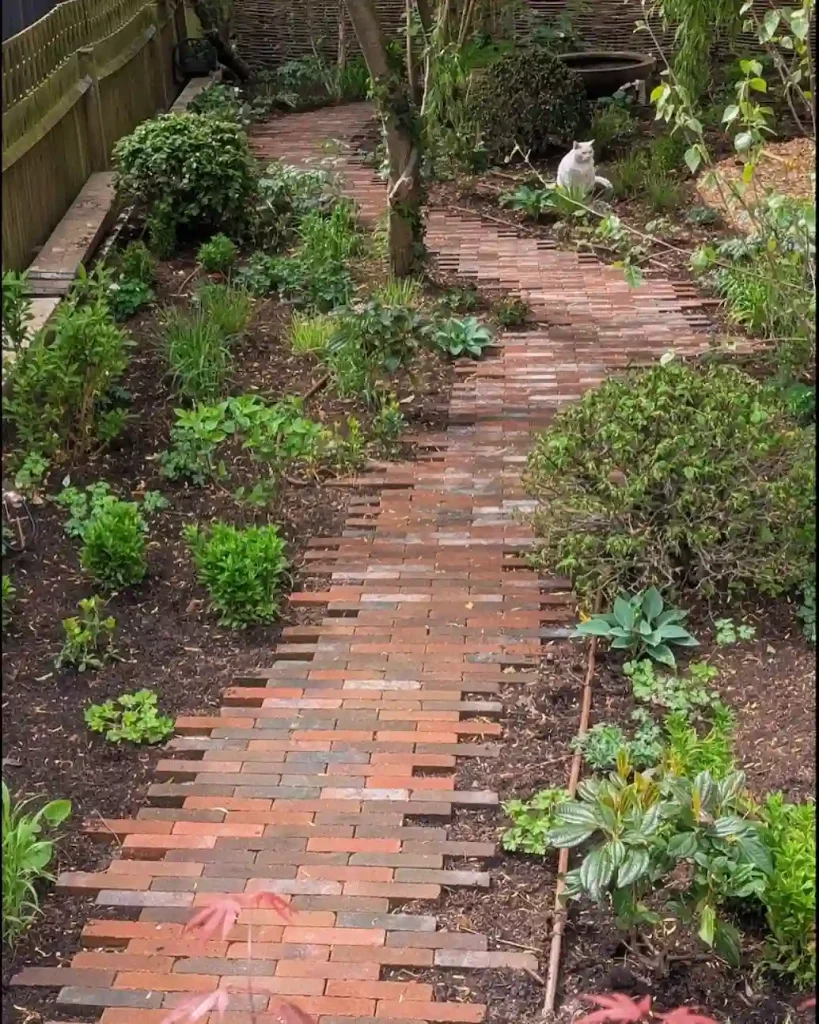
Narrow beds can still hold a path with real character.
Here the bricks run in long, staggered rows in warm red, rust and grey brown. The path bends left, then right, so you never see the whole thing at once. Dark mulch sits on both sides, and a white cat watches from the middle of it all.
- Mixed brick shades look aged from day one
- Bends make a short path feel longer
- Hostas, glossy shrubs and spiky grasses keep the edges soft
- Dark mulch makes the red stand out
Let the plants flop over the brick edge a little. It makes the path look like it has always been there.
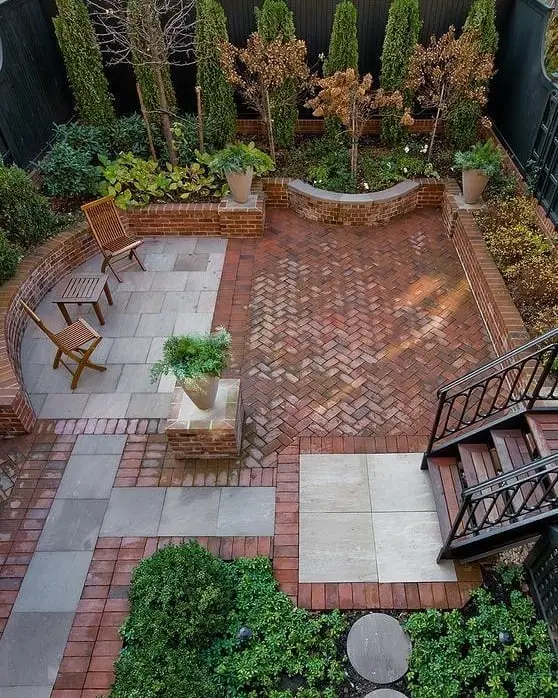
2. Pair Herringbone Brick with Pale Stone in a Small Courtyard
Two paving materials can share a small space if one of them borders the other.
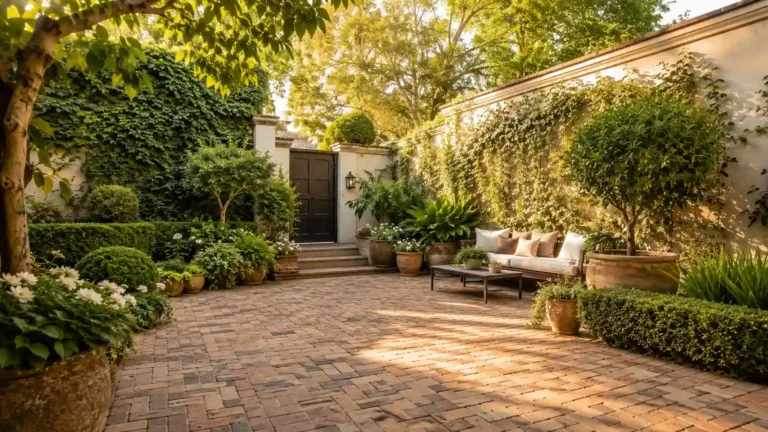
In this courtyard, red brick laid in a herringbone pattern fills one side, and soft grey stone slabs fill the other. A brick border runs between them, so the change looks planned. Low curved brick walls hold the beds, and tall narrow evergreens stand against a dark fence.
Brick side: warm, busy and full of pattern.
Stone side: cool, calm and good for a table and chairs.
Keep the pots matching. Two or three of the same shape tie it all together.
Run a brick border between the two materials.
Repeat one pot shape around the space.
Adding a third paving color.
Switching materials with no border between them.
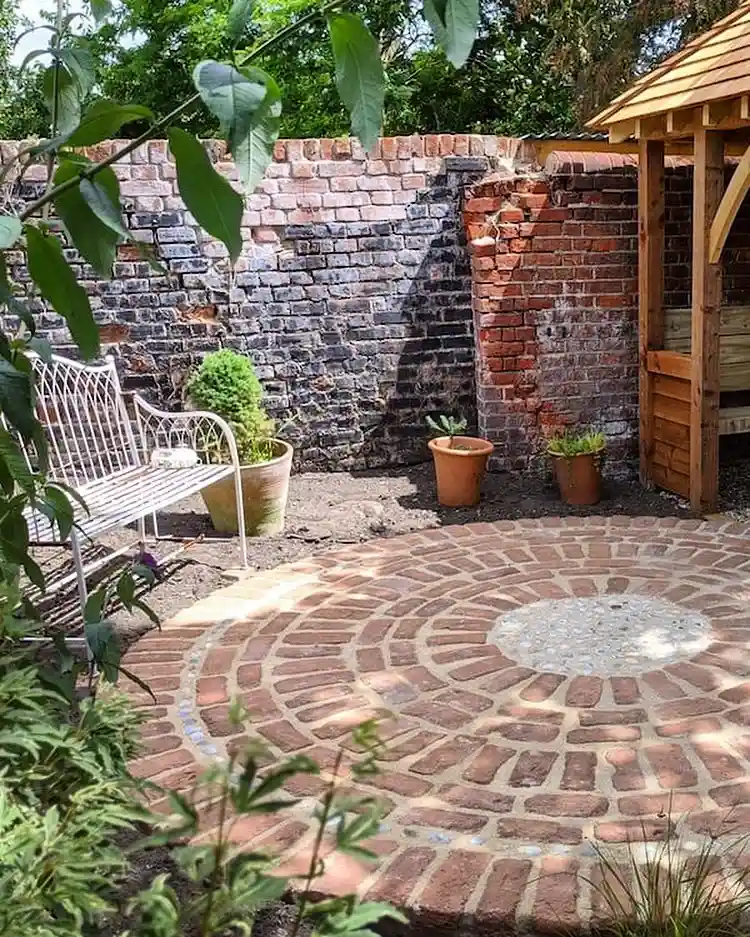
3. Build a Round Brick Seating Spot Against an Old Wall
A circle of brick in the corner of a yard gives you somewhere to sit instead of just walk past.
Rings of bricks fan out from a pale pebble center, and a lighter brick edge finishes the curve. Behind it stand an old weathered wall in reds and blue greys, a white metal bench and a few terracotta pots. Dappled light does the rest.
Plan the circle first, then build it from the middle out.
Push a stake into the center and tie a string to it. Use the string to mark the outer edge.
Set the pebble or stone center first so every ring has something to follow.
Lay bricks in rings from the middle outward, side by side, and finish with an edge row.
 Related guideEverything to Know Before You Start Your Courtyard Garden DesignHow-to · Small Garden Design · 8 min read
Idea 04 of 08
4. Run a Brick Path Between Raised Vegetable Beds
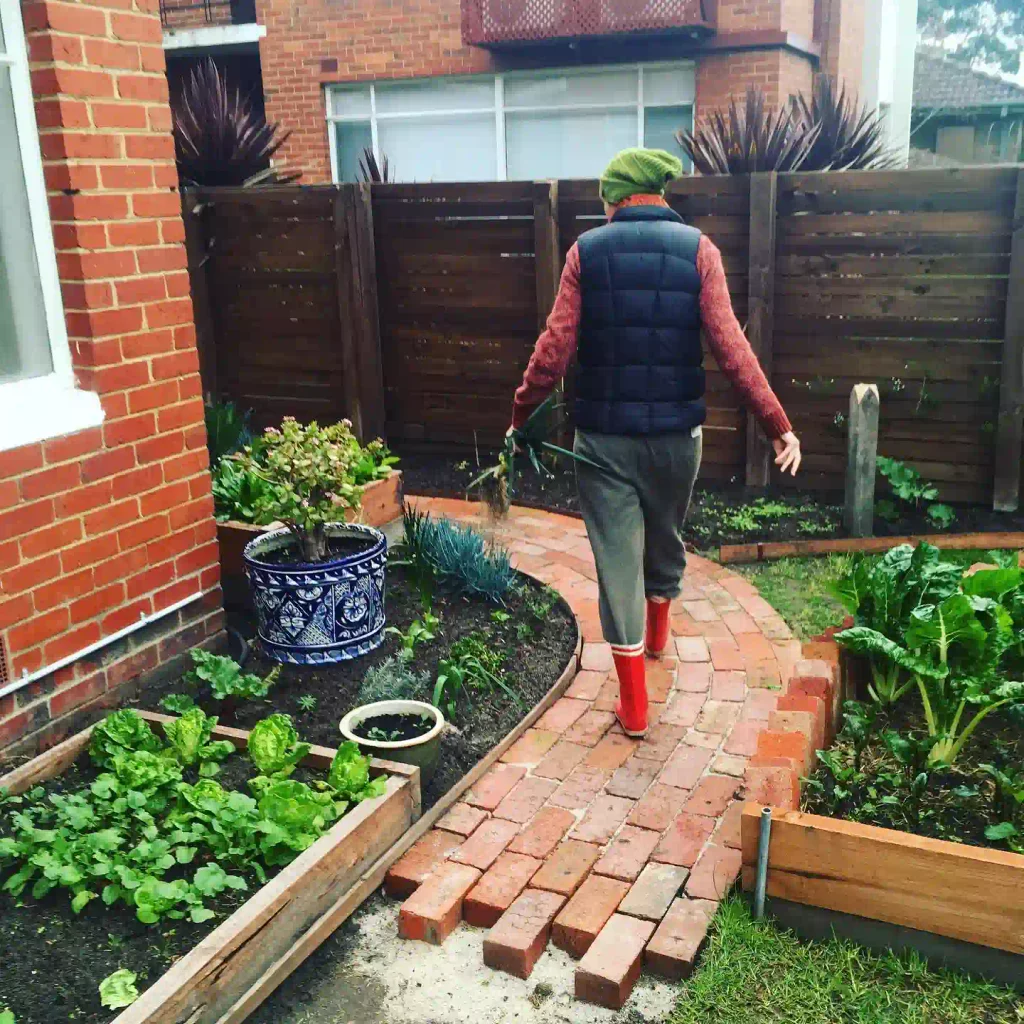
Boots on, an armful of greens, and a short walk back to the house.
That is the scene here, and the path makes it work. Reclaimed bricks curve past a big blue patterned pot, with raised timber beds of lettuce and chard on either side. Bricks stood on end edge the bend by the chard. The boots even match the path.
💡 Quick Tip
Make the path wide enough to carry a full watering can in each hand. Narrow paths get trampled at the edges.
The red house wall behind adds even more warmth, and a plain dark fence keeps the planting in front as the star.
5. Set Brick Sunbursts with Pebble Centers Along the Path
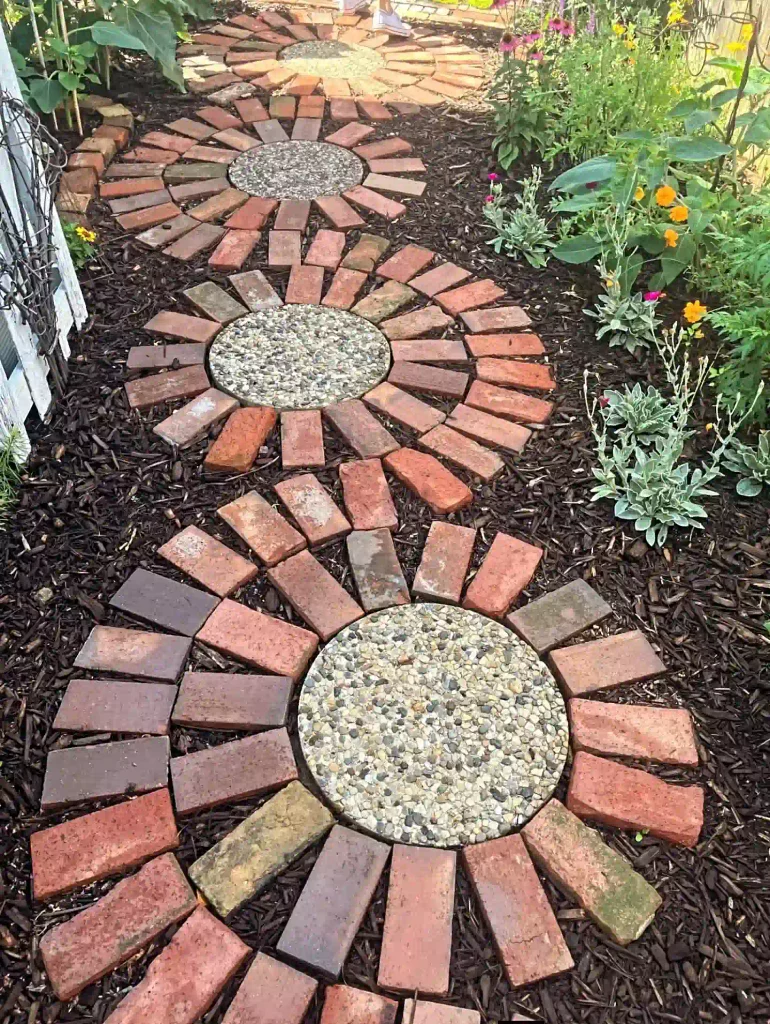
Why walk a straight line when the path can look like a row of flowers?
Each round piece has a disc of small pebbles in the middle, and old bricks fan out around it like petals. Reds, browns and a few mossy greens make every ring slightly different. Dark mulch fills the space between them, while fuzzy silver leaves and pink coneflowers grow right at the edge.
Ring by ring, the path pulls your eye forward.
Watch the spacing. Old bricks come in different sizes, so dry fit each ring before you commit.
6. Mix Salvaged Bricks, Pebbles and Round Pavers into One Mosaic Path
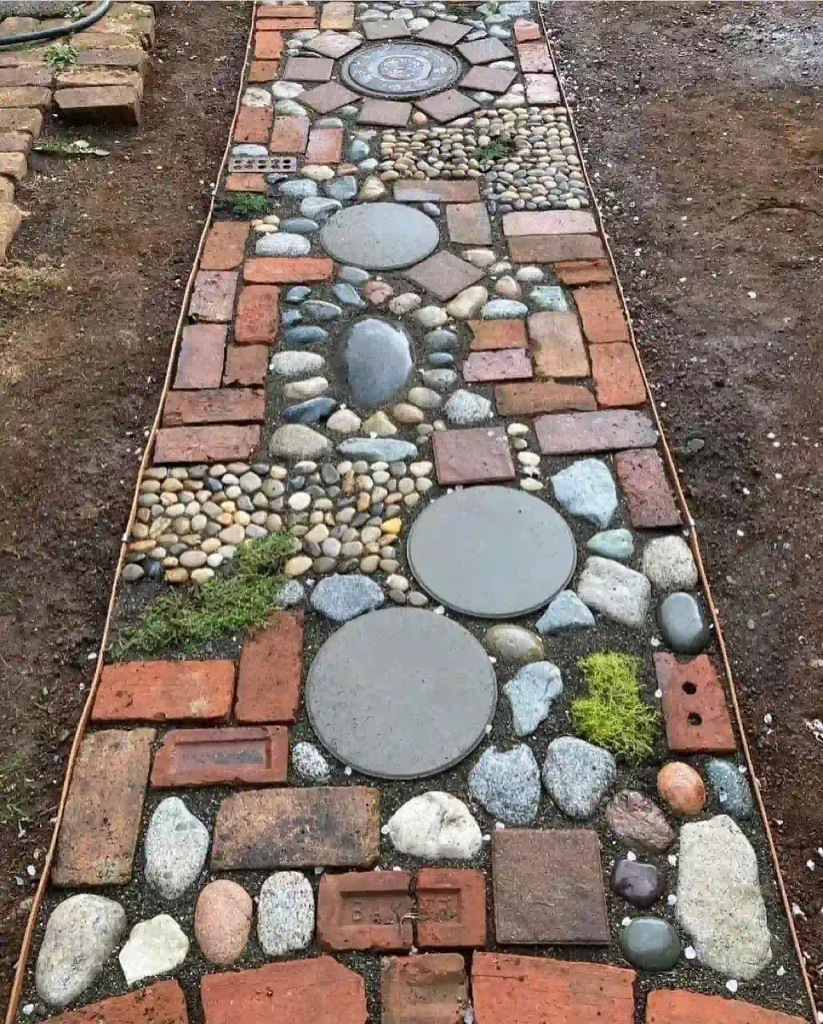
Nothing here matches, and that is the whole charm.
Salvaged bricks form the frame. Inside it sit grey round pavers, river pebbles in tight patches, flat stones and a flower shape made of square pavers at the far end. Moss tucks into the gaps. A thin metal strip along each side holds it all in place. A couple of bricks even show their old stamped marks, which is fun to hunt for.
Pebble patches feel bumpy underfoot, so put the round pavers along the line you actually walk.
| Bricks and pavers | Pebbles and stones |
|---|---|
| Underfoot: flat and steady | Underfoot: bumpy and textured |
| Best spot: along the walking line | Best spot: in patches between |
| Look: warm and orderly | Look: cool and varied |
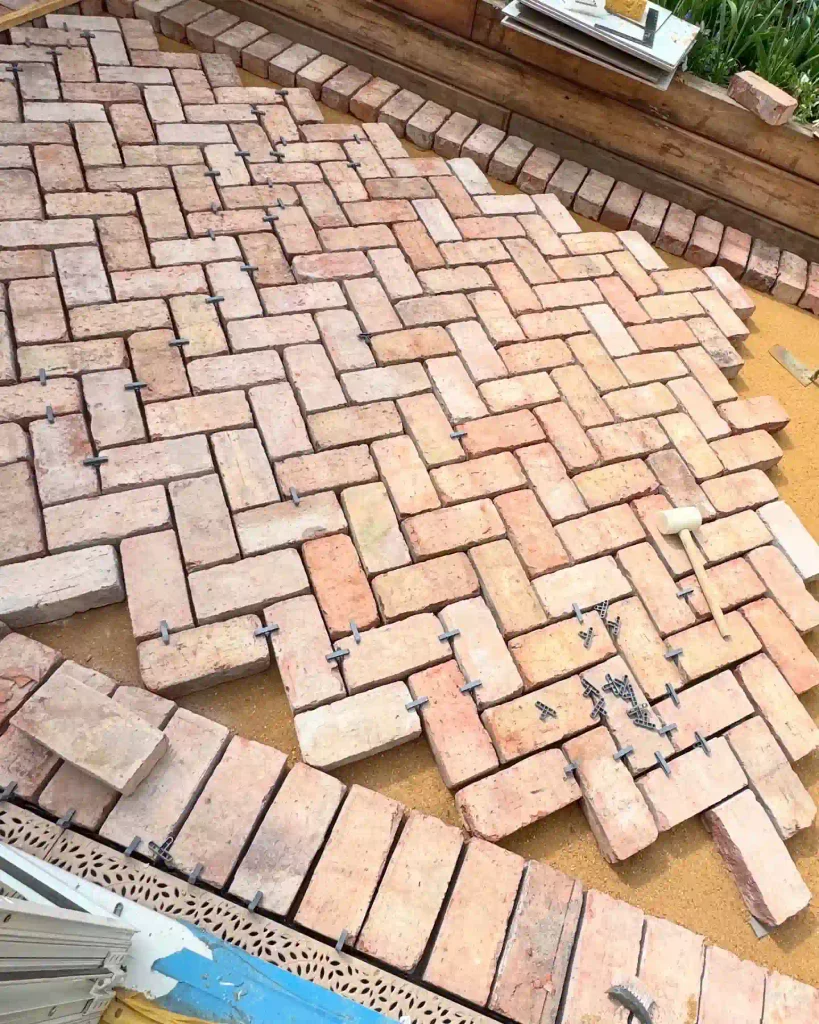
7. Dry Lay Your Bricks First and Let Spacers Do the Hard Work
Here is what the middle of a brick project really looks like.
Soft pink and cream bricks sit in herringbone and basket weave patches on a golden sand base. Small plastic spacers keep the gaps even, and a rubber mallet waits nearby. A row of bricks along the edge holds everything in.
Base: level sand, raked flat before the first brick.
Gaps: spacers every few bricks so the lines stay straight.
Taps: a few gentle knocks with the mallet to seat each brick.
Loose bricks on a sand base, spacers still showing and the gaps open.
Gaps filled, bricks locked in place and a surface that feels solid underfoot.
Idea 08 of 08
8. Garden Paths with Bricks Look Best When They Curve
The curve is the whole trick here.
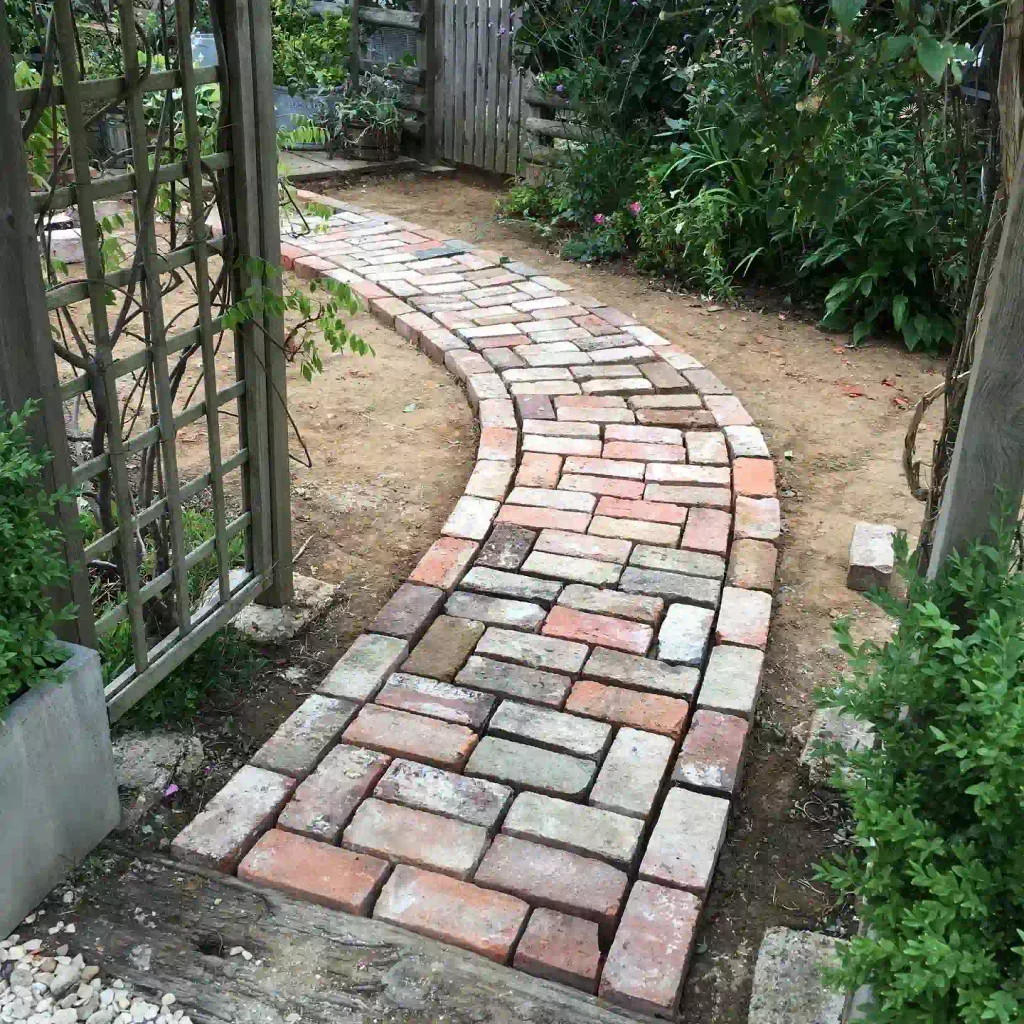
The path leaves a wooden trellis gate and bends toward the back of the garden. Pale pink, cream, rust and grey bricks sit in a staggered pattern, with an edge row that follows the bend. Soil still shows on both sides, waiting for plants, while green shrubs and climbers already frame the way in.
Lay a garden hose on the ground first and move it until the bend looks natural. Then build the path along it.
Straight gets you there. A curve makes you want to follow it.
A bend hides the end of the path, so a small yard feels bigger and every step has a reason.
Conclusion
A brick path does not have to be long, straight or new. It needs a clear route, an edge that holds, and a few plants close enough to soften the line. Garden paths with bricks reward patience, so start with the pattern that suits your space, whether that is a ribbon, a ring or a curve.
Lay a short test patch first and see how the colors look in your light. If you want more ideas for the beds around your path, our cottage garden and garden edging posts are a good next read.
Save this post to your garden ideas board so it’s easy to find when you pick up the first brick.
Related Garden Guides
- Gardens with boulders: stone paths, steps and walls that look settled.
- Brick planters: 8 builds you can finish in a weekend.
- Woodland garden design: fern paths and moss floors for shady yards.
- Sloped backyard landscaping: 8 ideas that keep flat space for family life.
- Browse every guide on garden edging ideas: brick, stone and steel borders.
Written by
Nina Calloway
Nina founded gardenkinds after nine years of gardening, starting in a 200 sq ft London backyard and now on a half-acre cottage plot in Kent. She writes the cottage, flower and small-garden guides, and grows almost everything she recommends before it goes on the site.
Stuck on your own garden?
Send us your soil, light and a photo. Nina answers a few reader questions every month, and the best ones end up in an update to this list.
Keep Reading.