DIY Garden Rock Art Ideas for Rainy Afternoons and Craft-Loving Grandchildren
A rainy afternoon with a grandchild can feel long by two o’clock. Then someone finds a bucket of smooth stones by the back step, and the whole day has a plan.
This post may contain affiliate links. If you buy through them we may earn a small commission at no extra cost to you. It never changes what we recommend — read our affiliate disclosure.
 pin it for later ✳
At a glance
TL;DRIn this list
7 ideas, each with a photo
Filed under
Read time
7 min · updated 3 Oct 2026
Painted stones are cheap, forgiving, and easy for small hands. They also last, which is the best part. The face your grandchild paints today can grin at you from the flower bed for months.
This roundup of diy garden rock art mixes real garden photos with fresh ideas you can start at the kitchen table. You will find a goofy boulder with pebble feet, a school of clownfish stones, and a tall smiling mushroom with a ladybug on its hat. There is a rainy day painting setup for the porch, a kindness rock box the whole street can share, and painted markers for the herb bed.
Every idea comes with a quick plan, a few honest tips, and a small visual you can save. Pick one, grab a brush, and let the rain do its thing.
1. Give a Big Garden Boulder a Goofy Face and Pebble Feet
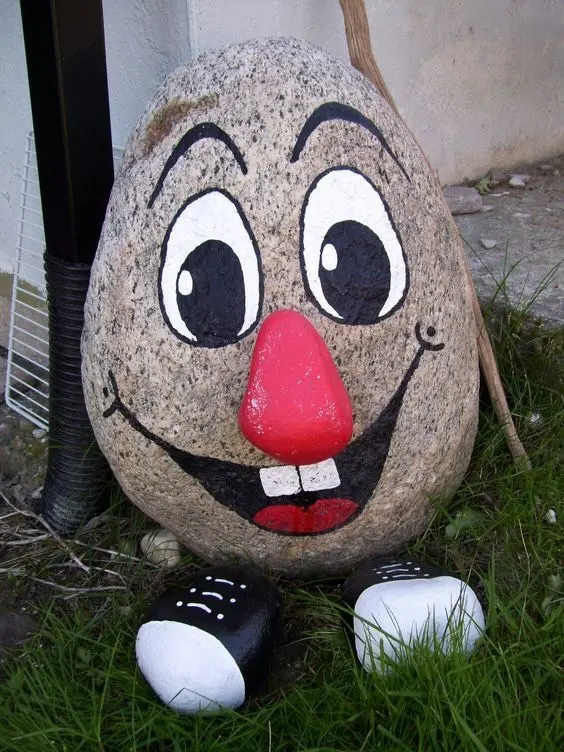
A round granite boulder is already halfway to being a character. The painter here gave it wide white eyes with black pupils, thick curved eyebrows, and a big open smile with two square front teeth. The nose is a bright red stone that sticks out from the face, so it catches the light.
Two small stones painted black and white sit in the grass below, like a pair of sneakers.
The speckled granite shows through the paint, so the face looks like it grew out of the rock. On a rainy day, kids can paint the small stones at the table while a grown up carries the big one to a dry spot.
Paint the white parts first and the black outlines last. A wobbly line is easy to fix over dry white paint.
Wash a big rounded rock and let it dry all the way.
Paint the eye whites and the two front teeth with white outdoor paint. Add a second coat once the first is dry.
Add black pupils, thick eyebrows, and the wide smile. Paint the red mouth shape last.
Paint one small stone red for the nose and two small stones black and white for shoes. Set them in place on the grass.
2. Clownfish Pebbles That Look Ready to Swim Down the Path

Five smooth stones, five little fish.
- Orange bodies with white bands edged in thin black lines
- Darker orange fins painted on the side and tail
- Big round eyes with a tiny pupil, and a small smile on the lead fish
They rest among gray and tan pebbles, so the whole pile looks like a stream bed.
Pick oval stones with one end a bit narrower, because that end becomes the tail. Set them in a gravel bed or a shallow bowl of pebbles and a few fish look like a school.
Let each grandchild name their own fish. A named stone gets painted with a lot more care.
3. Set Up a Rainy Day Painting Table on the Covered Porch
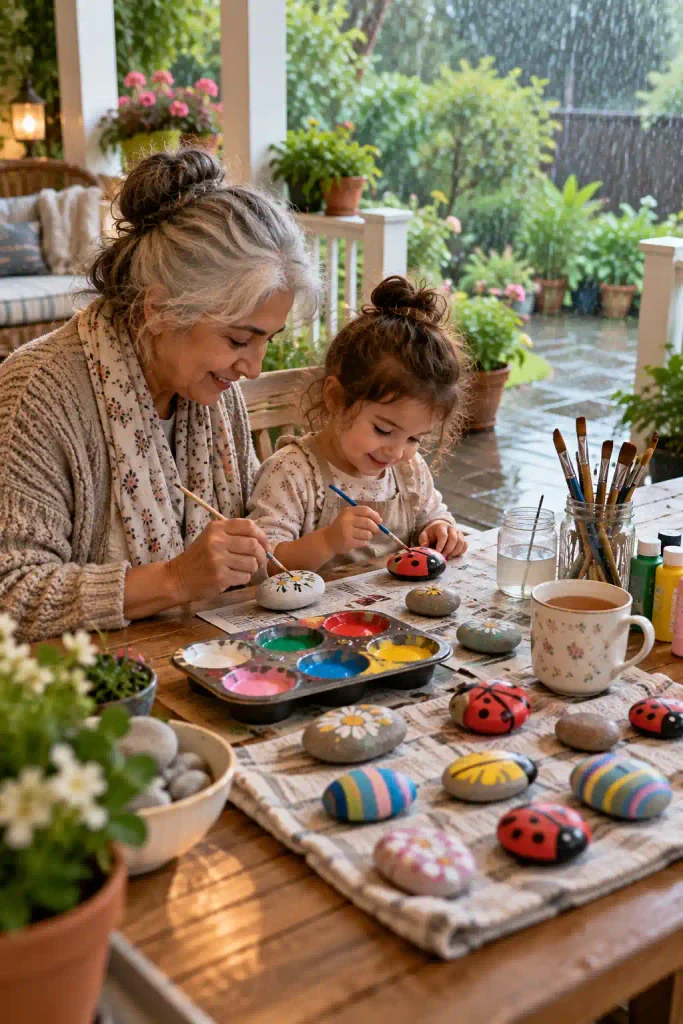
Rain does not have to cancel craft time. A covered porch gives you fresh air, the sound of drops on the roof, and a table where spills do not matter.
Lay cardboard or an old shower curtain over the table. Put the stones in a bin, the paint in a muffin tin, and the brushes in a jar of water. Let the youngest pick the first stone, because choosing is half the fun.
Finished stones dry on a tray lined with newspaper. Leave the sealer coat to the grown ups and do it outdoors with the air moving.
Wash and dry every stone before painting.
Pour small puddles of paint into a muffin tin.
Painting on damp stones, because the paint can peel.
Thick globs that never fully dry.
 Related guideHow to Build a Desert Landscaping Backyard for Any Budget and Yard SizeHow-to · Small Garden Design · 11 min read
Idea 04 of 07
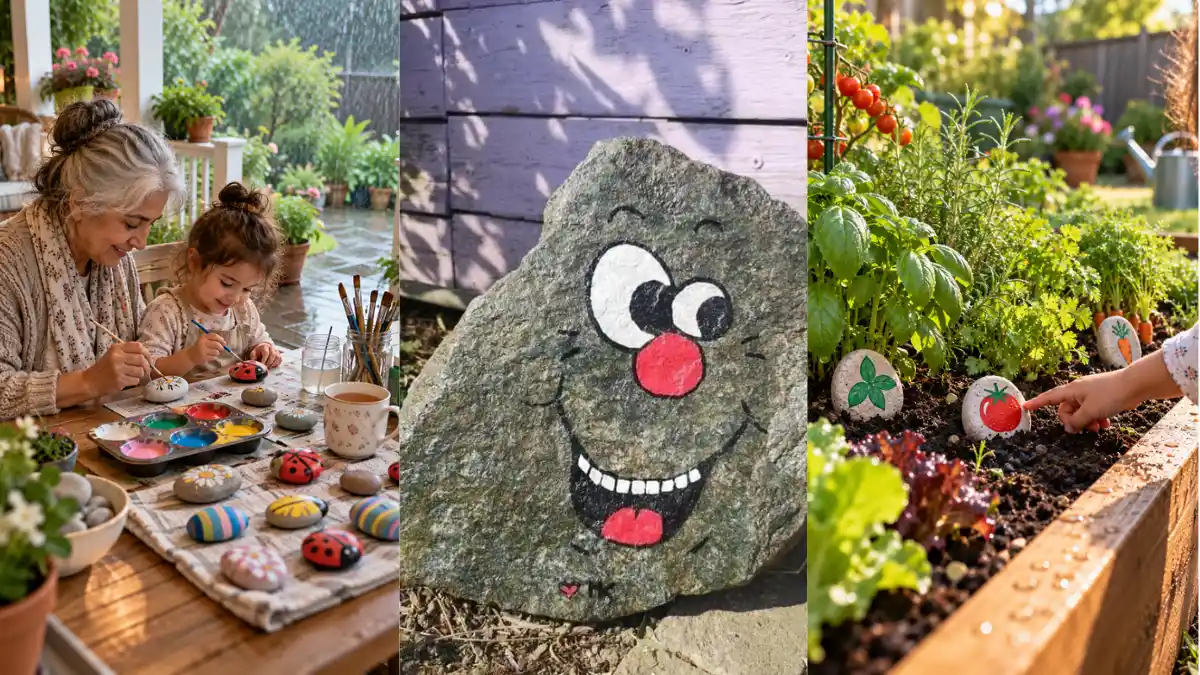
4. A Grinning Grey Stone Leaning on the Garden Shed
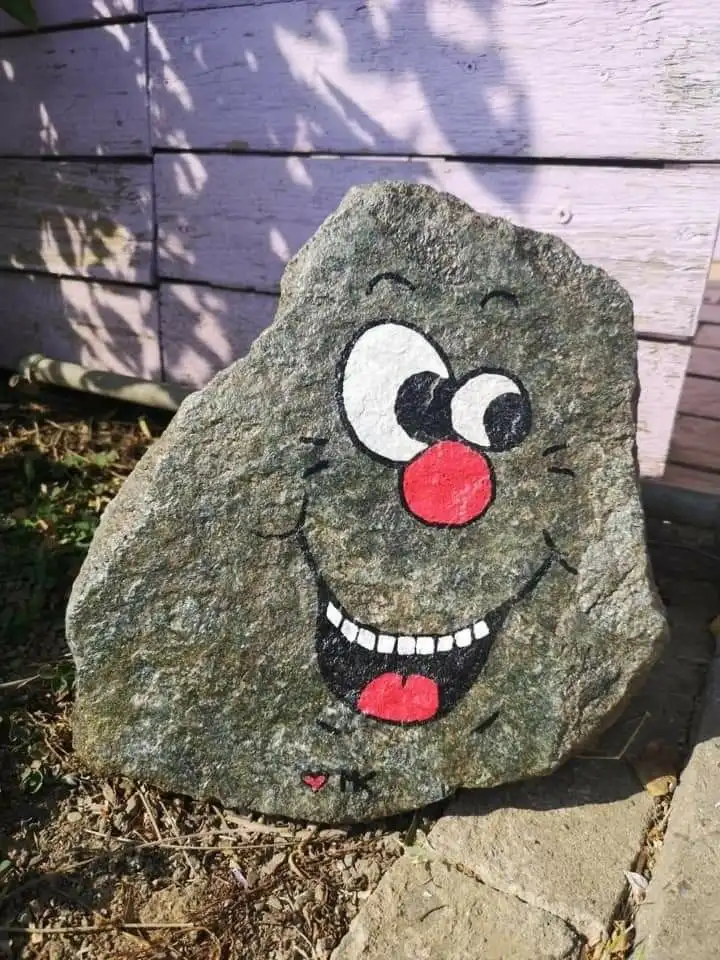
Not every stone needs to be round. This one is flat in back and lumpy on top, and the painter worked with every bump. Two big white eyes glance off to one side, with black pupils and curved brows above them. A round red nose sits in the middle, and the wide grin shows a row of white teeth and a red tongue.
The grey-green speckles show right through the paint. The stone leans on a pale lavender shed wall where the light falls in patches. Near the bottom corner there is a tiny red heart and a pair of initials, like a signature.
Side glances make faces funnier. Shift the pupils to one corner of each eye and the stone looks like it is up to something.
💡 Quick Tip
Let each grandchild sign the bottom corner with a tiny heart and their initials. It turns a plain stone into their stone, and they will check on it every time they pass the shed.
5. A Kindness Rock Box Where Neighbors Take One and Leave One
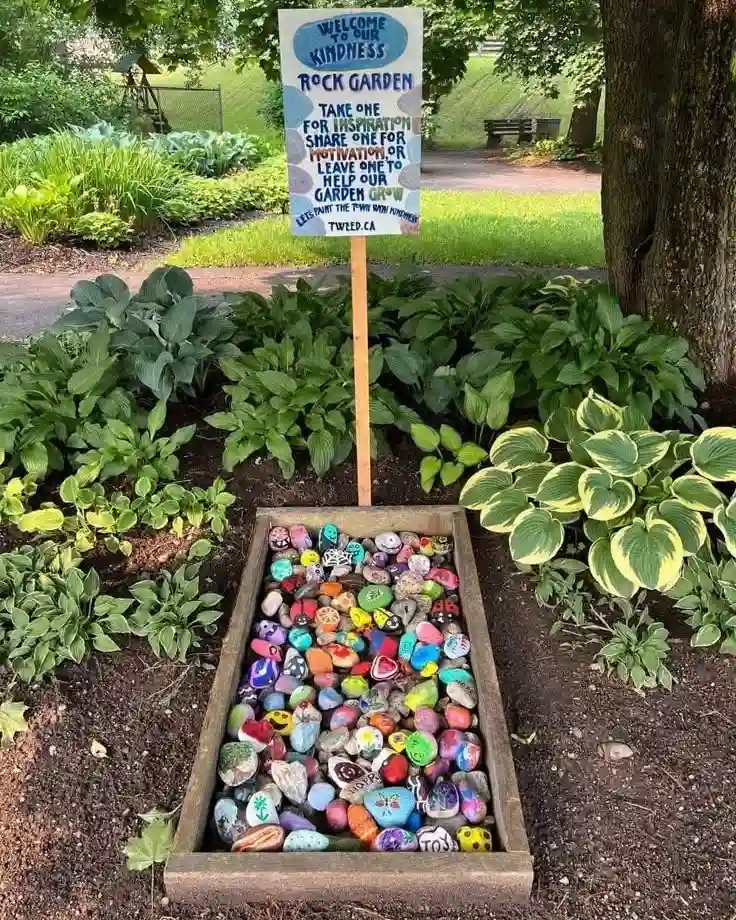
A plain wooden box sits low in a bed of hostas, packed with painted stones in every color. Some have small flowers, some have butterflies, and some are just bright swirls. A painted sign on a wooden stake explains the idea: take a stone for a boost, share one with someone else, or leave one behind to help the garden grow.
The green and cream hosta leaves around it make the colors pop without any extra work.
Grandchildren love the leaving part. Paint the stones on a wet afternoon, then carry them out together when the rain stops.
Build your own take one, leave one box
Rain makes the stones. Sunshine fills the box.
6. Painted Plant Marker Stones for the Herb and Veggie Bed
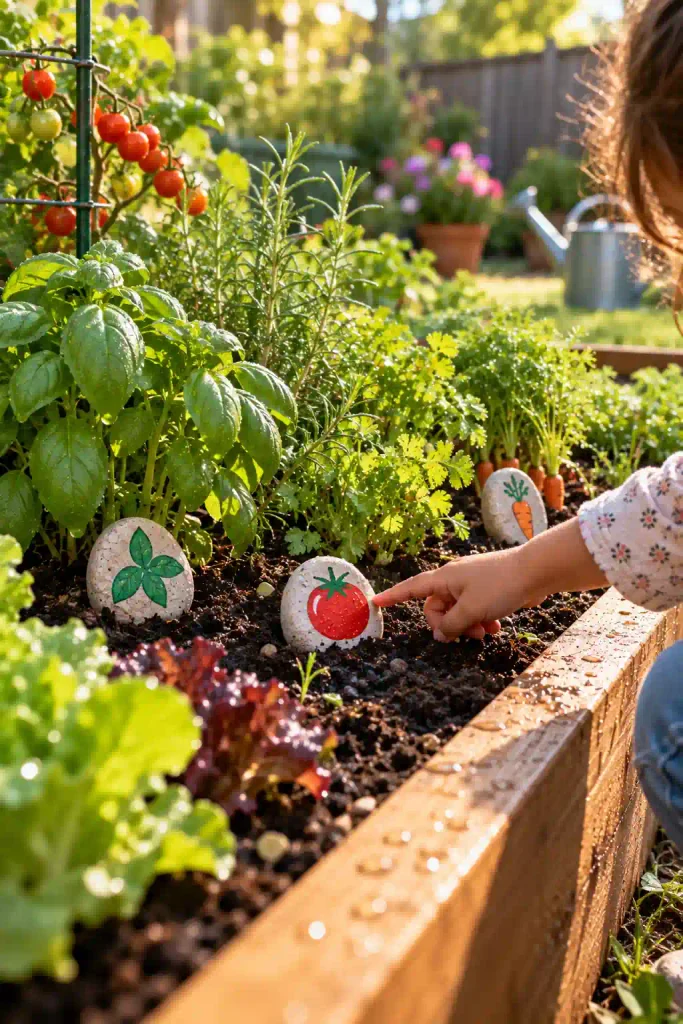
Nobody remembers what they planted in April. Flat stones with a tiny painted picture fix that, and small children can match the picture to the plant even before they read.
- Basil: a green leaf with a pale center line
- Carrots: an orange cone with feathery green tops
- Strawberries: a red heart shape with tiny yellow seeds
- Chives: a few thin green lines in a bunch
Paint one coat of background color first, then the picture on top. Wedge each stone upright at the front of its row, or lean it against a short stick.
A good rainy day job: paint the whole set at the table, then plant the markers when the soil dries out.
Rows of green seedlings that all look the same, and a lot of guessing at watering time.
Every row has a painted stone, and a grandchild can point to the basil without asking.
7. A Giant Smiling Mushroom Guarding the Flower Bed
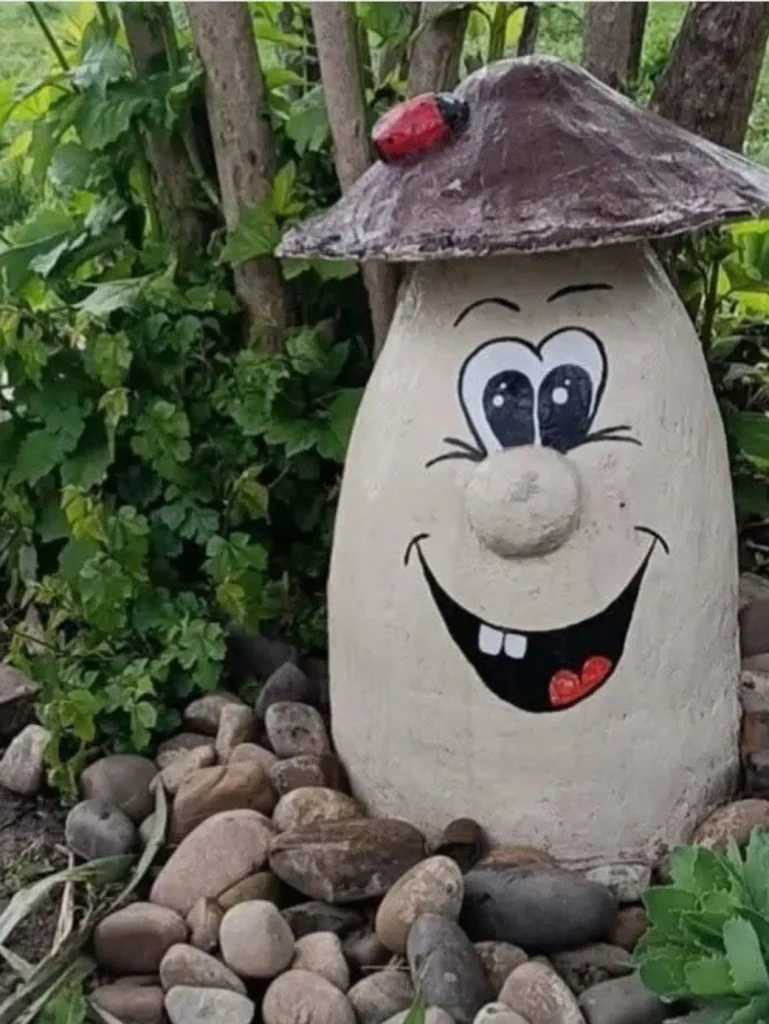
Meet the tallest, friendliest mushroom in the yard. It has a tall egg-shaped body and a wide brown cap with a rough, textured finish. A red ladybug sits on the top edge of the cap. The face has heart-shaped white eyes with big black pupils, a round raised nose, and a wide smile with two front teeth and a small red heart on the tongue.
It stands in front of leafy shrubs with a heap of rounded river stones around its base. The body looks smooth and pale, so it may be a shaped piece rather than a natural rock.
For a family version, paint a large rounded stone for the stalk and top it with a wide flat stone or a painted saucer for the cap. Kids can handle the ladybug and the face.
Anchor it well. A tall piece can tip when little ones lean on it.
Conclusion: Your DIY Garden Rock Art Plan
Good diy garden rock art does not need fancy skill. It needs a dry stone, a few jars of paint, and a grandchild with strong opinions about eyebrows.
Start with the idea that fits your afternoon. A smiling rock takes an hour. A mushroom or a kindness box can grow over a whole season. When the sun comes back, carry the finished stones outside together and let the kids pick where each one lives.
Save this post to your Pinterest garden craft board so the next rainy day already has a plan. And if your stones turn out funny, keep them that way.
Related Garden Guides
- Gardens with boulders: stone paths, steps and walls that look settled.
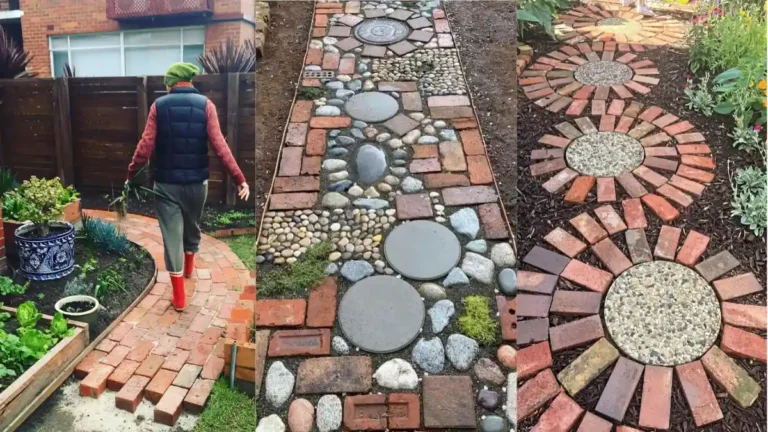
- Garden paths with bricks: patterns, bases and edges that soften with moss.
- Christmas porch decor ideas: festive looks without overdoing it.
- Browse every guide on garden edging ideas: brick, stone and steel borders.
Written by
Nina Calloway
Nina founded gardenkinds after nine years of gardening, starting in a 200 sq ft London backyard and now on a half-acre cottage plot in Kent. She writes the cottage, flower and small-garden guides, and grows almost everything she recommends before it goes on the site.
Stuck on your own garden?
Send us your soil, light and a photo. Nina answers a few reader questions every month, and the best ones end up in an update to this list.
Keep Reading.