Dahlia Flower Gardens for Late-Summer Color and Armfuls of Cut Blooms
Ten dahlia flower gardens for late-summer color, from gravel side paths to black raised boxes, with layouts and staking tips for armfuls of cut blooms.
This post may contain affiliate links. If you buy through them we may earn a small commission at no extra cost to you. It never changes what we recommend — read our affiliate disclosure.
 pin it for later ✳
At a glance
TL;DR
In this list
10 ideas, each with a photo
Filed under
Read time
6 min · updated 13 Oct 2026
Dahlias do not fade quietly in late summer. While other beds start to look tired, they keep pushing out bloom after bloom until the first frost, and every stem you cut makes the plant send up more.
That is the real draw of dahlia flower gardens. You get a border that looks full from the street and a steady supply of flowers for the kitchen table. A quick scroll through Pinterest can make it seem like you need a whole farm field to pull it off. You do not.
The ten gardens below range from a narrow gravel side path to a front yard fence line, black raised boxes, a long grass walkway and a field glowing at sunset. Some are tiny and some are huge, but each one shows a layout idea you can copy at your own size. You will see where the tall ones go, how to hide bare lower stems, which colors sit well together, and how to stake so heavy heads stay upright.
Pick the setup closest to your space and borrow from it. Your first armful of cut blooms is closer than it looks.
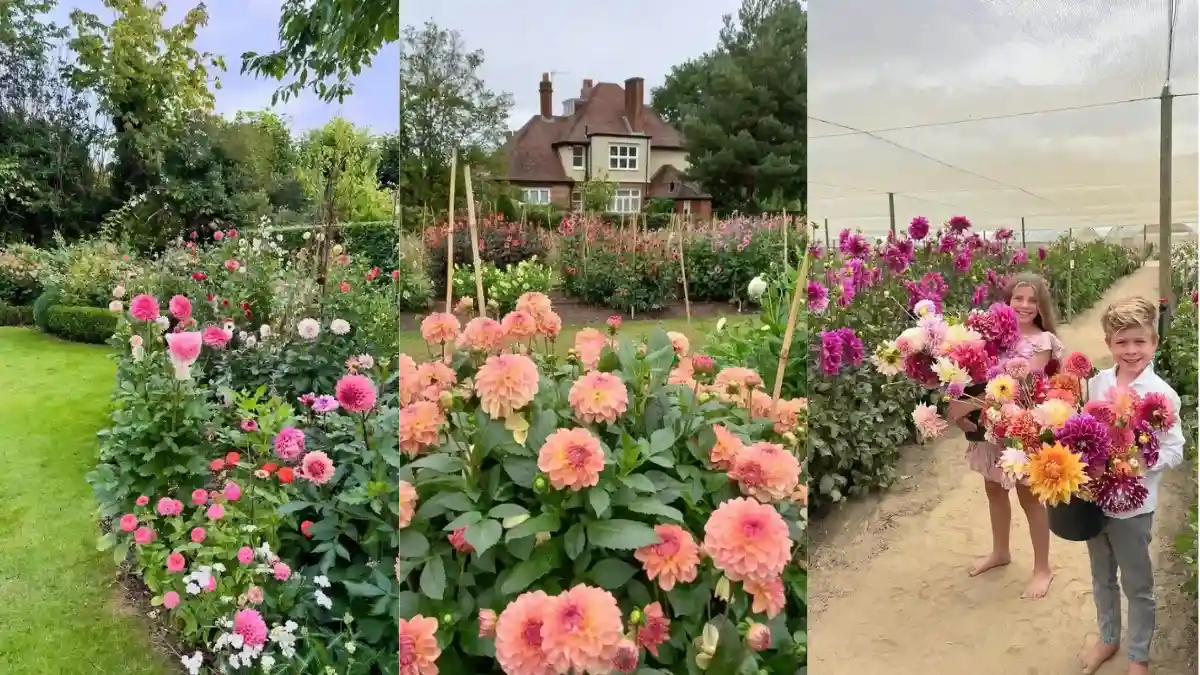
1. Plant a Mixed-Color Cutting Patch and Carry Out Buckets of Blooms
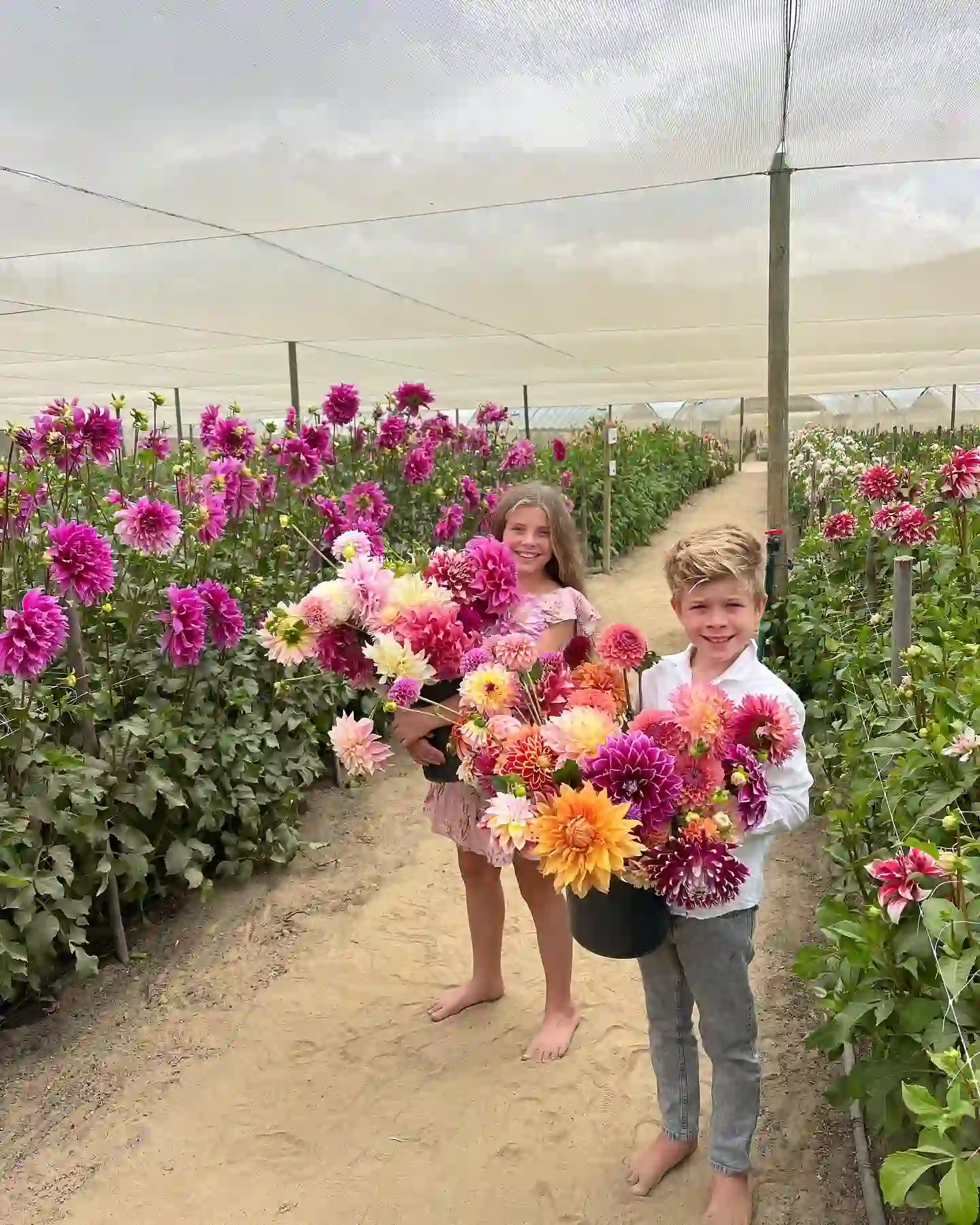
Two kids, two buckets, and more color than a flower shop. Rows of dahlias stand on both sides of a sandy path while netting overhead softens the light.
What makes this patch easy to cut from:
- Straight rows with a wide walking path, so you can reach every plant
- Magenta, peach, orange, cream and wine red growing side by side, which gives the bucket real variety
- Big dinnerplate heads next to smaller ball shapes for a loose, full armful
Keep a bucket of water in your other hand while you cut and the stems start drinking right away.
2. Line a Narrow Side Path With Potted Dahlias
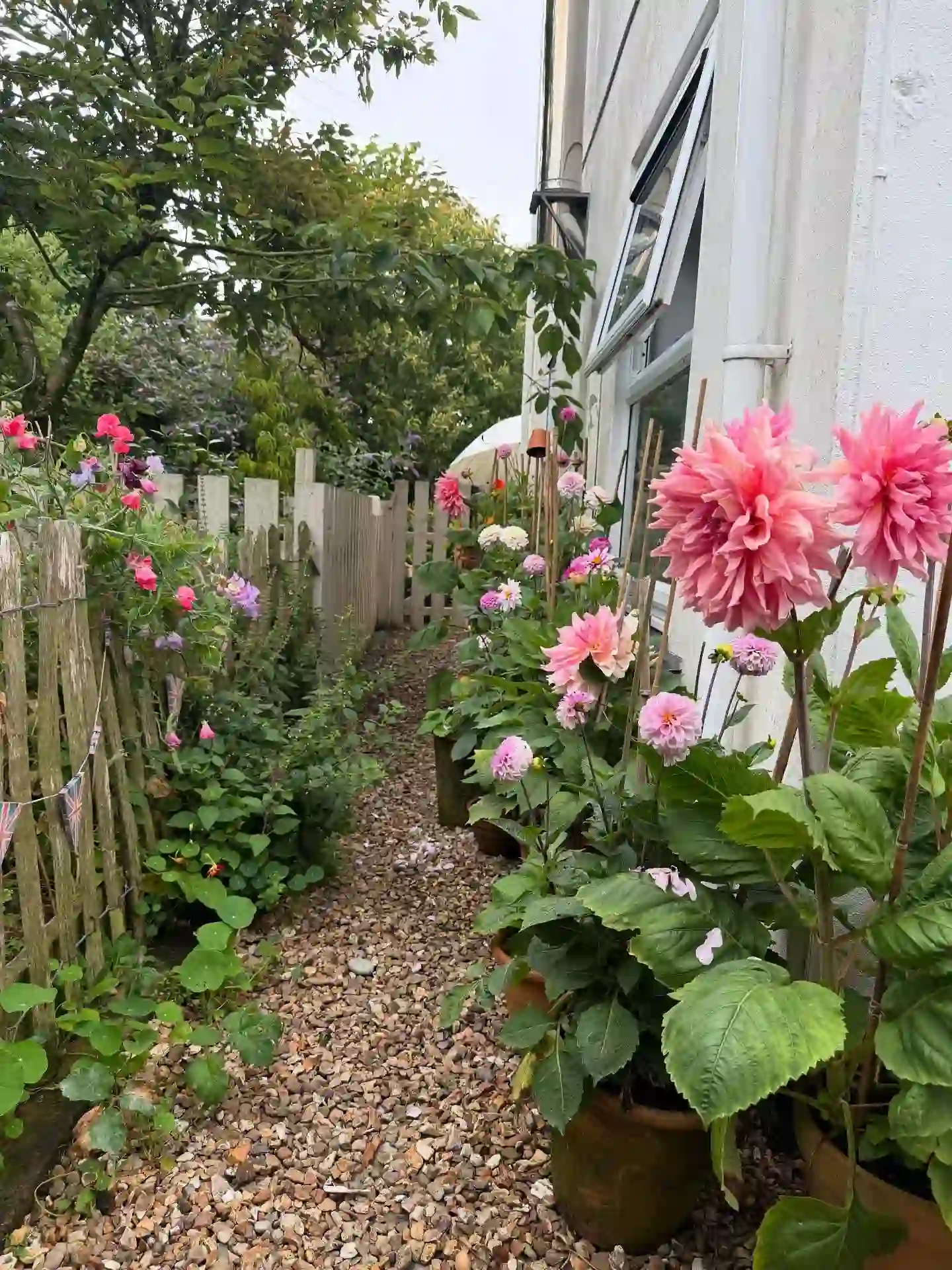
A gravel strip along a white wall is easy to ignore. Here it holds a row of terracotta pots, each with a dahlia tied to a bamboo cane, and the pink blooms rise almost to the window. Big dinnerplate flowers sit up front, with smaller pale pink and cream heads behind them.
Across the path, a weathered picket fence carries sweet peas in red, pink and lavender, with a little bunting strung along the rails.
Pots are the trick for tight spots. You can plant where there is no soil at all, and you can slide a pot into more sun if a corner turns out too shady.
Narrow does not mean boring.
💡 Quick Tip
Push the cane into the pot when you plant the tuber, not after. You will not spear the tuber later, and the stem grows up against its support from day one.
3. Turn a Fence Line Into a Blush and Coral Dahlia Border
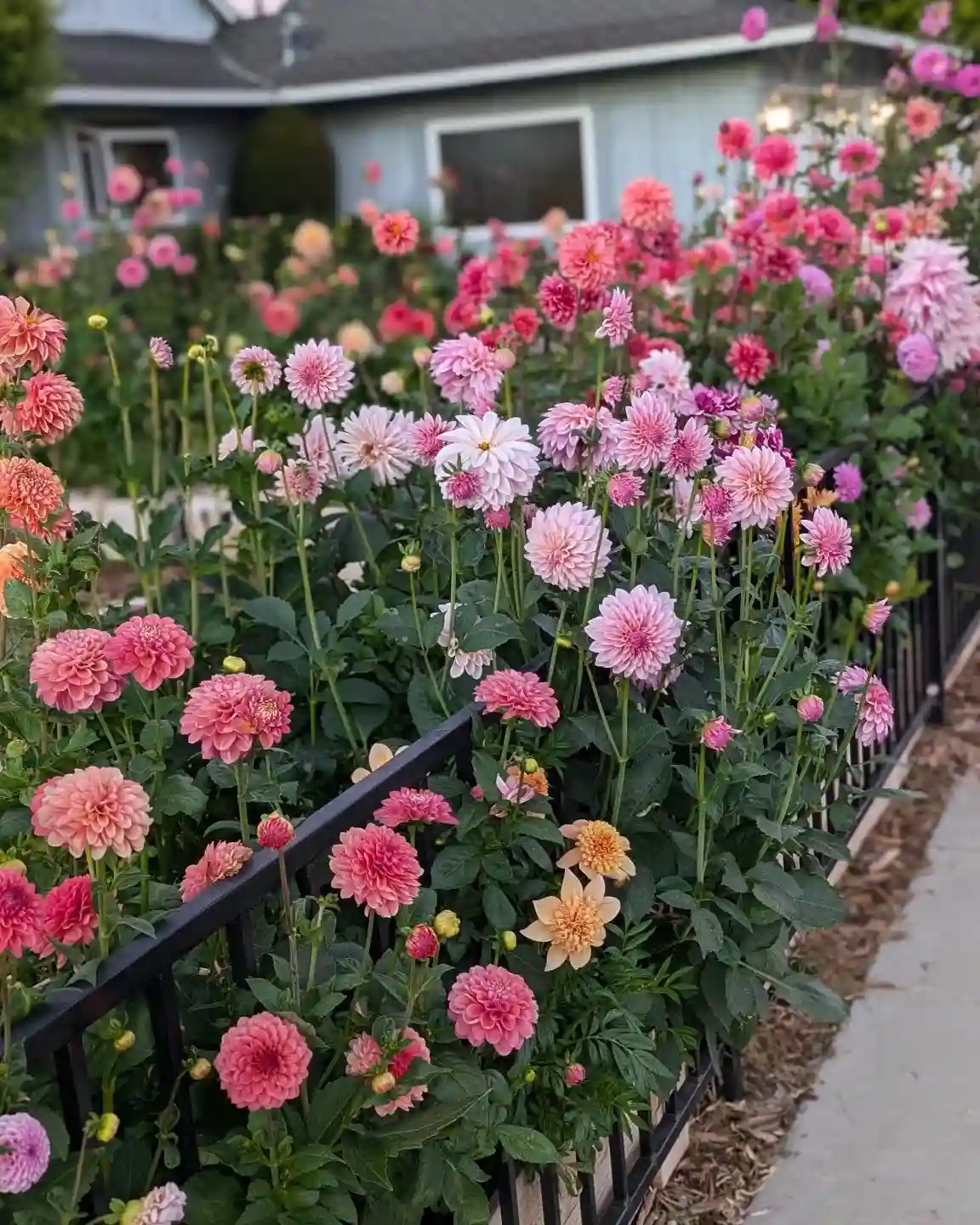
Color does the heavy lifting here. Along the black fence, the dahlias slide from coral and salmon on one side to soft pink and blush in the middle, with a few creamy peach singles near the front. Every shade stays in one warm family, so a crowd of blooms still looks calm. The dark fence makes the pastels pop.
The layers matter too. Tall plants stand toward the back and shorter ones sit near the fence, so nothing hides anything else.
Plant the tall ones first, then fill in front.
| Back row | Front row |
|---|---|
| Taller plants with long stems | Shorter plants close to the fence |
| Best for armfuls of cut flowers | Best for curb appeal and filling gaps |
| Usually needs strong stakes | Usually needs less support |
Idea 04 of 10
4. Pair Dark Red Dahlias With Pink Sedum and Purple Spikes
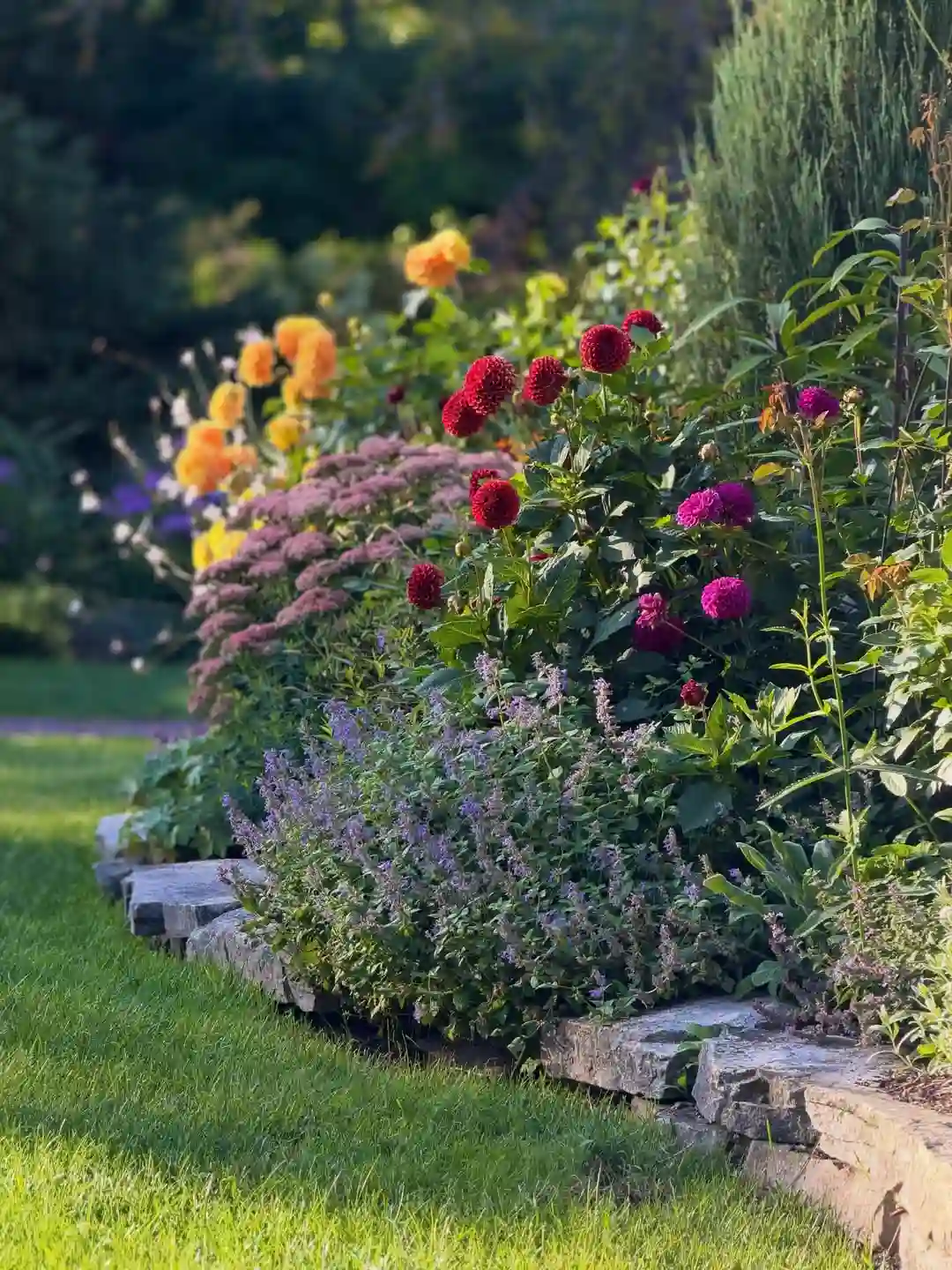
Low evening light turns this border into a glow. Round dark red dahlias and a few magenta ones sit in the middle, with orange blooms burning behind them. Up front, a mound of pink flower heads that looks like sedum and a cloud of lavender-blue spikes that looks like catmint soften the edge.
The order is easy to copy:
- Back: orange dahlias and airy white flowers
- Middle: dark red and magenta ball dahlias
- Front: sedum and purple spikes spilling toward the stone edge
Cool purples calm down hot reds, and the flat stones keep the lawn line crisp. One warning: skip anything taller than the dahlias in the front row, or the blooms get lost.
5. Grow Dahlia Flower Gardens in Black Raised Boxes With Corner Posts
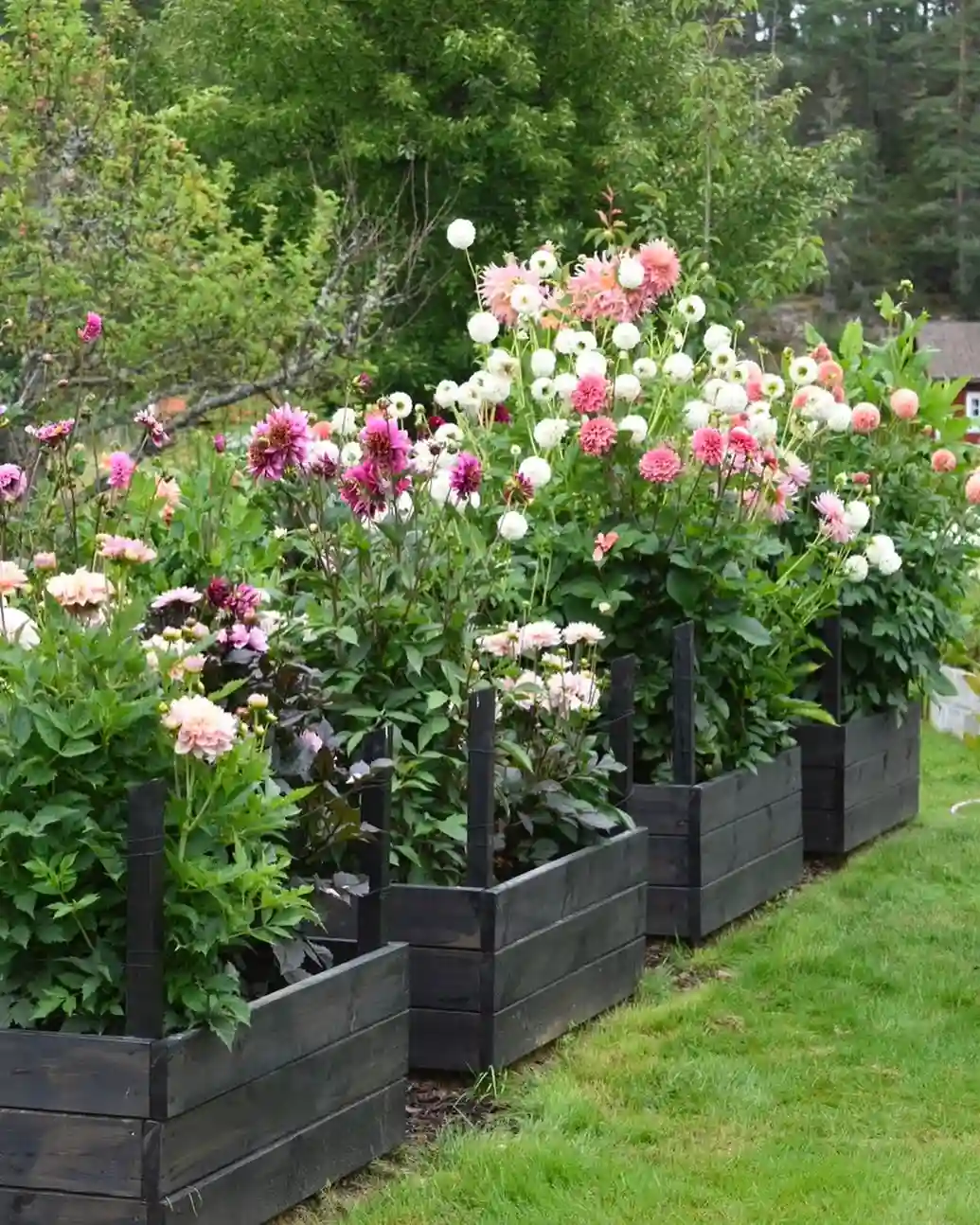
Black wood makes everything inside it look brighter. These stained boxes sit in a row along the lawn, each one packed with dahlias in white, soft pink, coral and deep magenta. A few dark-leaved plants add contrast, and a tall post at each box corner gives the stems something to lean on.
Boxes also help when your ground is heavy or stony, because you choose the soil that goes in. Dahlias dislike sitting in wet soil, so the extra drainage is a bonus.
Recreate this look
6. Plant a Dahlia Hedge Beside a Mown Grass Path
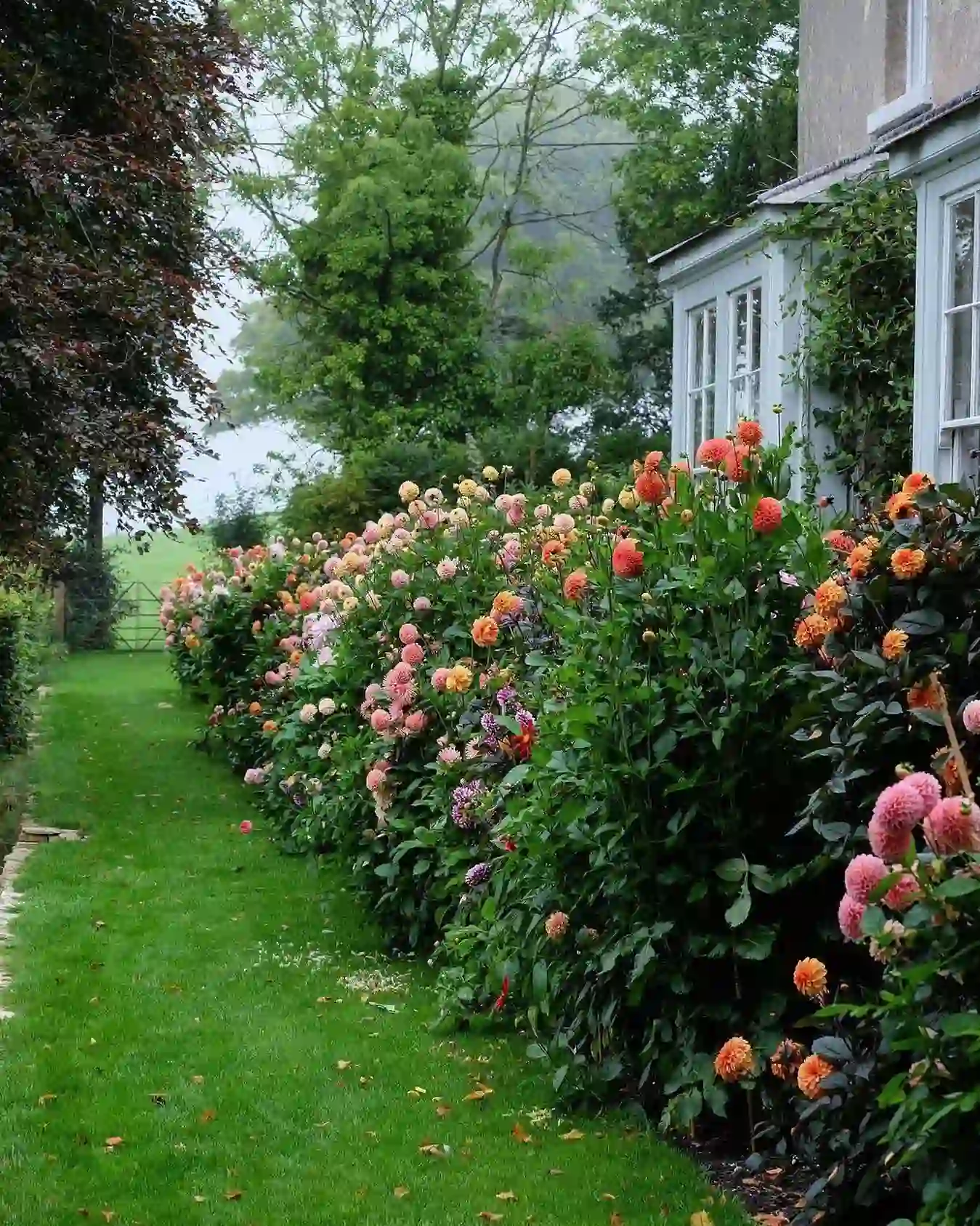
Plant dahlias close enough and a bed turns into a hedge. This one runs the full length of a house wall, a dense mass of peach, apricot, orange and pink that grows softer in color toward the far gate. Hot orange and red balls sit near the windows, and the paler shades fade into the mist.
A mown strip runs alongside, dotted with fallen leaves. That strip is the secret. It lets you walk the whole length, check every plant and cut from the edge without stepping into the bed.
Leave a mown path along the bed so you can reach every plant.
Shift colors gradually from hot to soft along the run.
Packing plants so tight that air cannot move between them.
Planting a deep bed you can only cut from one side.
7. Go Big With One Color Family in Long Rows
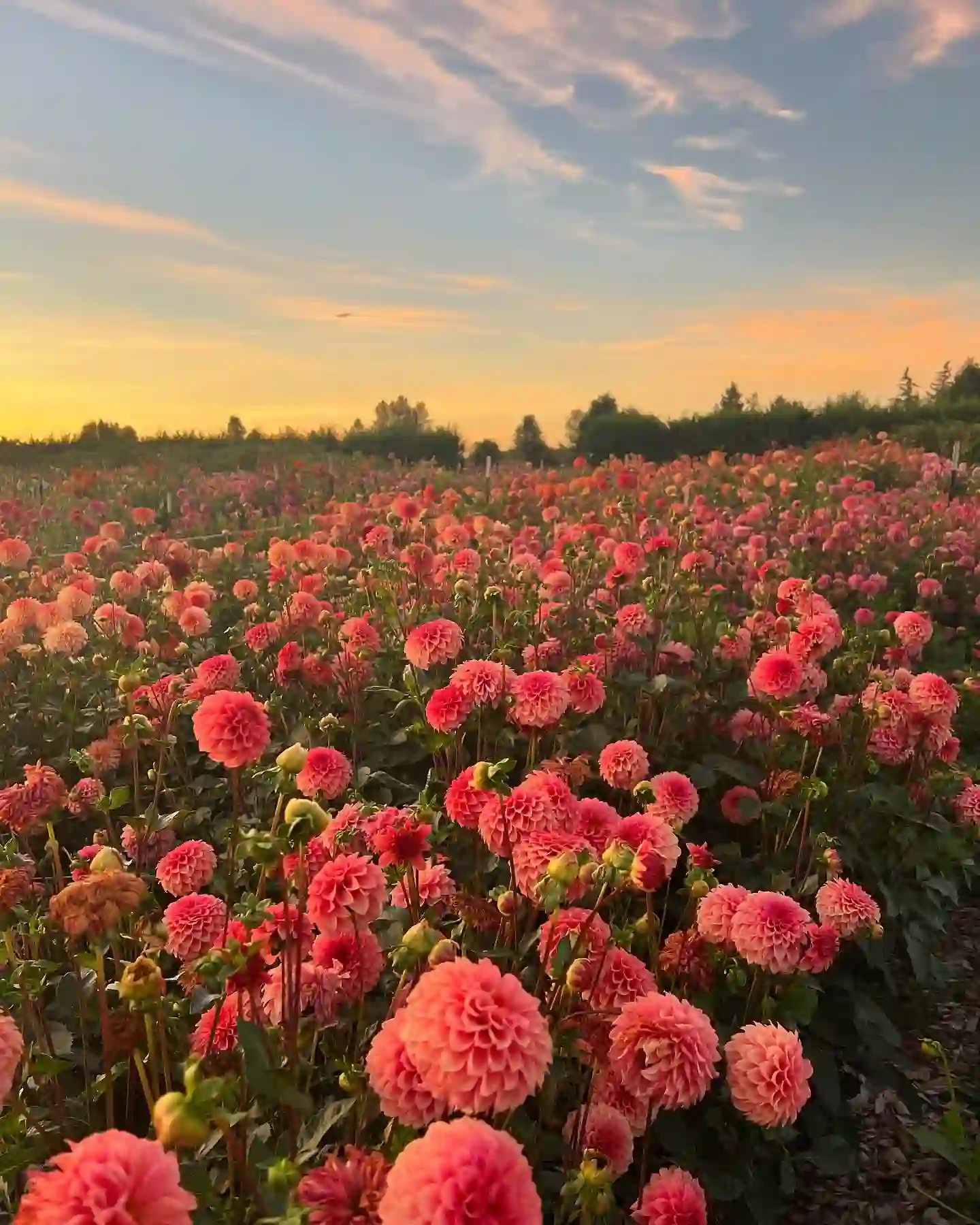
Coral, salmon, rose and apricot, and not one clashing shade. This field is all round, ball-shaped dahlias, and the sunset only deepens the warm tones. Sticking to one color family keeps a huge planting calm, and it means any bouquet you cut already matches.
Look closely and you will spot a few browned, spent heads on the left and plenty of green buds waiting behind the open flowers. That mix is what a healthy cutting row looks like.
Pick one color family, like coral through peach, and stay inside it.
Plant in long rows with enough room to walk between them.
Snip off spent, browned heads each time you pass so new buds keep coming.
Idea 08 of 10
8. Set a Small Vase of Dahlias on a Garden Chair
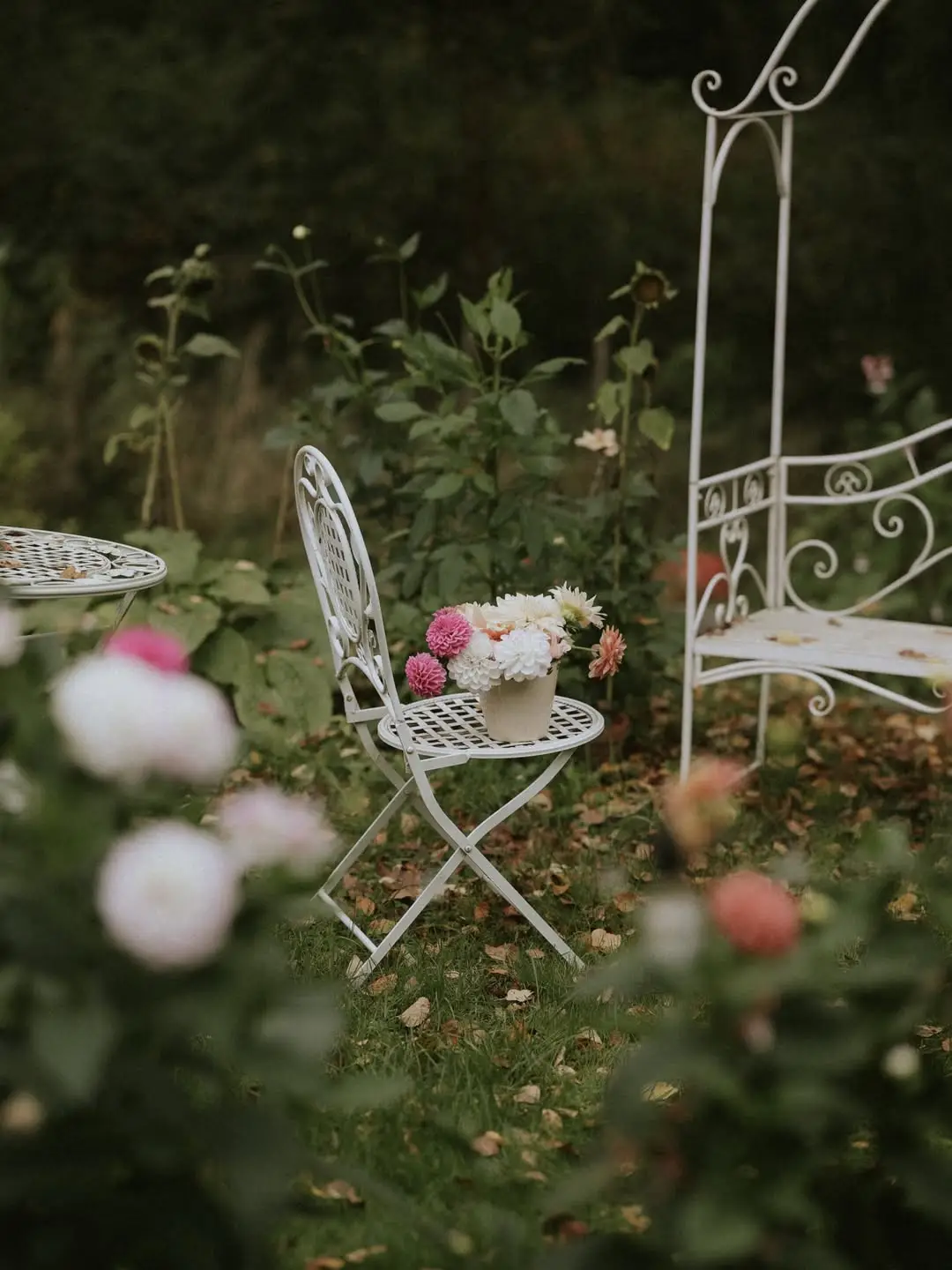
Not every dahlia needs to stand in a row. Here a white metal folding chair sits right inside the planting, with a small cream pot of pink, white and peach blooms resting on the seat. A matching table and a scrolled iron bench wait nearby, and fallen leaves dot the grass.
The soft, blurry dahlias in the foreground make it feel like you are peeking into a private corner. You only need a few stems to get the same look, and they come straight from the bed.
A few stems cut from the bed and set where you will sit make the garden feel lived in, and you get to enjoy the flowers up close.
9. Soften a Lawn Edge With Dahlias and Smaller Filler Flowers
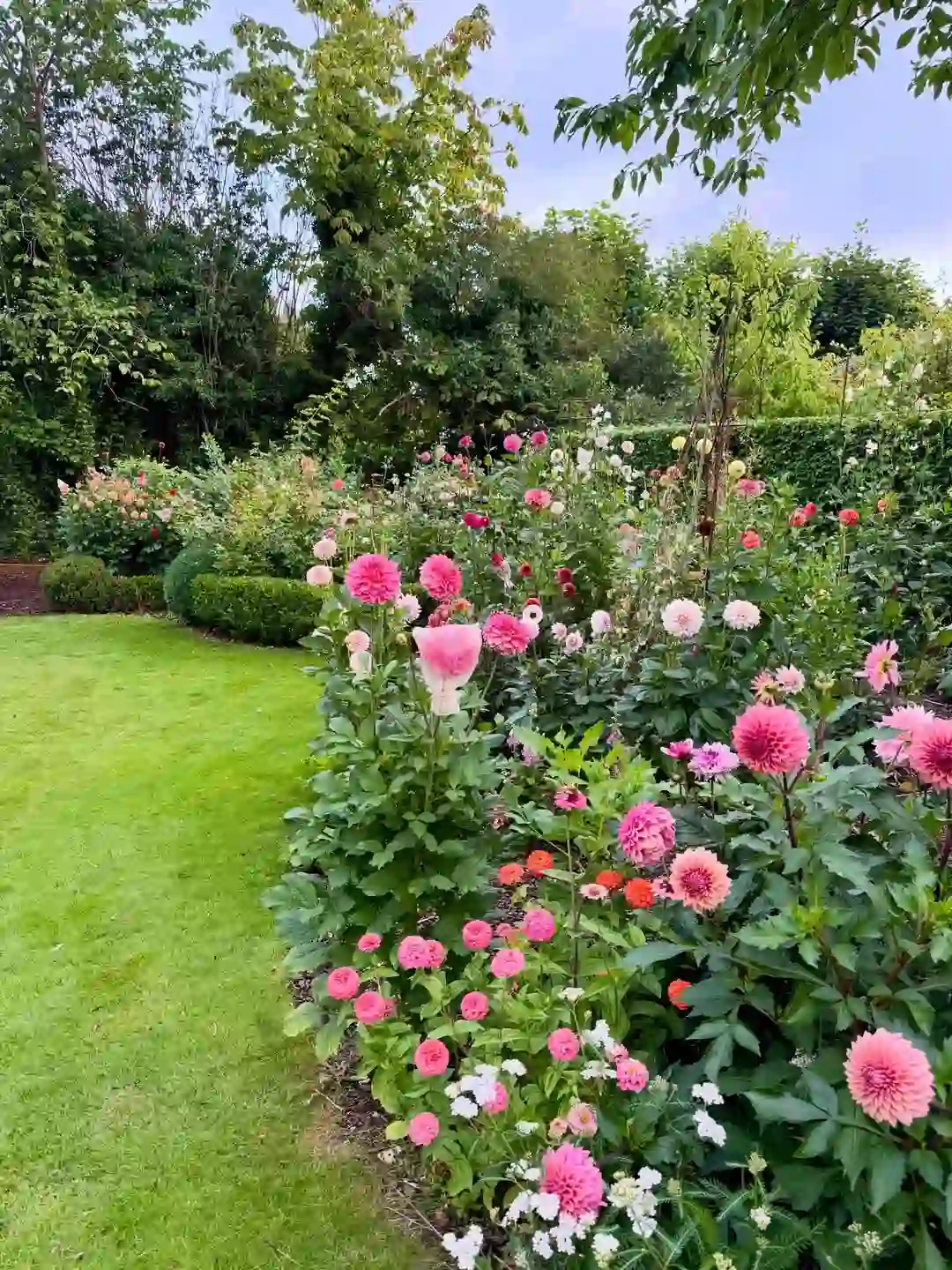
Tall dahlias can look a little bare around the ankles. This border solves that with layers. Pink ball and dinnerplate dahlias rise through the middle, small pink and red-orange blooms that look like zinnias fill the front, and frothy white flowers spill right to the grass.
Behind it all, clipped box shapes and a neat hedge frame the color, so the border looks planned instead of wild. The low fillers also give you extra stems to cut without touching your best dahlias.
Dahlias alone, with tall stems, bare lower leaves and gaps at the front edge.
Short fillers hide the stems and white lacy flowers soften the lawn line.
10. Stake Every Dahlia Early and Label Each Row
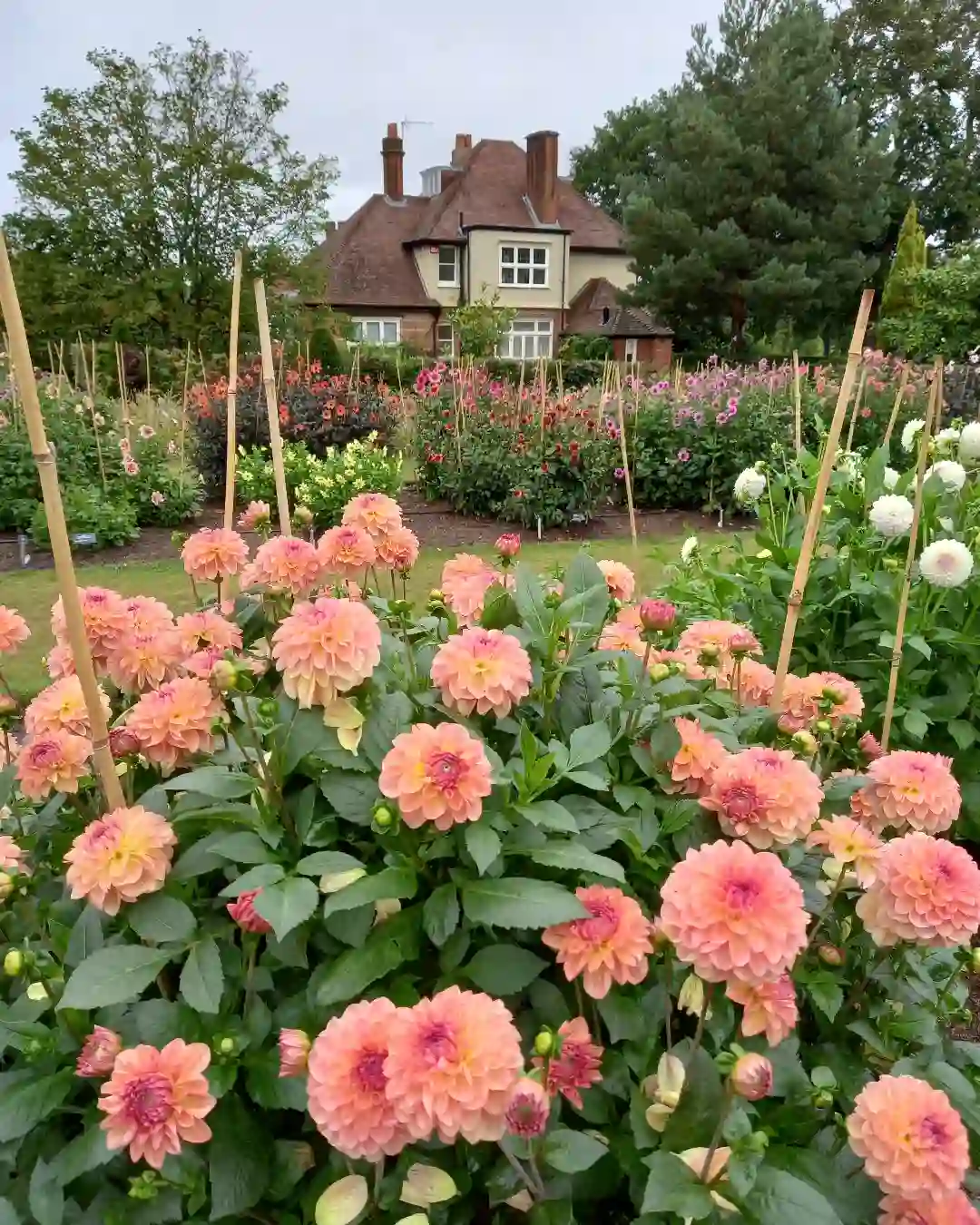
Plain bamboo canes are not the pretty part of this patch, but they do the quiet work. Peach and apricot dahlias fill the foreground, white ones stand on the right, and rows of pink and red stretch toward the house. Small tags sit along the rows, so every variety has a name.
Support and labels are what keep a big planting under control:
- Set the cane at planting time, before the plant gets big
- Tie stems loosely with soft twine as they grow
- Tag each row with the variety name
- Leave walking room between rows
Next spring you will be glad you wrote the names down.
Final Thoughts
Late summer is when dahlias pay you back for every cane and every tie. Whatever your space looks like, a side path, a fence line, a few boxes or a long row, there is a layout here you can borrow.
Start small if you need to. Pick one color family, give each stem support, and cut often. The more you pick, the more the plants bloom, so your table fills up while the border stays full.
Save this post to your garden board so you can find these dahlia flower gardens when planting season rolls around again. Follow along for more ideas to grow, cut and enjoy.
Related Garden Guides
- Pink flower gardens: 8 schemes that keep pink soft instead of loud.
- Flowers that attract hummingbirds: 9 tubular blooms for porches, patios and fences.
- Ornamental grass gardens: 7 low-care grass borders, paths and patios.
- Browse every guide on flower garden ideas: beds, borders and color plans.
Written by
Nina Calloway
Nina founded gardenkinds after nine years of gardening, starting in a 200 sq ft London backyard and now on a half-acre cottage plot in Kent. She writes the cottage, flower and small-garden guides, and grows almost everything she recommends before it goes on the site.
Stuck on your own garden?
Send us your soil, light and a photo. Nina answers a few reader questions every month, and the best ones end up in an update to this list.
Keep Reading.